UNHCR Urges EU to Amend Return Regulation
UNHCR calls for safeguards in EU's Return Regulation before 2026.
Model Diplomat7 min readEurope
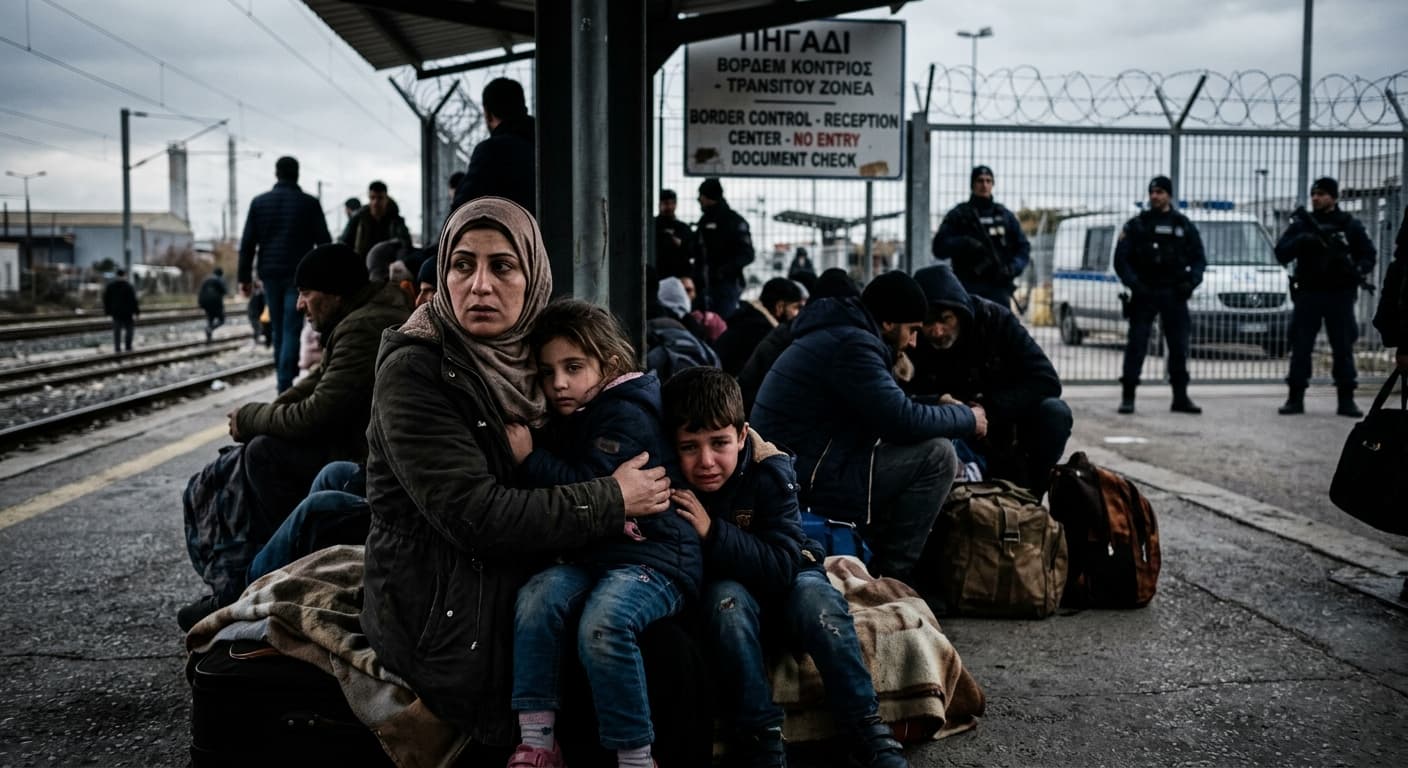
UNHCR presses EU to fix Return Regulation before it bites
UNHCR asks EU lawmakers for four protection safeguards in the new Return Regulation as return hub, third-country and detention rules take effect in 2026.
The UN Refugee Agency has put the European Union on notice: the Return Regulation adopted by the European Parliament on 17 June 2026 will, as drafted, allow refugees with real protection needs to be transferred to countries where they may not be safe — and UNHCR wants four specific fixes made in the implementation phase before the first return hub opens. The intervention lands three weeks before the regulation's non-deferred articles bite and, uniquely, tries to move the fight from the closed Brussels legislative arena into the national and administrative rulebooks that member states are now writing. The angle worth watching is not whether Brussels listens — it will not reopen the text — but whether UNHCR's four asks become the benchmark that European courts, from Luxembourg to Strasbourg, use to strike down the first deportations under the new system.
What UNHCR actually asked for
In a Brussels statement, UNHCR Europe welcomed elements of the Commission's original proposal but said the version endorsed by EU interior ministers on 8 December 2025 and finalised in trilogue on 1 June 2026 leaves refugees exposed. The agency listed four asks.
First, clarify that when an asylum claim is rejected on the basis of the "safe third country" or "first country of asylum" concepts, the returnee can be sent only to the specific state examined during the asylum procedure and named in the return decision — not to any state on a general list. Second, restrict return hubs to people whose claims have been rejected on the merits in a "full and fair" procedure, used only where direct return home is not possible, and designed as short-term staging points. Third, restore automatic suspensive effect for appeals where a claim has not been substantively assessed, so that returns are put on hold while a court checks that non-refoulement is respected on up-to-date country information. Fourth, tighten pre-removal detention: individualised assessment, last resort, and — UNHCR's longstanding red line — no immigration detention of children.
The demand echoes concerns UNHCR raised in a parallel statement on the Commission's May 2025 revision of the Asylum Procedures Regulation, which expanded the "safe third country" concept. Taken together, the two texts do something the 2008 Return Directive did not: they let a member state remove someone to a third country with which the person has no connection at all, as long as an agreement exists.
Why the Commission's own numbers made this fight inevitable
The political pressure that produced the regulation is not disputed. According to Eurostat, 491,950 third-country nationals were ordered to leave the EU in 2025, but only 135,460 were actually returned to a third country — an enforcement rate of roughly 27.5%. Ursula von der Leyen had told EU leaders in October 2024 that the return rate was "only about 20%",
BBC News reported, and made closing that gap the Commission's signature migration deliverable.
The Commission responded on 11 March 2025 by withdrawing its stalled 2018 recast of the Return Directive and proposing a directly applicable Regulation, COM(2025) 101. The instrument introduces a "European Return Order" made available through the Schengen Information System, mutual recognition of return decisions across member states, and — the innovation NGOs mobilised against — the legal basis for "return hubs" in third countries.
The Council hardened the text on 8 December 2025 with a general approach that permits criminal sanctions, including imprisonment, for returnees who fail to cooperate, and indefinite entry bans for security risks. Parliament and Council negotiators reached the final political deal on 1 June 2026, and the plenary approved it 418-218-30 on 17 June, according to the European Parliament press release. Detention may last up to 24 months, extendable by six months if cooperation with a third country improves.
The two-tier entry into force that changes the calculus
The overlooked feature of the deal is architectural. According to the European Parliament's legislative train, a bloc of "priority" articles applies immediately upon publication in the Official Journal — Article 4 on the definition of country of return (which provides the legal basis for removal to safe third countries), Article 5 on fundamental rights, Article 17 on return hubs, Article 18 on the best interests of the child, Article 37 on the external dimension, and Article 45 strengthening Frontex's logistical role. Other provisions kick in twelve months later.
That means return hub agreements can, in principle, be signed and used almost immediately, while the procedural guarantees UNHCR is targeting — appeal rules, detention safeguards — are still being domesticated by member states. The Commission's Home Affairs page insists returns will respect non-refoulement, the right to access asylum and the prohibition of collective expulsion, with "specific procedural safeguards for vulnerable people, including minors."
UNHCR's implicit thesis is that the twelve-month gap is where the damage happens — and where litigation will start.
The angle: UNHCR is arming the courts, not lobbying the co-legislators
The regulation cannot realistically be reopened. What can be shaped is how it is applied — and here UNHCR is drawing on a body of case law that already exists. The European Court of Justice ruled in August 2025 that Italy's list of "safe" countries could not stand where whole regions or minorities are unsafe, prompting judges to block the Meloni government's transfers to Albanian centres. Al Jazeera reported that the two Italian-Albanian facilities have sat empty for months, at a construction cost seven times that of an equivalent centre in Italy. The Meloni government now openly bets that the Return Regulation's entry into force will finally let them fill.
That is precisely the terrain UNHCR wants to contest. Its recommendations map, point for point, onto the vulnerabilities of the Italian model: a fast-track procedure without substantive review, transfer to a third country with no connection to the applicant, and appeals that do not automatically stop removal. The European Economic and Social Committee's formal opinion on the proposal reached similar conclusions in more forceful language, "strongly" opposing the creation of return hubs as incompatible with EU and international obligations and calling for mandatory suspensive effect on first-instance appeals where non-refoulement is at stake.
The European Parliamentary Research Service concluded in its substitute impact assessment that the return-hub proposal offered "no clear evidence" it would lead to more effective returns, would affect irregular migrants' human rights, and would generate substantial costs.
Who gains, who loses
The clearest winners are national interior ministries in Italy, Greece, Denmark, Poland, Germany, Austria, the Netherlands and the Czech Republic — the coalition that pushed the harder line. Greece's September 2025 law, described by then-migration minister Thanos Plevris as "the strictest returns policy in the whole EU", already goes further than the regulation and, per Al Jazeera, has drawn interest from other member states looking to replicate it. Rejected asylum seekers face €5,000 fines and two to five years' confinement in closed camps if they refuse to leave.
The losers are asylum seekers from countries on the parliament-approved safe list — Bangladesh, Colombia, Egypt, India, Kosovo, Morocco and Tunisia — whose claims will be presumed to fail and processed within three months. As Isabel Rosenbaum argued in a
Chatham House Kalam analysis, the Egypt designation coexists with documented rights abuses that would ordinarily have barred returns.
A quieter loser is EU institutional coherence with the international protection regime. UNHCR's core legal warning is that mere transit through a safe country is not, on its own, an appropriate ground on which to apply the safe-third-country concept — a position that mirrors the UN Migration Network's return checklist tying non-refoulement to individualised assessment and effective remedy with suspensive effect.
A direct quote from UNHCR's intervention
"Without stronger safeguards added to the text recently proposed by the Council, the future EU return system could expose refugees, who are in need of international protection, to a risk of being transferred to countries where they may not be safe or able to integrate — undermining both protection and migration management goals."
That formulation — "undermining both protection and migration management goals" — is deliberate. UNHCR is not arguing the EU should stop deporting. It is arguing that a system whose transfers do not hold up in court will not scale, and that Frankfurt-style Italian court challenges will be replicated across the bloc if the safeguards it recommends are ignored.
What to watch
- Council formal adoption and Official Journal publication in the coming weeks: triggers immediate entry into force of Articles 4, 5, 17, 18, 37 and 45. Watch for whether member states front-load return-hub agreements before national procedural rules catch up.
- First return-hub agreement: Italy-Albania is the most advanced, but Dutch officials have floated Uganda and the UK's Home Office is examining western Balkan hosts,
BBC News reported. The first litigation before the European Court of Human Rights on a transfer under Article 17 will define the perimeter.
- 1 July 2027 Commission review of member states' Schengen Information System arrangements. Under Article 7(8) of the
Council text, a positive review triggers an implementing decision making mutual recognition of return orders mandatory — the single largest expansion of enforcement powers in the regulation.
- Greek Council of State ruling on the September 2025 returns law, expected in the coming months; a strike-down would set the ceiling for how far other member states can push.
- UNHCR-EU dialogue at Justice and Home Affairs Council meetings in autumn 2026, when member states will present national implementation plans required by the twelve-month deadline.
The Bottom Line
UNHCR's 8 July call is not a plea to Brussels — it is an operating manual for the courts and national administrations that will actually implement the Return Regulation. The agency has conceded the political fight over the text and moved to the terrain where it can still win: the specific safeguards on appeals, detention, third-country transfers and return hubs that European and national judges will read as the international-law floor. If UNHCR's four asks harden into jurisprudence before the first return hub opens, the Regulation will function; if they do not, the EU will spend the late 2020s litigating deportations it cannot enforce.
Discover more
India
Congress Accuses Modi of Stalling Women's Law
Congress accuses Modi of stalling women's reservation law by linking it to delimitation, revealing a deeper electoral strategy.
India
UN Expert Albanese: India Violates Law
UN Rapporteur Francesca Albanese accuses India of breaching international law, spotlighting human rights concerns in Kashmir and prompting diplomatic pushback.

US Politics
House Ethics Committee Pushes Sexual Miscond.
The House Ethics Committee has shifted responsibility for sexual harassment settlement records to the Office of Congressional Workplace Rights, complicating disclosure efforts.

Economics
Fed's Amex AML order puts correspondent banking on notice
Federal Reserve's Amex AML order requires board-level controls and a 90-day plan; OCC fined the bank $350 million over enterprise-wide deficiencies.