Ukraine's Oil War
Kyiv's drone strikes aim to disrupt Moscow's oil revenue.
Model Diplomat3 min readEurope
Ukraine’s oil war: Zelenskyy bets on deep strikes
Kyiv says its May drone campaign against Russian refineries is on track, aiming to hit oil revenue, unsettle Moscow, and force costs deeper inside Russia.
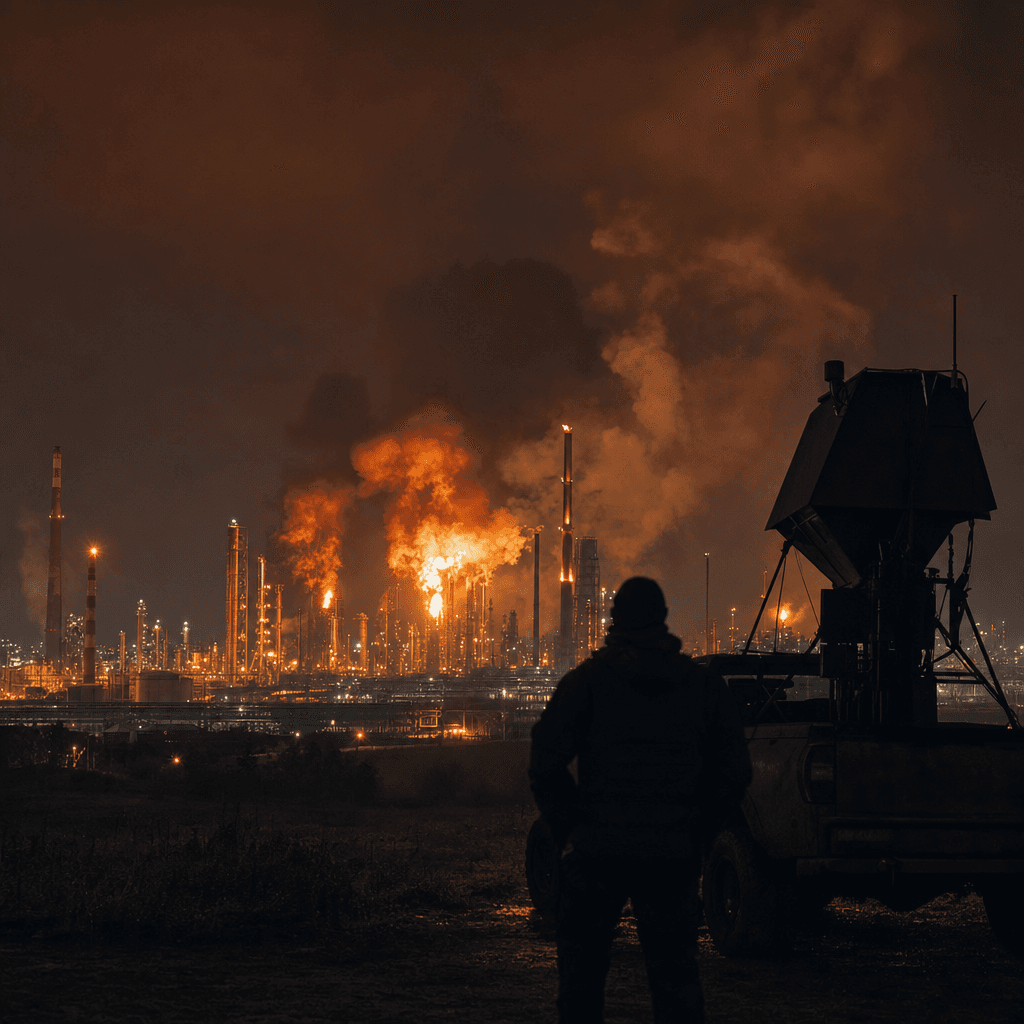
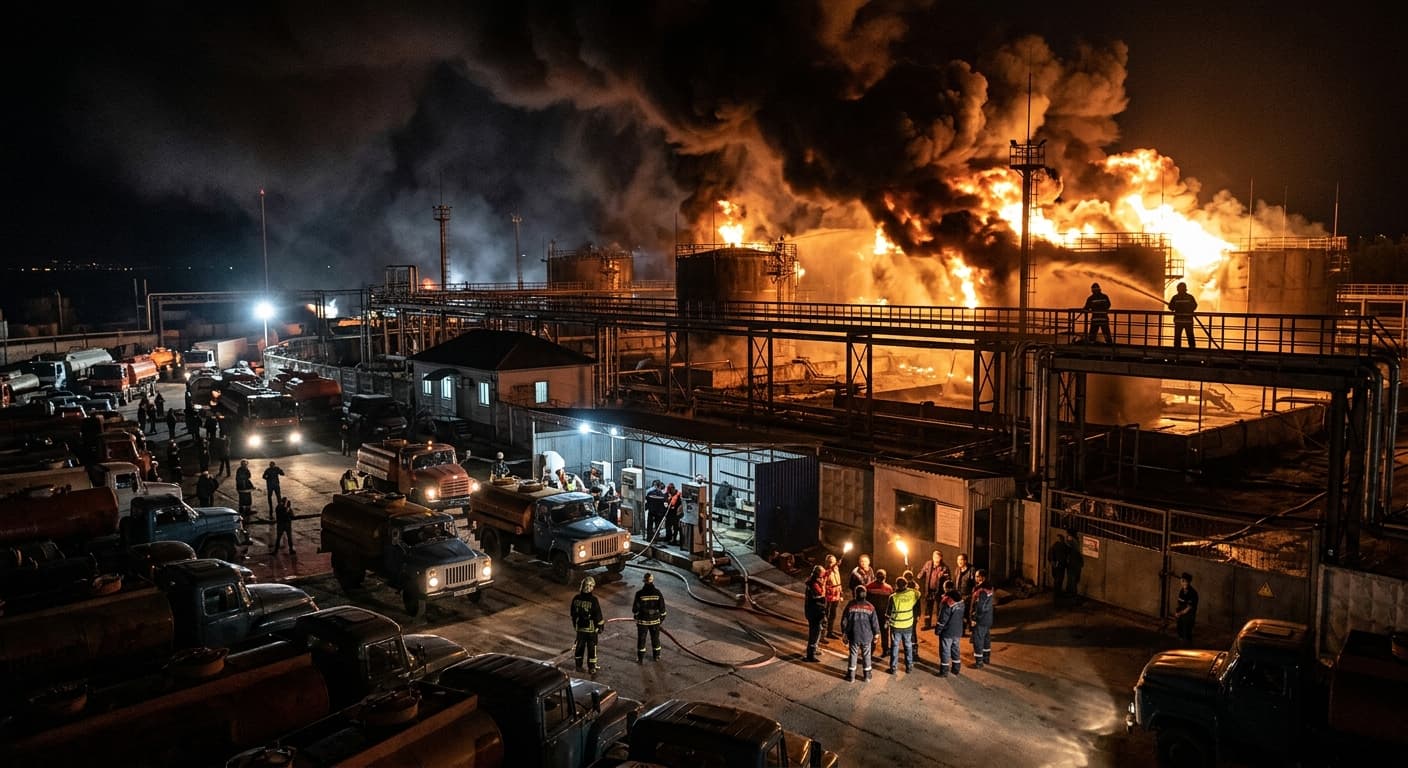
Ukraine is using its long-range drone campaign to turn Russia’s energy system into a battlefield. Volodymyr Zelenskyy said on Thursday that strikes on the Syzran refinery, more than 800km inside Russia, were “all going to plan,” and that “the key targets are Russian oil refineries, storage facilities and other infrastructure tied to these oil revenues” (The Guardian). The message is not just about damage. It is about leverage: Kyiv wants to show it can keep reaching high-value targets that fund Russia’s war, even as the front line remains slow-moving.
Deep strikes are now a campaign, not a raid
The Syzran hit matters because it fits a wider pattern. The Guardian said the refinery was struck by Ukrainian drones and set on fire, while Russia’s Samara governor said two people were killed in the city, though he did not mention the plant (The Guardian). That ambiguity is typical: Ukraine claims the military effect, Russia stresses casualties and tries to downplay damage to critical infrastructure.
What has changed is scale. BBC reporting in late April noted repeated Ukrainian attacks on oil infrastructure in Perm and Tuapse, including facilities more than 1,500km from the border, with Ukrainian officials framing them as a way to cut the cash flow that sustains Moscow’s war effort (BBC). The same reporting showed the Kremlin was already forced to adjust public events, including Victory Day security, because the deep-strike threat had become real (
BBC). That is the point of the campaign: not to seize territory, but to impose a continuing internal security problem on Russia.
For Kyiv, the benefit is obvious. Deep strikes are a cheaper way to pressure a larger adversary, especially while Ukrainian battlefield gains remain limited. For Moscow, the loss is twofold: physical damage to refining capacity and a perception problem, because refineries burning hundreds of kilometers from the border make the home front look vulnerable.
Oil hits the war budget and the political mood
This campaign targets the Russian state where it is most exposed: hydrocarbons. The Guardian said Ukraine’s strikes have already hurt Moscow’s revenue at the same time as sanctions continue to bite (The Guardian). That tracks with earlier Guardian analysis showing Ukrainian attacks on export terminals and refineries were already cutting volumes and pressuring state finances (
The Guardian). In other words, this is not symbolic harassment. It is an attempt to squeeze the Kremlin’s war budget and complicate domestic stabilisation.
There is also a psychological dividend. BBC’s reporting on Ukraine’s drone commander made clear that Kyiv sees Russian oil facilities as “legitimate military targets” because they convert natural resources into war funding (BBC). That logic is designed to normalise a new phase of the war: one in which Russian civilians, markets, and local officials feel the conflict is no longer safely contained near the border.
The downside for Ukraine is escalation risk. The more effective the oil campaign becomes, the more pressure Russia has to retaliate harder against Ukrainian infrastructure and cities. That is already the baseline. Zelenskyy’s calculation is that Russia pays a higher political and fiscal price by absorbing the strikes than Ukraine pays by continuing them.
What to watch next
The next test is whether Moscow can protect refining capacity without stretching air defenses away from the front. Watch for the next cluster of Ukrainian strikes, any Russian acknowledgment of refinery outages, and whether oil-price movements magnify the effect. If the May campaign keeps landing, Kyiv will argue it has found a durable asymmetry—and Russia will have to decide whether to absorb the damage or divert more resources inward. For broader context, see Conflict and
Global Politics.
Discover more
Global
Kyiv's Empty Quiver: Ankara Summit on NATO
As Russia strikes Kyiv, NATO's Ankara summit must address Ukraine's urgent air defense needs amid dwindling interceptor supplies.
International Relations
Ukraine Drone Strikes Crimea Power Grid
Ukrainian drone strikes targeting Crimea's power grid signal a strategic shift, aiming to disrupt Russian logistics by hitting critical energy infrastructure.
Conflict & Security
Russia Encircles Konstantinovka—Key to Donbas
Russia's encirclement of Konstantinovka could unlock the wider Donbas for further advances, marking a pivotal moment in its grinding eastern offensive.
Conflict & Security
Ukraine's Energy Offensive Hits Crimea
Ukraine's drone campaign is disrupting Russian fuel supplies and forcing rationing in Crimea, turning energy infrastructure into a key front of the war.