Ukraine's Energy Offensive Hits Crimea
Ukraine's drone strikes force fuel rationing in Crimea.
Model Diplomat3 min readEurope
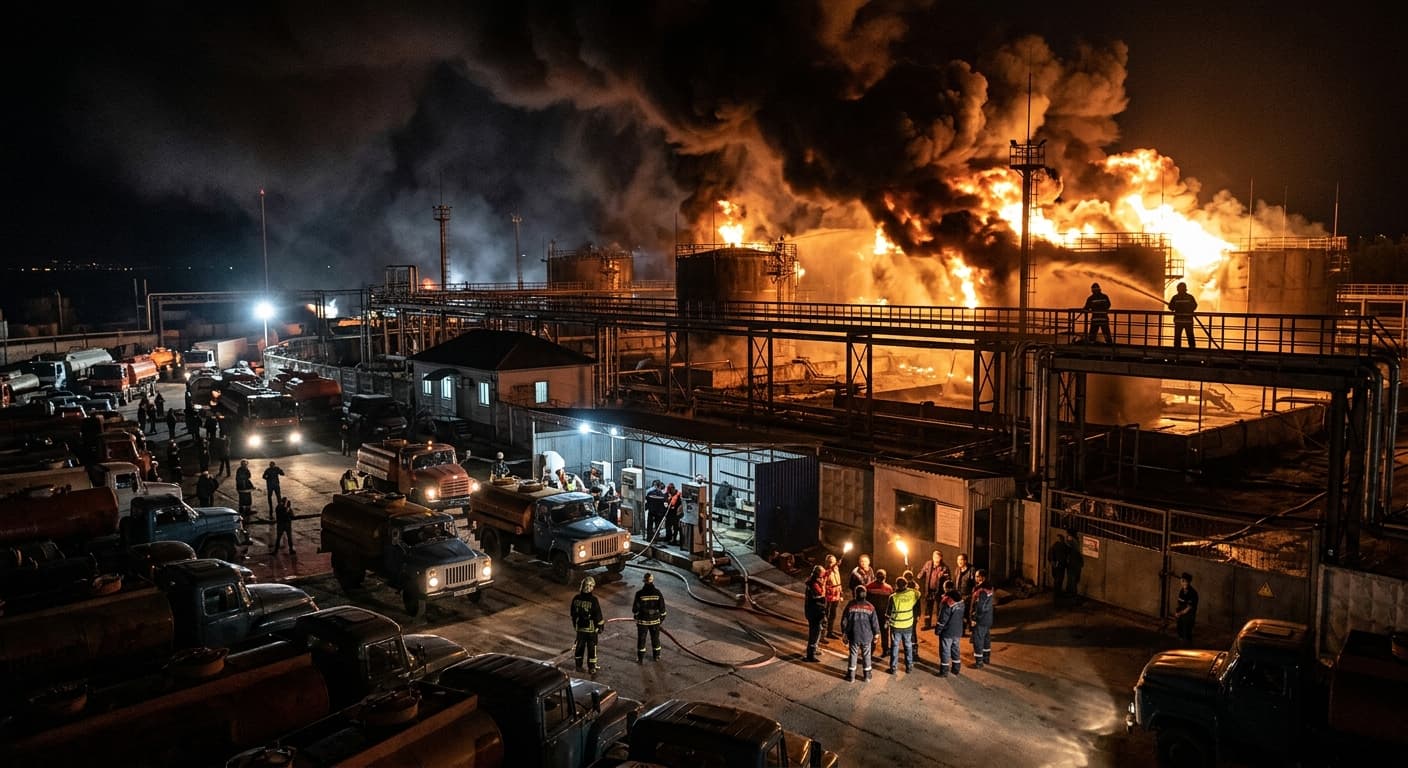
Ukraine's Energy Offensive Empties Crimea's Pumps
Ukraine's relentless drone campaign on Russian fuel supply lines has forced Moscow-backed authorities to halt public fuel sales on the peninsula—a sign the logistics war is working.
BBC reported Sunday that Russian-installed Governor Sergey Aksyonov suspended all public fuel sales in occupied Crimea, effective immediately. Fuel will now flow only to state security services—a de facto rationing that marks an escalation in what was already acute scarcity. The move came hours after Ukraine's overnight drone strike on an oil depot in Kerch killed four and wounded 28, followed by hits on fuel logistics across the Kerch Strait in Russia's adjacent Krasnodar region.
The fuel cutoff is not a single attack's consequence but the endpoint of a systematic campaign. Since May, Ukraine has doubled its strikes on Russian supply lines, shifting from large refineries toward distributed logistics that directly choke occupied territories. Al Jazeera reported that Ukrainian drone attacks along the M-14 motorway reduced Russian military traffic by more than 70 percent; when that route became untenable, Moscow rerouted supplies through Crimea—walking directly into Ukraine's targeting scope. The strategy worked. By mid-June,
BBC analysis noted, Crimean petrol stations were capping sales at 20 liters per customer, with lines stretching to 10 hours, before the fuel suspension.
The rationing now extends far beyond the peninsula. Al Jazeera documented fuel limits hitting 53 Russian regions across the country. Moscow's Tatneft chain capped sales at 20 liters of petrol and 40 liters of diesel per customer by mid-week. Ukrainian strikes on the Moscow Oil Refinery—which supplies over 38 percent of the capital's fuel demand—forced the facility to halt operations and shut six airports around the capital. The campaign is deliberately widening: Ukraine's General Staff confirmed striking not just strategic facilities but smaller depots, pumping stations, and tank farms to extract maximum civilian pain.
The strategic payoff is twofold. First, Ukraine degrades Russia's war machine by starving its logistics tail—troops cannot operate without fuel. Aksyonov's admission last week that hundreds of buses would not leave depots, and reports of Russian units abandoning positions due to food and fuel shortages, bear that out. Second, the campaign drives a wedge between Moscow and Russian society. Tourist footage of Russian families stranded in Crimea unable to buy petrol to leave, combined with price spikes and rationing visible in Moscow itself, makes the war's cost tangible to civilians.
Crimea's uniqueness makes it an ideal pressure point. As the base for Russia's Black Sea Fleet and a logistics hub for southern operations, it cannot be abandoned—but all its resupply routes remain under Ukrainian drone reach. The Kerch Bridge, the primary road link, has been repeatedly damaged. Ferries are targets. Supply trucks routed overland face ambushes. Aksyonov's decision to cut off the civilian market entirely signals there is no surplus left; every drop now goes to keeping military operations afloat.
Watch for three indicators next week: whether the fuel suspension extends—logisticians may have to shut off military supply if reserves fall further. Second, whether Russia escalates retaliation on Ukrainian fuel infrastructure or power grids, as it has promised. Third, signs of Russian military logistics failure in the field—abandoned checkpoints, halted operations, or unit rotations blamed on supply constraints. None of that is certain, but the arithmetic is clear: if Ukraine sustains this tempo of strikes and Russia cannot rebuild refining capacity fast enough, the choice between civilian and military fuel becomes impossible.
Discover more

Global Politics
US Seizes Iranian Ship, Tensions Surge
The US seizure of the Iranian ship Touska highlights a shift in control over the Strait of Hormuz, favoring Iran's strategic position.
India
Romanian Coalition Party Demands PM Resign
Romania's Social Democrats withdrew from coalition, joining far-right AUR to topple PM Bolojan, risking €10 billion in EU funds by August 2026.
Global Politics
Trump's Conflicting Messages on Iran War
Trump's mixed messages on Iran reflect a strategy of audience management, benefiting Tehran amid a complex geopolitical landscape.

Conflict & Security
Drone Warfare Killing Aid Workers at Unprec
Over 1,000 humanitarian workers killed in three years as cheap armed drones collapse legal protections. Gaza, Sudan, Ukraine, and DRC see deliberate targeting of aid convoys and hospitals with zero prosecutions.