Ukraine’s Drone War Forces Russia Defensive
Ukraine's drone strikes are reshaping the war dynamics against Russia.
Model Diplomat3 min readEurope
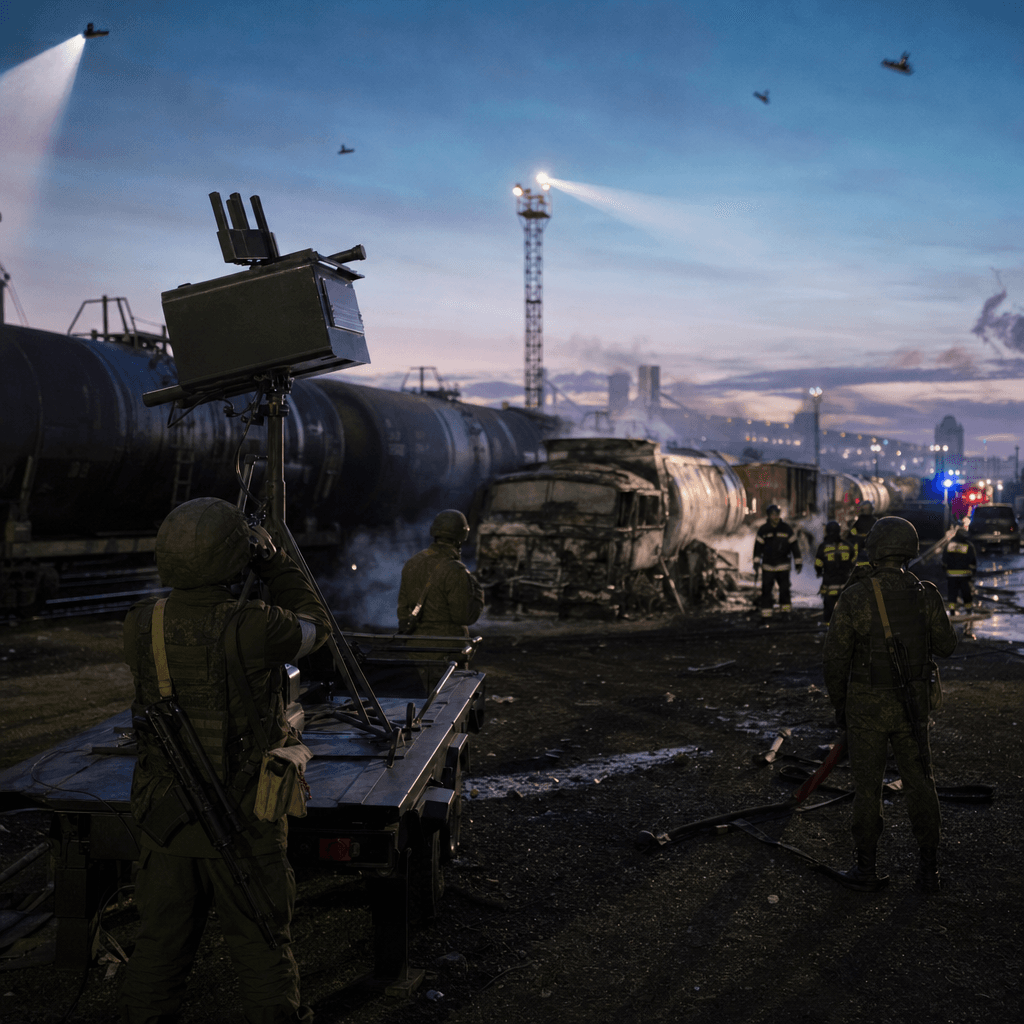
Ukraine’s Drone War Is Forcing Russia Onto the Defensive
Ukraine’s expanding drone fleet is hitting Russian oil, logistics and morale, narrowing Moscow’s leverage as the war shifts deeper inside Russia.
Russia is now defending its rear. The Financial Times says Moscow has adopted a law letting the central bank and other financial institutions help shoot down drones, a sign the Kremlin is adapting to a threat Ukraine has scaled up through domestic production and longer-range strikes (Transcript: How Ukraine’s drones turned the tables). This is the real shift: Kyiv is no longer just absorbing Russian pressure on the front line; it is forcing the war onto Russian territory and into Russian state capacity.
The battlefield advantage is turning into industrial pressure
Ukraine’s drone effort is no longer a niche battlefield tool. FT correspondent Chris Miller describes a system that has moved from surveillance drones in 2022 to mass-produced attack platforms built in converted appliance and steel plants, small workshops and with European-backed financing (Transcript: How Ukraine’s drones turned the tables). That matters because drones let Ukraine punch above its weight: cheap systems, expensive effects.
For policymakers following the wider war economy on Global Politics and
Conflict, the key point is leverage. Kyiv is not trying to match Russia tank-for-tank. It is targeting the nodes that make Russia’s offensive possible: refineries, ports, logistics hubs and air defenses. Once those are under sustained pressure, Moscow has to spend more to protect the same assets, and every extra ruble goes to defense rather than offense.
Oil is the pressure point
Ukraine’s most effective strikes are landing where Russia is most exposed: energy infrastructure. Reuters, via ERR, reported that the Kirishi refinery — one of Russia’s largest, and roughly 7% of national refining capacity — halted production after drone damage hit three of its four crude distillation units (ERR). That is not symbolic damage. It is a direct hit on fuel supply, export earnings and the logistics that keep Russia’s war machine moving.
Agencia EFE reported that Ukraine’s attacks on Russia’s oil sector have helped push maritime crude exports down by as much as 20% in April, while Kyiv says its strikes have already inflicted at least $7 billion in losses this year (Growing attacks on Russian oil industry bolster Ukraine’s strategy). EFE also noted that the range of Ukrainian attacks has expanded from 600 kilometers in 2022 to 1,750 kilometers in 2026. That widening reach is the strategic story: Russia cannot assume distance will protect its critical infrastructure anymore.
What this means for negotiations
This dynamic helps Ukraine in two ways. First, it buys time by slowing Russia’s ground offensive. Second, it improves Kyiv’s bargaining position by showing Russia it cannot simply outlast Ukraine and dictate terms. FT’s Miller said Ukrainians now see the drone campaign as a way to push Moscow toward “negotiating in earnest” rather than from a maximalist position (Transcript: How Ukraine’s drones turned the tables). EFE quoted Ukrainian analysts making the same case: lower oil exports mean less money for daily attacks and more domestic criticism inside Russia about the state’s inability to defend its own territory (
Growing attacks on Russian oil industry bolster Ukraine’s strategy).
What to watch next: whether Russia can repair Kirishi quickly, and whether Ukraine can keep up the strike tempo into June without losing momentum. The next decision point is simple: either Moscow hardens its defenses and absorbs more economic pain, or it escalates against Ukrainian drone production sites and tries to break the campaign at its source.
Discover more
Global Politics
Trump's Conflicting Messages on Iran War
Trump's mixed messages on Iran reflect a strategy of audience management, benefiting Tehran amid a complex geopolitical landscape.

Economics
Fed's Amex AML order puts correspondent banking on notice
Federal Reserve's Amex AML order requires board-level controls and a 90-day plan; OCC fined the bank $350 million over enterprise-wide deficiencies.

Conflict & Security
Guatemala: El Niño 2026–27 becomes regional security test
UNICEF: 25.8M children face El Niño risks in Latin America; Guatemala maps 188 municipalities for drought and food insecurity amid regional security test.

Economics
Fed's stress-test overhaul is a capital-smoothing exercise
Federal Reserve finalized stress-test overhaul: two-year averaging for bank capital buffers and public input, expected to halve volatility.