Ukraine Stalemate Weakens Putin's Strategy
Putin's leverage in Ukraine is becoming more costly to maintain.
Model Diplomat3 min readEurope
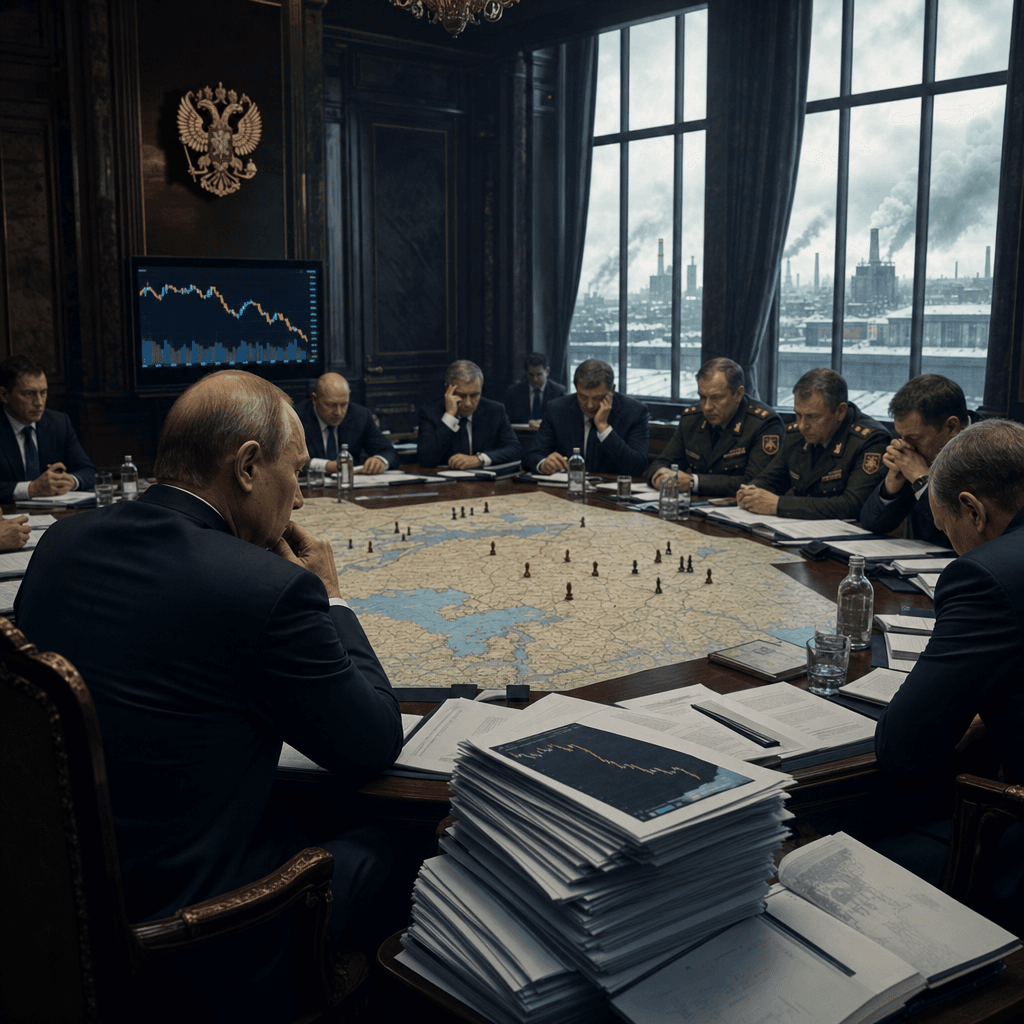
Ukraine Stalemate Is Tightening the Squeeze on Putin
[Moscow still has battlefield depth, but the war grind, weaker growth, and elite unease are narrowing Putin’s room to wait.]
Vladimir Putin is still holding the bigger pile of cards in Ukraine, but his leverage is getting more expensive to use. France24 reports that Russian forces failed to secure the whole Donbas, lost ground in March-April for the first time since summer 2023, and entered the May 9 Victory Day period with a stripped-down parade, public anxiety over mobile internet shutdowns, and a rare Putin remark suggesting the war could end soon — on his terms (France24). That is not a peace signal so much as a pressure signal: the Kremlin wants to show resolve while acknowledging the cost of endless war.
Battlefield gains are slowing, not translating into victory
The key shift is not that Russia has lost its military advantage. It has not. The shift is that the advantage is producing diminishing returns. France24, citing an AFP analysis of Institute for the Study of War data, says Russian forces lost ground between March and April for the first time in nearly three years (France24). Al Jazeera reached the same broad conclusion, saying the peace process is “on pause” and that Russia’s offensive remains a war of attrition rather than a route to collapse in Kyiv (
Al Jazeera).
That matters because Putin’s central war bet has always been time: absorb losses, outlast Western attention, and force Ukraine into a worse negotiating position. But the front is no longer delivering the kind of decisive momentum that would justify the economic and political bill. Russia still occupies just over 19% of Ukraine, yet the gap between occupation and control of the Donbas remains the core problem for the Kremlin (France24).
The economy is now constraining the war machine
The second pressure point is domestic. France24 says Russia’s first-quarter GDP fell 0.2%, its first quarterly contraction in three years, while inflation, internet restrictions, and tax pressure are feeding quiet discontent even among elites (France24). The Council on Foreign Relations is blunter: Russia’s growth surged early in the war, then slowed to about 1% in 2024 and 2025 before turning negative in the first quarter of 2026; the military buildup has crowded out civilian investment and left the economy less flexible, not more resilient (
CFR).
This is where Global Politics logic is useful: the war is not just a front-line contest, it is a distribution fight inside Russia. The winners are defense firms, war-linked contractors, and a security elite insulated from the pain. The losers are small business, consumers facing higher prices, and regional officials who now have to manage scarcity while Moscow keeps the military machine fed (
CFR;
France24).
What to watch next
The next decision point is whether Putin keeps using talk of a settlement to manage pressure, or whether he escalates to restore momentum. Al Jazeera notes that Russian officials have framed diplomacy as stalled while signaling they still want talks on Moscow’s terms, not a compromise (Al Jazeera). Watch three things: battlefield losses around the Donbas, whether the Kremlin changes manpower policy, and whether the June economic data confirms that the first-quarter contraction was a warning, not a blip. If the slowdown deepens, Putin will have less room to keep selling endurance as strategy.
Discover more
Global
Kyiv's Empty Quiver: Ankara Summit on NATO
As Russia strikes Kyiv, NATO's Ankara summit must address Ukraine's urgent air defense needs amid dwindling interceptor supplies.
International Relations
Ukraine Drone Strikes Crimea Power Grid
Ukrainian drone strikes targeting Crimea's power grid signal a strategic shift, aiming to disrupt Russian logistics by hitting critical energy infrastructure.
Conflict & Security
Russia Encircles Konstantinovka—Key to Donbas
Russia's encirclement of Konstantinovka could unlock the wider Donbas for further advances, marking a pivotal moment in its grinding eastern offensive.
Conflict & Security
Ukraine's Energy Offensive Hits Crimea
Ukraine's drone campaign is disrupting Russian fuel supplies and forcing rationing in Crimea, turning energy infrastructure into a key front of the war.