Ukraine Alleges Russian Drones Use Depleted-U
Kyiv alleges radioactive components in Russian drones' missiles.
Model Diplomat3 min readEurope
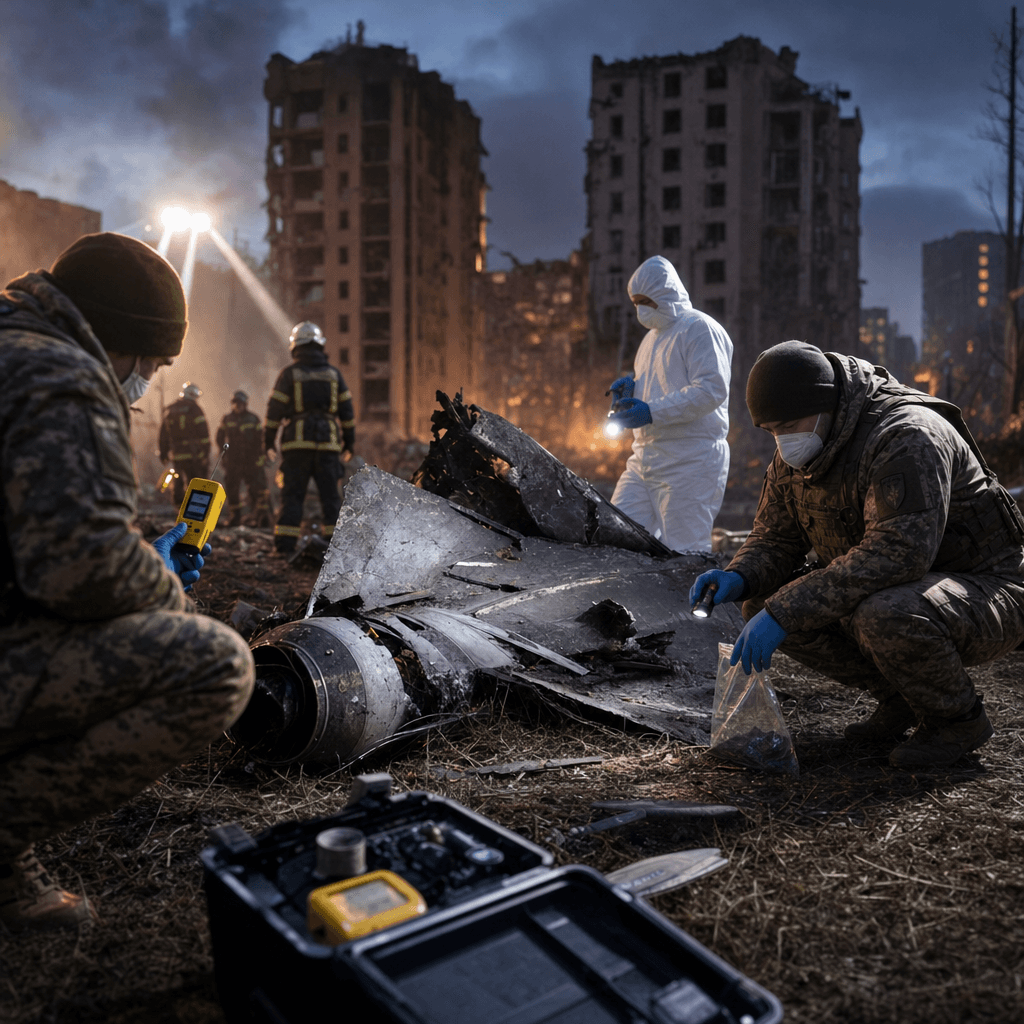
Ukraine’s Depleted-Uranium Claim Targets Russia’s Drone Edge
Kyiv says a Russian Geran-2 drone carried an R-60 missile with depleted uranium; if confirmed, the claim sharpens the war’s toxic and political stakes.
Ukraine’s Security Service says Russian drones are now carrying radioactive components, after radiological inspectors found elevated gamma radiation on fragments of a Geran-2 strike drone shot down in Chernihiv region on 7 April, with the debris later moved to radioactive-waste storage, according to BBC News Ukraine and
Deutsche Welle. The SBU says the drone had been fitted with an R-60 air-to-air missile and that testing identified uranium-235 and uranium-238 in the warhead, but the evidence is still being processed inside a criminal war-crimes case, not by an independent international lab,
BBC News Ukraine.
What Kyiv is really saying
This is not mainly about radiation on the battlefield. It is about proof of Russian adaptation. The SBU says Moscow has modified Geran-2 drones, originally used as one-way attack weapons, by adding R-60 missiles to help them hunt Ukrainian aircraft and helicopters that intercept drones, a development also described by Deutsche Welle. That matters because Ukraine’s air force has built much of its anti-drone success around helicopters, light aircraft, and cheap interceptors; Russia’s response is to make those interceptors more vulnerable.
The radiation finding adds a second layer. A level of 12 microSieverts per hour is far above normal background, but the BBC notes that brief exposure is not the same as a major radiological disaster; the main risk is from damaged or burned munitions that can release radioactive dust, BBC News Ukraine. In other words, Kyiv is warning civilians not to touch wreckage, but it is also trying to turn a technical find into evidence of Russian recklessness.
Why this matters now
The leverage here runs both ways. Ukraine gains politically if the claim holds up, because it can fold the find into its wider argument that Russia is industrializing escalation, not just sustaining it. That helps Kyiv push for tighter sanctions, more battlefield forensics, and more air-defense support from partners already stretched by drone and missile demands. France 24 reported this month that Ukraine can knock down drones at scale, but remains acutely short of missile interceptors, especially Patriot rounds. That shortage is exactly what Moscow is exploiting.
Russia, meanwhile, benefits if it can keep the debate in the realm of deniability. The claim that a drone carried depleted uranium is dramatic; the burden of proof is higher. If Kyiv cannot show a clean chain of custody and independent verification, Moscow will dismiss the story as propaganda. That is why the SBU’s own lab language matters: it is building a legal record, not just a media line.
What to watch next
The next decision point is verification. Watch for independent forensic confirmation — whether Ukrainian authorities release methodology, whether an international expert body gets access, and whether the SBU’s criminal case produces testable evidence beyond its own statement. Also watch whether this becomes a diplomatic talking point at the next air-defense coordination meeting: if allies treat the find as credible, it strengthens Kyiv’s argument that Russian drones are evolving faster than Europe’s defenses are being replenished.
Discover more
Global
Kyiv's Empty Quiver: Ankara Summit on NATO
As Russia strikes Kyiv, NATO's Ankara summit must address Ukraine's urgent air defense needs amid dwindling interceptor supplies.
International Relations
Ukraine Drone Strikes Crimea Power Grid
Ukrainian drone strikes targeting Crimea's power grid signal a strategic shift, aiming to disrupt Russian logistics by hitting critical energy infrastructure.
Conflict & Security
Russia Encircles Konstantinovka—Key to Donbas
Russia's encirclement of Konstantinovka could unlock the wider Donbas for further advances, marking a pivotal moment in its grinding eastern offensive.
Conflict & Security
Ukraine's Energy Offensive Hits Crimea
Ukraine's drone campaign is disrupting Russian fuel supplies and forcing rationing in Crimea, turning energy infrastructure into a key front of the war.