UK Inflation Rises to 3.3% Amid Iran War
Rising prices challenge UK economic stability post-conflict.
Model Diplomat7 min readUnited Kingdom
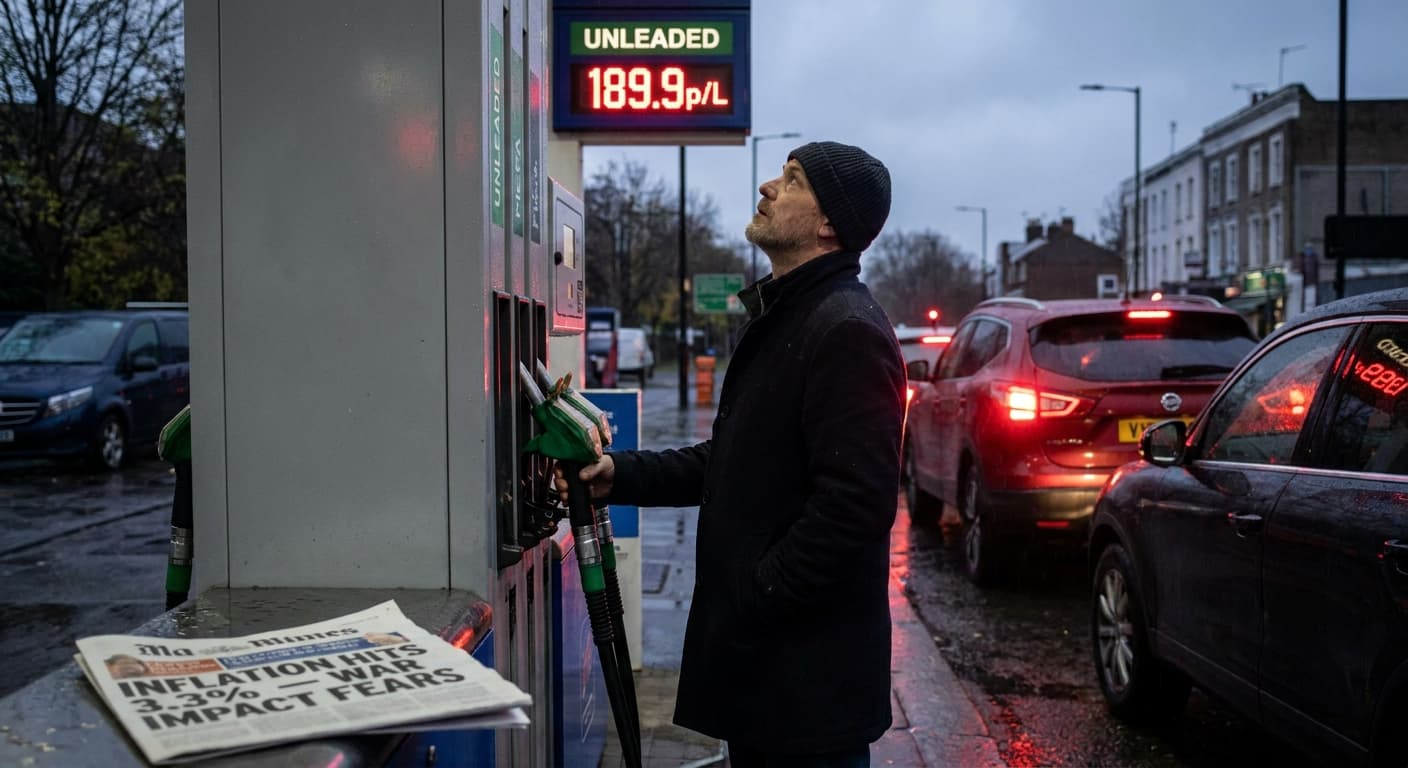
UK Inflation Rises to 3.3% as Iran War Reroutes British Prices
The Hormuz shock pushed March CPI to 3.3%, breaking a disinflation trend and forcing Rachel Reeves and the Bank of England into a fiscal-monetary bind.
The UK's Consumer Prices Index rose to 3.3% in the year to March 2026, up from 3.0% in February, in the first official data to capture the pump-price fallout from the US-Israel war on Iran that began on February 28, according to the Office for National Statistics. The number itself is only three-tenths of a point — but it exposes something structural: no other G7 economy is transmitting the Strait of Hormuz shock into its cost of living as fast, or as directly, as Britain. That is not bad luck. It is the predictable output of a UK power grid that still sets its electricity price off gas 85% of the time, an Ofgem price cap that lags wholesale markets by months, and a fiscal position with the narrowest headroom in the G7. The result: even now that Brent has fallen back below pre-war levels, UK households will pay the war premium deep into 2027 — and Rachel Reeves will pay it politically well before that.
The number, and what actually moved it
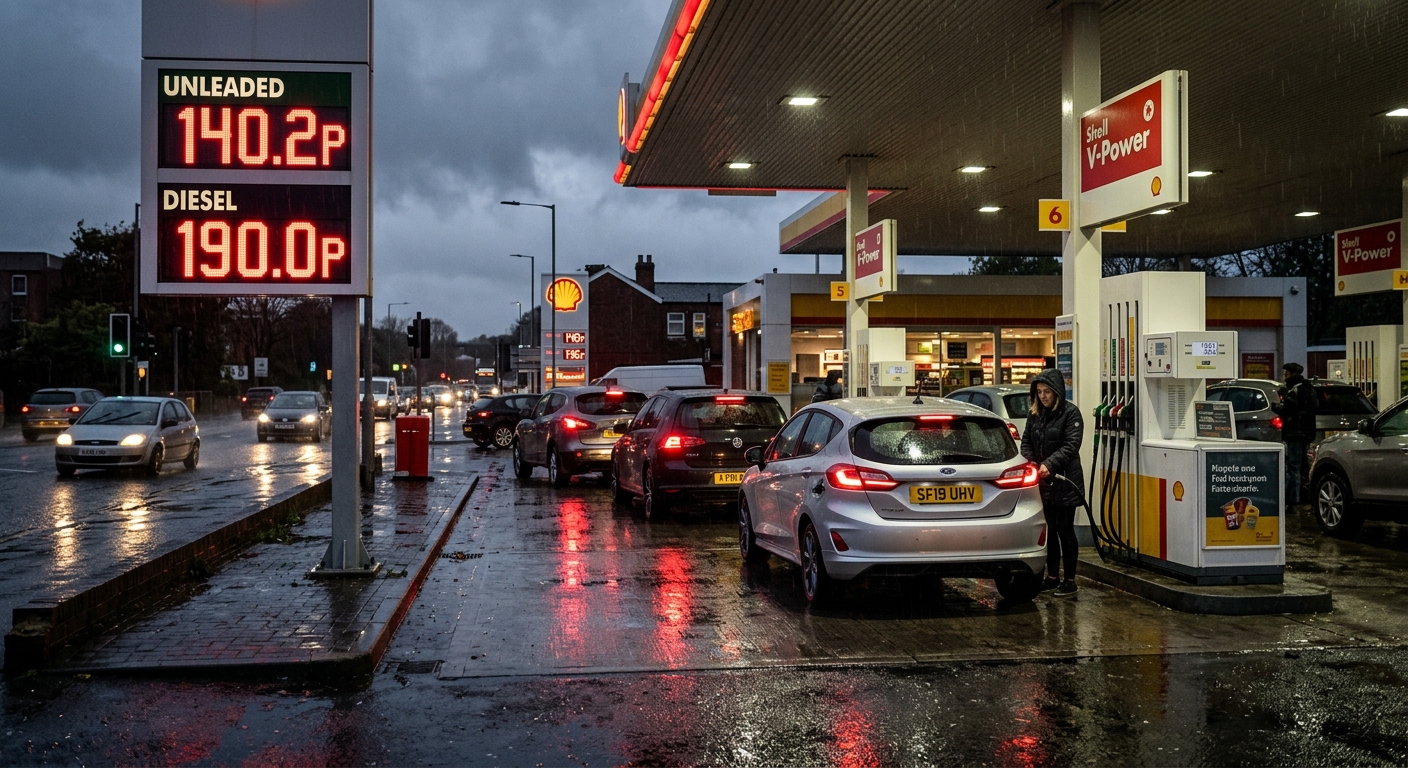
Motor fuels did most of the work. The ONS reports that average petrol rose 8.6 pence per litre between February and March 2026 — versus a 1.6p fall a year earlier — leaving the pump price at 140.2p, the highest since August 2024. Diesel had reached 190p by April, according to the governor's open letter Andrew Bailey was obliged to send Reeves once inflation ran a full percentage point above target. The direct energy contribution to March CPI was 0.3 percentage points — mechanically, the entire overshoot.
The more revealing series is domestic heating oil: prices jumped 90.5% in a single month, producing a 12-month rate of 95.3%, the highest since September 2022. That is not a pump-price story. It is a signal that the shock is already migrating from transport into the household energy bill — the same channel that made the 2022 Russia gas shock so persistent.
Why Britain, and not France
The comparison in the ONS bulletin is the most awkward line in the release: UK CPI at 3.3% versus 2.8% for the EU as a whole, 2.8% for Germany and 2.0% for France — the first time since December 2024 that Britain has run hotter than the bloc it left. That gap is not a rounding error; it is a policy diagnostic.
The Centre for European Reform's post-mortem on the Hormuz crisis identifies the mechanism precisely: gas sets the UK electricity price roughly 85% of the time, against 47% for Italy and just 15% for Spain, where a decade of renewables build-out has broken the link. France, cushioned by a fully functioning nuclear fleet that had been offline during the 2022 crisis, is running the lowest headline rate in the G7. The Institute for Government notes the UK also holds strikingly less gas storage capacity than France or Germany — a legacy of the era when North Sea supply made storage optional — and imports most of its gas via
Norwegian pipelines and US LNG, both of which reprice to global spot when Hormuz closes.
The shock itself is genuinely historic. Brookings, drawing on IEA data, estimates output from countries affected by the closure fell by more than 14 million barrels a day after Iran's harassment campaign and the US blockade of Iranian exports on April 13. Bruegel calls it a categorically different event from 2022: "The 2026 shock eliminates supply, with a volume loss exceeding 1973-74," writes the Brussels think tank in its
June working paper on policy sequencing.
The pass-through has barely started
The most important sentence in Bailey's April 22 letter to the Chancellor is not about March. It is the forecast that follows:
"Having already increased to 3.3%, CPI inflation is expected to be higher later this year. Bank staff expect inflation to decline to 3.1% on average in 2026 Q2 before rising back to 3.3% in Q3… That Q3 projection is 1.4 percentage points higher than at the time of the February Report."
The Bank's own scenario analysis, reported by the BBC, sketches a benign path in which inflation peaks at 3.6% and a "scenario C" in which oil holds above $120 and CPI reaches 6.2% early next year — a path that would demand up to six rate rises, taking Bank Rate to 5.5%. Chief economist Huw Pill was the only member of the nine-strong Monetary Policy Committee to vote for a hike in April; the rest opted to hold at 3.75%, where the rate has sat since December 2025.
The pipeline is loaded. Ofgem's July price cap rises 13% to £1,862 for a typical household — a £221 annual increase, driven by the 25% jump in wholesale gas that followed Hormuz's effective closure. The regulator lags wholesale prices by a full quarter, which is why even the July 2 news that Brent had
dropped back to $70.82 — below pre-war levels — cannot rescue bills in the second half of 2026. Suppliers are warning the October cap could go higher again.
Then there is the second-round threat. The Bank's own modelling flags that natural gas is a critical input into ammonia and urea, the feedstocks for fertiliser, "large volumes of which had passed through the Strait of Hormuz." Global agricultural prices are already up 4.5% since the war began, per the governor's letter. Bank staff estimate the indirect pass-through will add roughly a third of a percentage point to CPI by Q3.
Reeves loses her buffer
The Chancellor's fiscal position was already thin. The OBR's Spring Forecast, finalised days before the war, cut 2026 growth to 1.1% and gave Reeves £23.6 billion of headroom against her main fiscal rule. Inside the document, the OBR warned explicitly that Middle East conflict "could have very significant impacts on the global and UK economies." Within a fortnight it did.
The mechanical damage is running through gilts. The BBC reports UK 30-year yields hit a 28-year high as markets priced in the combined risk of higher inflation, higher borrowing and pre-election political uncertainty; 10-year yields reached their highest since 2008, according to the
Financial Times. Analysts estimate debt-interest costs in 2026-27 will run some £15 billion above the Budget baseline if yields hold. The Institute for Government's assessment is blunt: the extra VAT the Treasury collects on more expensive petrol "may well be outweighed by upward pressures on public spending as higher inflation feeds through to higher welfare and pensions spending."
The politics has moved faster than the arithmetic. Keir Starmer has postponed September's phased 5p fuel-duty rise until 31 December, cut red-diesel duty for farming and rail freight by over a third, and given hauliers a 12-month excise-duty holiday — measures costing roughly £240 million on top of the £2.4 billion annual cost of the existing 5p cut. Reeves has promised targeted energy-bill support "for those who need it most" without specifying the envelope. That she has been forced to spend before her autumn Budget, on measures she did not want to make, is the clearest signal of how narrow her room has become.
The Financial Times reported on July 2 that Treasury officials briefing incoming adviser Andy Burnham believe the fiscal damage will come in lower than initially feared — a claim that only makes sense if Brent stays below $75 and the Hormuz memorandum of understanding signed on June 17 holds through the autumn. Neither is certain.
Where the war ends and the hangover begins
Brent's fall to $70.82 on July 2 is real, and it matters — a $56 collapse from the April 30 peak of $126. Al Jazeera reports Hormuz transits have crept back to about 40 vessels a day, still a third of the peacetime norm of 130. But at least 49 attacks on commercial shipping have been logged since February, and Tehran continues to assert unilateral control over the waterway. The World Bank projects Brent averaging $86 across 2026 before dropping to $70 in 2027, a path consistent with a fragile ceasefire, not a durable settlement.
Suren Thiru of the ICAEW captured the domestic implication when May inflation came in at 2.8%: "Even with hostilities seemingly over, the UK faces a painful hangover from the Iran conflict, with energy and other supply chains likely to take months to normalise, delaying any meaningful easing in inflation until late 2026," he told the BBC. KPMG's Yael Selfin has told the same broadcaster she expects UK inflation to
approach 4% by year-end.
Diplomat View
The story the March CPI print really tells is not that Iran shocked Britain — it is that Britain shocked less resilient than any other G7 economy, and did so from a fiscal starting point too thin to absorb the hit. The 3.3% number is a lagging indicator of choices made years earlier: not to build gas storage after 2017, not to break the gas-electricity price link, not to keep meaningful headroom in the public finances. Expect UK CPI to peak at 3.7–4.0% in Q3 2026, versus 2.5–3.0% for the euro area, and expect Bank Rate to be held at 3.75% through the autumn — a cut before Reeves's Budget is now off the table, and one hike remains a live risk if the October Ofgem cap surprises to the upside. The forecast changes if two conditions hold together: Brent averages below $75 through Q3 and Hormuz transits recover past 100 vessels a day by mid-August. Absent both, Reeves will be writing an autumn Budget that raises taxes to protect a fiscal rule she cannot amend without cost. Bailey's next letter to the Chancellor is the leading indicator to watch — not the pump price.
What to watch:
- August 20, 2026 — ONS July CPI release, the first full month capturing the higher Ofgem cap.
- August 7, 2026 — Bank of England MPC decision and Monetary Policy Report; Pill likely joined by one or two hawks.
- October 1, 2026 — Next Ofgem price cap, forecast by suppliers to rise again absent a durable Hormuz reopening.
- Autumn 2026 — Reeves's Budget; the OBR's revised fiscal outlook will formalise the loss of headroom to war-driven debt-interest costs.
Discover more

Global Politics
US Seizes Iranian Ship, Tensions Surge
The US seizure of the Iranian ship Touska highlights a shift in control over the Strait of Hormuz, favoring Iran's strategic position.

Conflict & Security
Drone Warfare Killing Aid Workers at Unprec
Over 1,000 humanitarian workers killed in three years as cheap armed drones collapse legal protections. Gaza, Sudan, Ukraine, and DRC see deliberate targeting of aid convoys and hospitals with zero prosecutions.

Global
World Normalises Taliban as Afghan Women Eras
UN data shows Afghan women erased from public life as Russia recognises the Taliban, EU hosts officials in Brussels, and ICC warrants for gender persecution go unenforced.
Conflict & Security
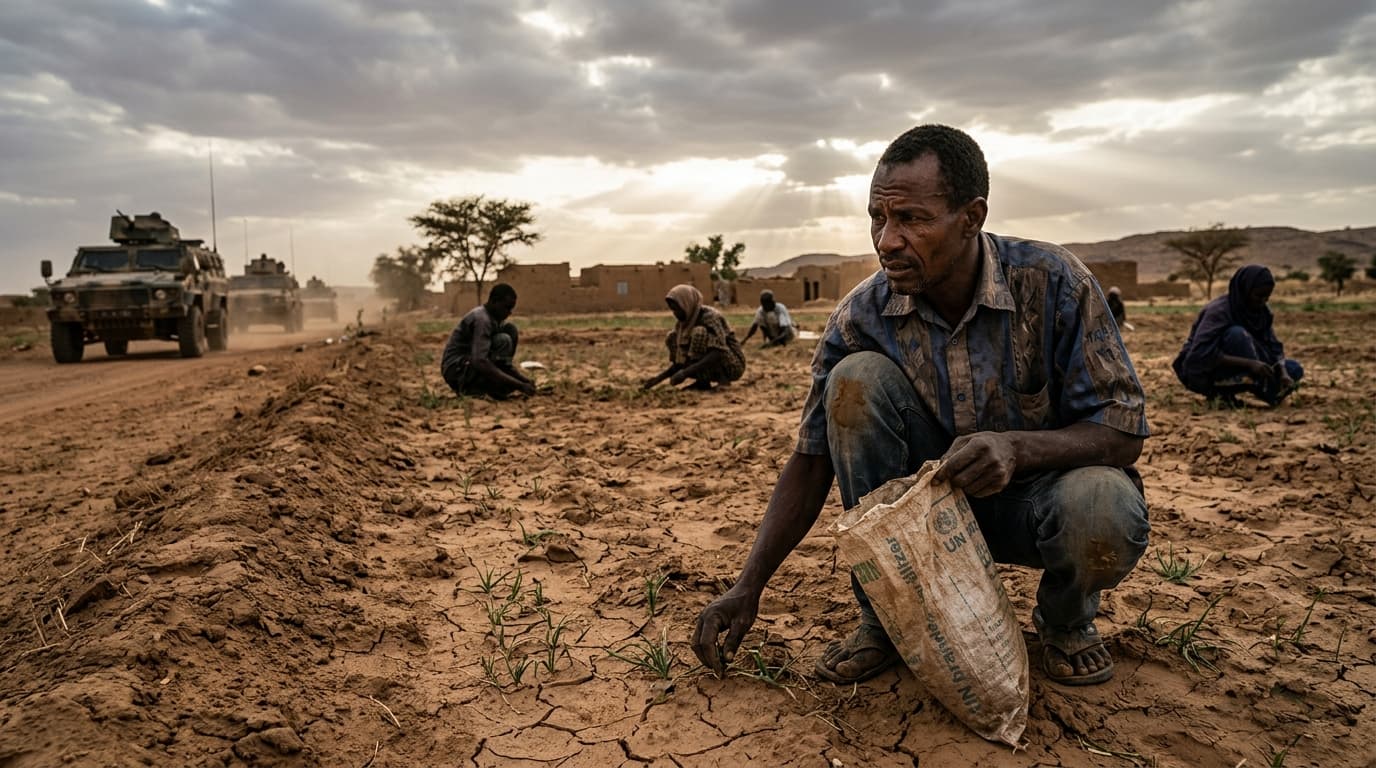
West Africa Food Crisis: Three Shocks in 2026
Conflict, climate extremes, and the Strait of Hormuz closure drive a severe food crisis in West and Central Africa, with fertilizer prices surging 80% and millions displaced.