Phelan Ousted as Navy Secretary Amid Crisis
John Phelan's firing signals deeper Pentagon leadership changes.
Model Diplomat3 min readUnited States
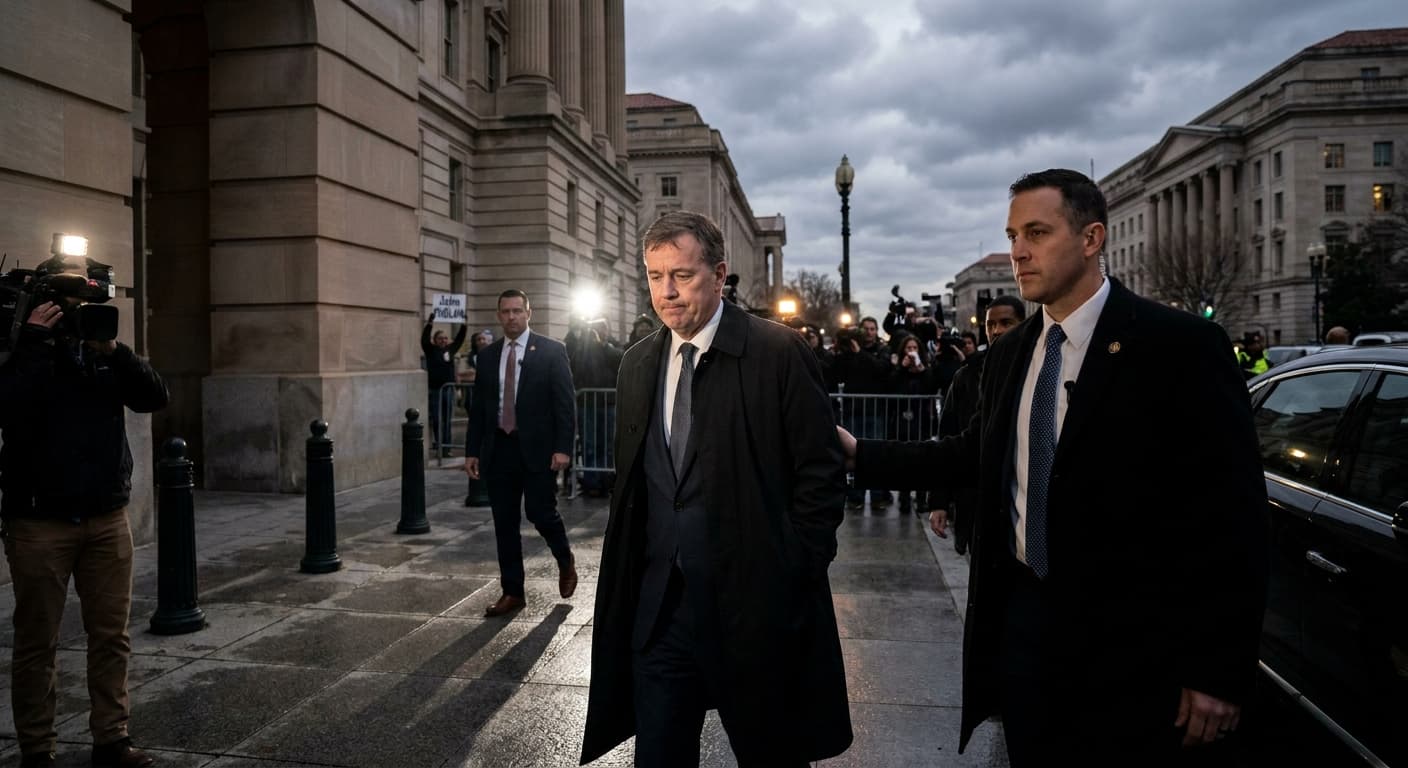
Phelan Out at Navy After 13 Months — Hegseth's Purge Reaches the Secretariat
John Phelan's abrupt firing as Navy Secretary, with a naval blockade of Iran underway, marks the deepest civilian leadership cut yet at the Pentagon.
John Phelan was forced out as Secretary of the Navy on April 22, effective immediately, after just 13 months in the role. Navy Undersecretary Hung Cao — a retired Navy SEAL captain and vocal DEI critic — steps in as acting secretary. No official reason was given. The announcement came from Defense Secretary Pete Hegseth's spokesperson, not Phelan himself, and arrived mid-week while Phelan was attending the Sea-Air-Space conference outside Washington.
The timing is striking. The U.S. Navy is currently conducting a blockade of Iran, redirecting vessels and conducting port boarding actions as part of active hostilities. Losing the civilian head of the service branch running that operation — abruptly, with no succession plan announced beyond an acting official — is an operational distraction the Pentagon didn't need.
Pattern, Not Anomaly
Phelan's ouster is the latest in a sweeping personnel purge that Hegseth has conducted across the defense establishment. In February 2025, Hegseth fired Joint Chiefs Chairman Gen. Charles Q. Brown Jr., CNO Admiral Lisa Franchetti, and Gen. James Slife, framing the removals as replacing "woke" leadership. In early April 2026, he forced out Army Chief of Staff Gen. Randy George alongside two other senior Army generals, reportedly via a phone call, with Army leadership learning of the changes through public announcements rather than internal channels.
Phelan, a New York-based financier and founder of Rugger Management, was confirmed 62–30 by the Senate in early 2025 — notably bipartisan support for a Trump nominee. He had no prior military service, and a February 2026 CNN report linking him to a 2006 flight on Jeffrey Epstein's private jet created political turbulence, though no misconduct was alleged. Whether that report factored into Hegseth's calculus is unknown.
Hung Cao: The Ideological Successor
Hung Cao's profile fits the template Hegseth has been building. A 25-year Navy veteran, Vietnam refugee, and two-time Republican congressional candidate in Virginia, Cao was installed as undersecretary explicitly as a counterweight to DEI programs within the service. He now runs the Navy — at least temporarily — at a moment of active combat operations.
The open question is whether Cao gets a permanent nomination. A Senate confirmation fight for a new Navy secretary, mid-conflict, would be a significant drain on political bandwidth. Hegseth may prefer to leave Cao in an acting capacity rather than invite scrutiny — a pattern the administration has used elsewhere to avoid confirmation votes.
What to Watch
Three things matter here. First, operational continuity: who is actually directing Navy policy on the Iran blockade and whether Cao has the institutional relationships to hold it together. Second, Senate reaction — the bipartisan coalition that confirmed Phelan 62–30 suggests some Republican appetite for pushback on unchecked Pentagon purges. Third, watch for further service secretary removals; if Hegseth moved against the Navy's civilian head, Army Secretary Dan Driscoll and Air Force Secretary Troy Meink should be regarded as less secure than their titles suggest.
The US Politics story here isn't just a personnel shuffle — it's a question of whether civilian-military command coherence can hold during active operations when the leadership pipeline is being rebuilt in real time. On current evidence, Hegseth is betting it can. That's a significant bet.
Sources: Washington Post,
CNN,
AP News,
USA Today/Roll Call
Discover more

Global Politics
US Seizes Iranian Ship, Tensions Surge
The US seizure of the Iranian ship Touska highlights a shift in control over the Strait of Hormuz, favoring Iran's strategic position.

Conflict & Security
Drone Warfare Killing Aid Workers at Unprec
Over 1,000 humanitarian workers killed in three years as cheap armed drones collapse legal protections. Gaza, Sudan, Ukraine, and DRC see deliberate targeting of aid convoys and hospitals with zero prosecutions.

Global
World Normalises Taliban as Afghan Women Eras
UN data shows Afghan women erased from public life as Russia recognises the Taliban, EU hosts officials in Brussels, and ICC warrants for gender persecution go unenforced.

Conflict & Security
West Africa Food Crisis: Three Shocks in 2026
Conflict, climate extremes, and the Strait of Hormuz closure drive a severe food crisis in West and Central Africa, with fertilizer prices surging 80% and millions displaced.