UK Defense Delays Undermine Nato Credibility
House of Commons report highlights military investment issues.
Model Diplomat3 min readEurope
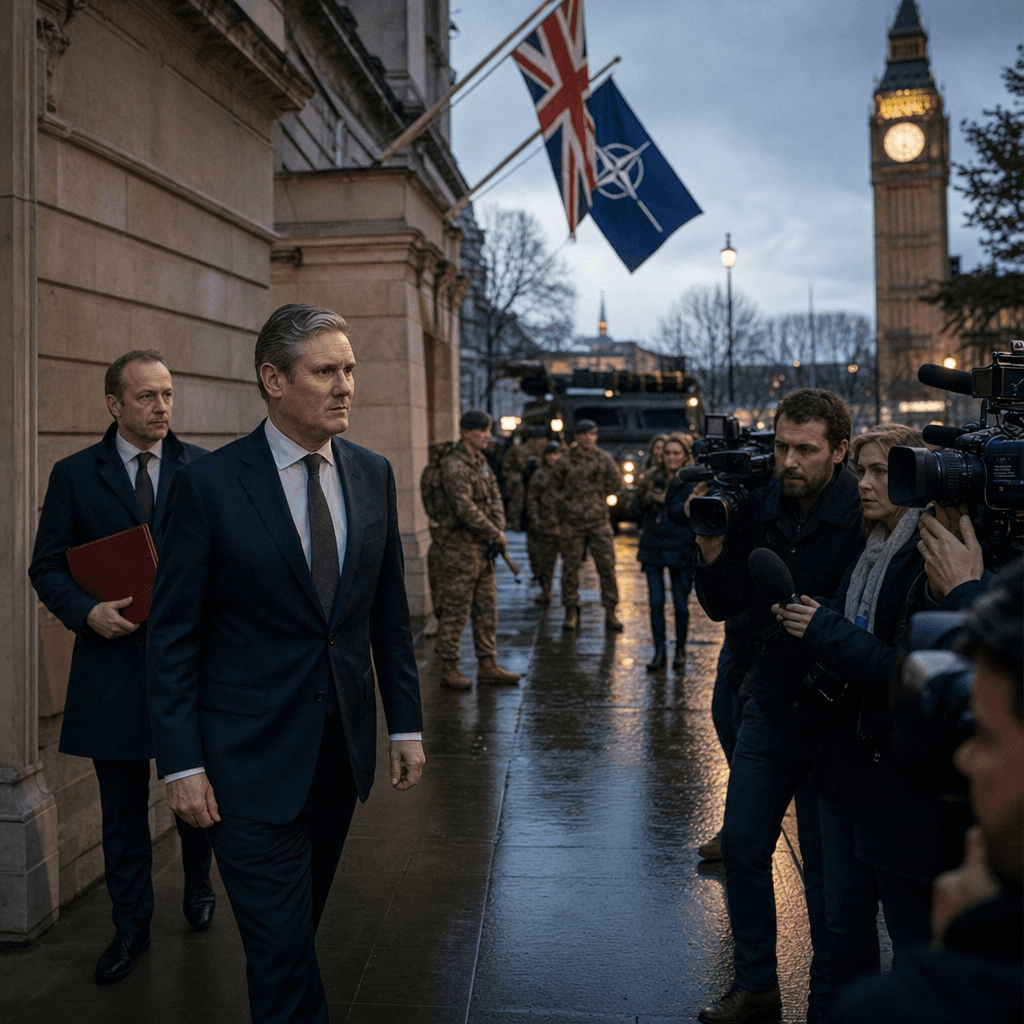
UK Defense Delays Undermine Nato Credibility, MPs Warn
A critical House of Commons report warns that persistent delays to Britain’s 10-year military investment plan are eroding its credibility among allies.
The British government’s failure to deliver its long-awaited Defence Investment Plan (DIP) is actively undermining its standing with key allies ahead of next month's crucial Nato summit, according to a scathing report from the House of Commons Public Accounts Committee (PAC). While Prime Minister Sir Keir Starmer has spent months championing a "Nato-first" posture, the parliamentary spending watchdog warned that the ongoing vacuum of concrete funding details has left the nation years without a credible plan for military capability, as reported by BBC News. This delay not only dents diplomatic trust but risks blowing out procurement costs as global inflationary pressures drive up supplier prices.
The £28 Billion Internal Rift
The root cause of the paralysis lies in an escalating financial dispute between Downing Street and the Treasury. Following the ambitious Strategic Defence Review in June 2025, the government accepted dozens of recommendations to shift the military toward "warfighting readiness," yet it has consistently failed to sign off on the funding. According to the Institute for Government, Whitehall is paralyzed by a severe mismatch between the Ministry of Defence’s (MoD) strategic goals and its fiscal reality. Internal MoD assessments leaked earlier this year indicated a £28 billion funding gap over the next four years just to meet existing capabilities and new review targets, setting up a direct confrontation between Chancellor Rachel Reeves and Number 10 over how to pay for it without breaching strict fiscal rules.
This budgetary delay has immediate structural implications for international security and broader
conflict dynamics. Industrial defense suppliers are starting to freeze investment decisions and cut staff due to long-term planning uncertainty. By delaying the DIP—which was originally scheduled for publication in autumn 2025—the MoD has forced major contractors to price in risk. This dynamic drives up procurement costs and directly hinders the force modernization required to counter peer-state threats.
Nuclear Crowding and Accounting Failures
Adding to the government’s headaches is the increasingly dominant role of the UK's nuclear enterprise. The PAC report revealed that the nuclear deterrent now devours 18 percent of the total defense budget (£10.9 billion), a figure projected to climb to 25 percent in the coming years. MPs warned that this growing share is crowding out conventional capabilities, all while the MoD fails to provide sufficient transparency over where the money is going. To make matters worse, the PAC flagged a "completely unacceptable failure" by the MoD to maintain supporting accounting records for more than £6 billion in assets, illustrating deep-rooted structural mismanagement at the heart of Whitehall's procurement machine.
What to Watch Next
The immediate pressure point is the upcoming Nato summit in The Hague starting on July 7. Defence Secretary John Healey has insisted that Starmer is determined to publish the DIP before leaders gather, making the next four weeks the critical window for a Treasury compromise. Analysts at the Royal United Services Institute have warned that without a fully funded investment plan on the table, the UK’s leverage to demand other European allies raise their defense spending to a proposed 3.5 percent of GDP will be severely compromised. Downing Street will likely be forced to announce high-interest borrowing or deep departmental trade-offs to break the deadlock before heading to the summit.
Discover more
Global Politics
Trump's Conflicting Messages on Iran War
Trump's mixed messages on Iran reflect a strategy of audience management, benefiting Tehran amid a complex geopolitical landscape.
India
Congress Accuses Modi of Stalling Women's Law
Congress accuses Modi of stalling women's reservation law by linking it to delimitation, revealing a deeper electoral strategy.

Conflict & Security
Drone Warfare Killing Aid Workers at Unprec
Over 1,000 humanitarian workers killed in three years as cheap armed drones collapse legal protections. Gaza, Sudan, Ukraine, and DRC see deliberate targeting of aid convoys and hospitals with zero prosecutions.
Global
World Normalises Taliban as Afghan Women Eras
UN data shows Afghan women erased from public life as Russia recognises the Taliban, EU hosts officials in Brussels, and ICC warrants for gender persecution go unenforced.