Tushar Mehta turns courtroom humour into legal branding
At a high-profile Delhi launch, Surya Kant and Amit Shah backed Mehta’s bid to humanise — and brand — the bench.
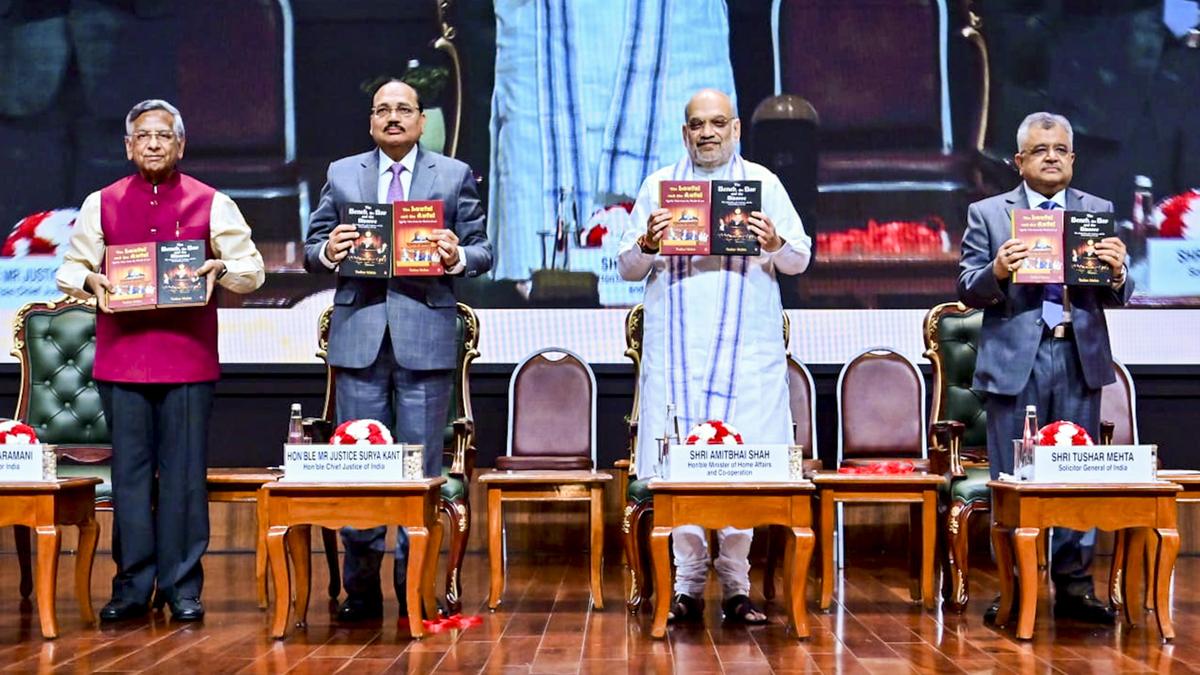
The launch of Tushar Mehta’s two books at Bharat Mandapam on Sunday was a controlled display of institutional intimacy: Chief Justice of India Surya Kant presided, Home Minister Amit Shah attended as chief guest, and judges, senior advocates and law officers filled the room, according to  The Hindu and
  LiveLaw. The titles — The Bench, the Bar and the Bizarre and The Lawful and the Awful — are built around courtroom anecdotes, and Surya Kant said they include everything from dress-code disasters to AI hallucinations in judgments and pleadings, plus drunk-and-disorderly conduct (The Hindu).
Why it matters
This is not just legal miscellany. Mehta is the Union government’s top courtroom face, so a humour volume is also a political product: it lets him present the judiciary as self-aware, human and slightly absurd without touching live disputes. That matters in  India, where the line between institutional criticism and disrespect is often contested, and where courtroom culture still carries heavy ceremony. By choosing the comic register, Mehta lowers the temperature while keeping the hierarchy intact. The message from the dais was clear: the bench can laugh at itself, but it still sets the terms of the joke (The Hindu; LiveLaw).
The launch also fits the government’s recent legal posture on speech. In March, The Hindu reported Mehta telling a Supreme Court bench that the IT rules were not meant to curb humour, satire or criticism, even as the Court pressed for balance in the fake-content case. The book event extends that argument into culture: humour is being framed not as defiance of authority, but as something authority can absorb and curate. That is useful for both the executive and the Court. It projects confidence, but it also softens the image of two institutions often seen as remote or combative.
What to watch next
The real test is whether this becomes more than a polished launch. Surya Kant’s tease — that Mehta should now write a third book on Indian courts — points to the next decision point: whether the legal establishment is willing to apply this self-mocking tone to its own system, not just foreign anecdotes (The Hindu). If Mehta does that, the stakes rise sharply, because Indian courtroom practice is now colliding with AI-generated filings, online satire and renewed fights over judicial decorum. If he does not, this stays what it looks like today: a high-status branding exercise in which the government and the Court briefly share a laugh, then return to business.