Turkey's Yıldırımhan Missile: Ambitious Reach
Turkey unveils long-range missile prototype at SAHA-2026.
Model Diplomat3 min readMiddle East
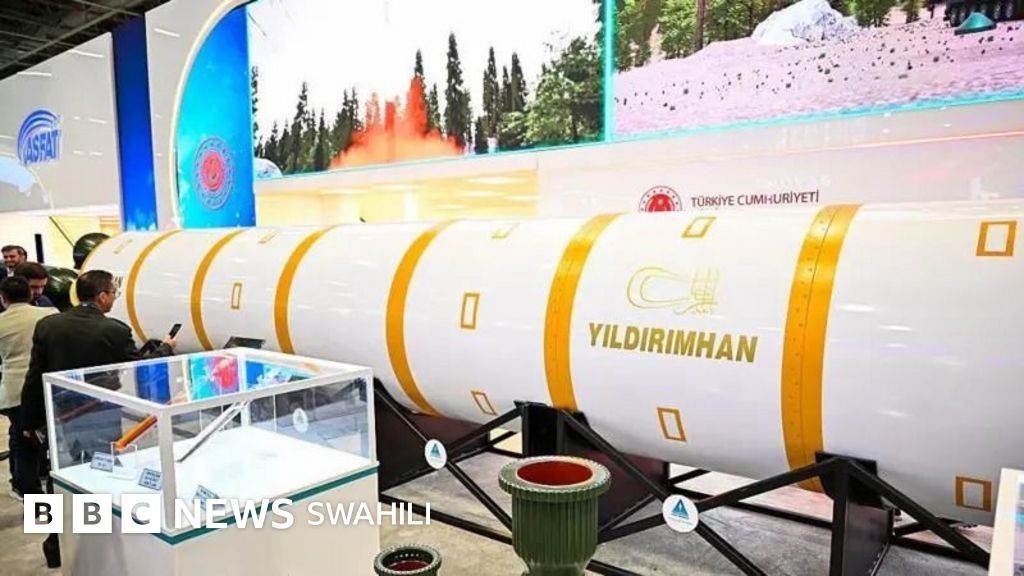
Turkey’s Yıldırımhan Missile Signals a Bigger Ambition
Turkey has unveiled Yıldırımhan, a claimed 6,000-km missile prototype. The move is less about deployment than about signaling reach, deterrence, and industrial maturity.
Turkey is using Yıldırımhan to announce that it wants to be counted among the states that can threaten far beyond their neighborhood. The Defense Ministry’s research and development center introduced the missile at the SAHA-2026 arms fair in Istanbul, and the ministry said it is Turkey’s first long-range missile and its longest-range system so far, with a displayed range of 6,000 km, according to BBC News Swahili.
What Turkey is really showing
The immediate power move is not a fielded weapon; it is a demonstration of ambition. Al Jazeera reported that Yıldırımhan is still a prototype, not yet in production, and that no flight tests have been confirmed publicly. That matters because the strategic value here is political as much as technical: Ankara is telling allies and rivals that its domestic defense base can now claim a system in the intercontinental class, even if the operational gap remains open.
The Turkish defense ministry’s pitch is also about speed and fuel technology. BBC News Swahili said Minister Yaşar Güler described Yıldırımhan as the first weapon in Turkey’s arsenal to use rocket fuel and said it can fly at extraordinary speed.
BBC News Türkçe added technical claims displayed at the fair: four rocket motors, liquid nitrogen tetroxide fuel, and a speed advertised at Mach 25. That combination is designed to suggest penetration capability against modern air defenses, not just reach.
Why this matters beyond Istanbul
This is part of a broader pattern in Turkish defense policy: build at home, advertise early, and use the platform to broaden leverage. Turkey has already turned drones and short-range missiles into exportable tools of influence, and Al Jazeera noted that local production now exceeds 90 percent and defense exports hit $10 billion in 2025. Yıldırımhan is the next rung up that ladder. If Ankara can mature long-range strike systems, it reduces dependence on foreign suppliers and gains a stronger hand in NATO politics, especially with partners that want Turkish systems but not Turkish unpredictability.
The timing also tracks the regional missile environment. BBC News Swahili linked Turkey’s announcement to a wider era of long-range missile use by Russia and Iran, while
Al Jazeera reported that Turkish officials are framing the project as a response to a more hostile security environment. The point is not that Turkey is about to mirror Russia, the United States, or China. It is that Ankara wants the strategic status those arsenals confer. For readers tracking the broader implications, see
Conflict and
Turkey.
What to watch next
The key decision point is whether this becomes a test program or stays a prestige model. Al Jazeera said even a likely future test site in Somalia has not been built, which means the hard part is still ahead: propulsion, guidance, reentry, and command-and-control.
Watch for three things: a confirmed test date, evidence of production budgeting, and any foreign reaction from NATO capitals or regional rivals. If Turkey moves from mock-up to flight test, Yıldırımhan stops being messaging and becomes capability.
Discover more
Global Politics
Trump's Conflicting Messages on Iran War
Trump's mixed messages on Iran reflect a strategy of audience management, benefiting Tehran amid a complex geopolitical landscape.

International Relations
Pakistan's Key Role in US-Israel-Iran Meddle
Pakistan is seeking to mediate the US-Israel-Iran conflict, balancing high-stakes diplomacy against severe economic pressures and steep regional challenges.

Economics
Fed's Amex AML order puts correspondent banking on notice
Federal Reserve's Amex AML order requires board-level controls and a 90-day plan; OCC fined the bank $350 million over enterprise-wide deficiencies.
Conflict & Security
Guatemala: El Niño 2026–27 becomes regional security test
UNICEF: 25.8M children face El Niño risks in Latin America; Guatemala maps 188 municipalities for drought and food insecurity amid regional security test.