Turkey Jails Comedian, Detains 225 at NATO
NATO summit in Ankara faces democratic values test amid detentions.
Model Diplomat7 min readEurope
Turkey Jails Comedian, Detains 225 as NATO Summit Opens in Ankara
Turkey's 13-day protest ban and 225 pre-summit detentions have turned NATO's Ankara meeting into a stress test of the alliance's own democratic-values clause.
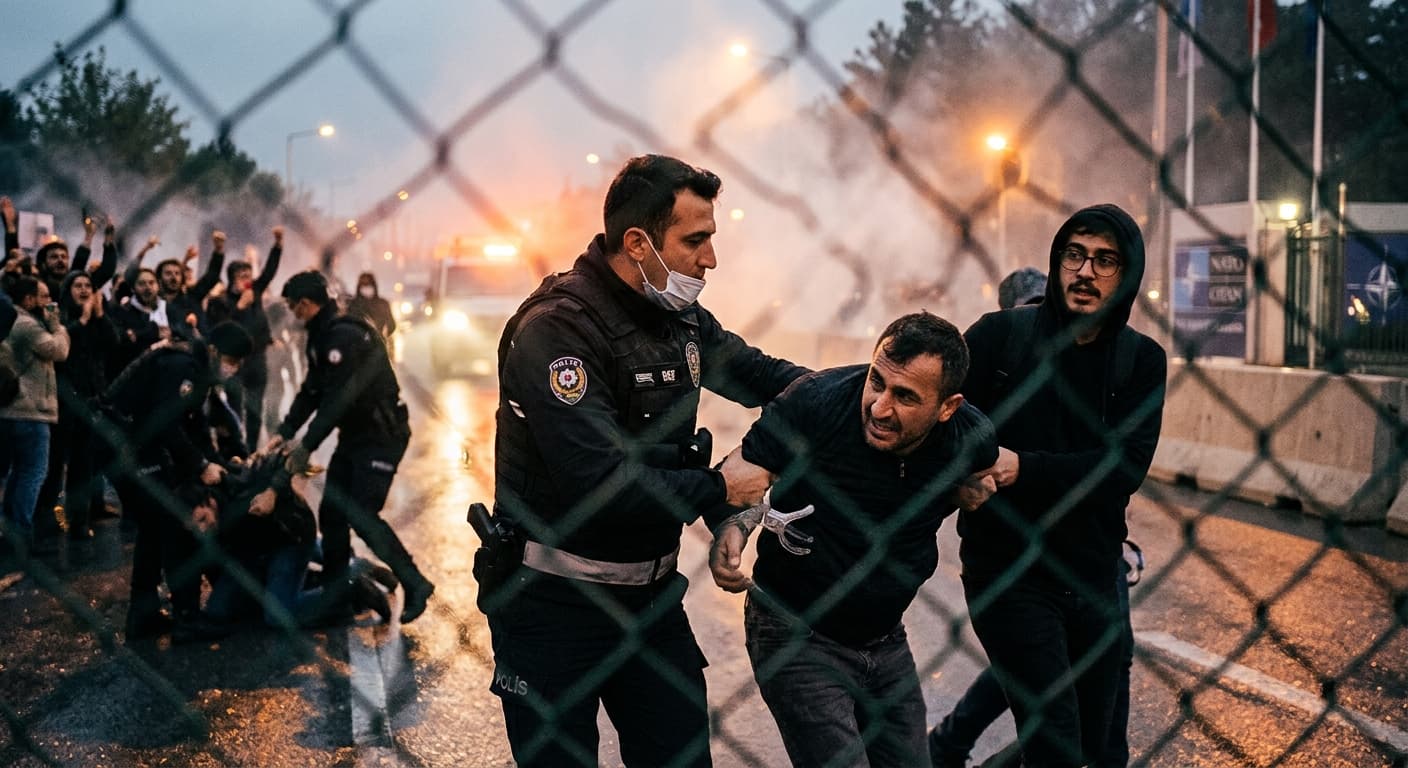
Turkey enters its first NATO summit in 22 years having jailed at least 103 people in pretrial detention, banned all public assemblies in Ankara for 13 days, and imprisoned a stand-up comedian over a YouTube routine — and the alliance has said almost nothing about any of it. The crackdown, which culminated on July 3, 2026 with the remand of comic Deniz Göktaş, is not incidental to the July 7–8 summit in the Beştepe Presidential Complex. It is what the summit is buying: President Recep Tayyip Erdoğan is using the moment of maximum Western dependence — on the largest army in NATO Europe, on the Montreux-controlled Bosphorus, on the Turkish drone industry — to consolidate a domestic crackdown that the alliance's own founding treaty commits members to prevent.
What actually happened, and on whose numbers
The load-bearing number is not the wire figure of "more than 200." It is the Ankara Chief Public Prosecutor's Office's own statement of June 25, 2026: 225 people detained in dawn raids on June 23, of whom 135 were referred to court with pretrial-detention requests, 103 were remanded, and 26 placed under house arrest, Amnesty International reported citing the prosecutor's release. Those detained included journalists, lawyers, academics, trade unionists, LGBT campaigners and — per the
BBC — volunteers from Turkey's largest environmental NGO, the Tema Foundation, most of them retirees returning from a nature trip.
The province-wide protest ban runs from 00:00 on June 28 to 23:59 on July 10, covering the entire summit window plus buffer days, Amnesty confirms from the June 22 Ankara Governorate notice. Communist Party of Turkey (TKP) rallies on July 5 in Ankara's Kızılay Square and in Istanbul went ahead anyway; police used tear gas and detained more than 100 protesters, according to
Saudi Gazette and other regional wires. The Amnesty statement is unequivocal:
"The blanket ban on all protests in Ankara must be lifted and everyone arbitrarily detained in prison or under house arrest in connection with the NATO summit must be released. This ban is an excessive and unjustifiable attack on the rights to freedom of peaceful assembly and expression." — Esther Major, Deputy Director for Research, Europe,
Amnesty International, June 28, 2026
The comedian as signal
Göktaş's case is the piece that made the crackdown international. He was detained on July 2 at Istanbul Airport on return from a pre-planned holiday, charged with "insulting the president" and "publicly inciting hatred and hostility," and remanded to Çorlu Prison on July 3, BBC Türkçe reported. The prosecution rests on his 90-minute show Ölü Deniz, uploaded free to YouTube on June 24 and viewed 10 million times in nine days — a set that discussed Erdoğan and the Quran. The
Financial Times noted the arrest fell in the same week that Erdoğan's chief rival, jailed Istanbul Mayor Ekrem İmamoğlu, was shuttled between corruption hearings.
The law being used, Article 299 of the Turkish penal code, punishes insulting the president with up to four years. A peer-reviewed study in Social & Legal Studies documents its transformation under Erdoğan: 26,115 investigations were opened under Article 299 in 2018 alone, against 20 in 2006 under President Ahmet Necdet Sezer. The article existed for nearly a century before it became a working instrument of routine political control.
What NATO's own text requires — and what it is doing instead
The North Atlantic Treaty's preamble and Article 2 bind parties to "the principles of democracy, individual liberty and the rule of law" and to "strengthening their free institutions." NATO's own
2022 Strategic Concept repeats the commitment in paragraph 2: allies are "bound together by common values: individual liberty, human rights, democracy and the rule of law." Neither text contains an enforcement mechanism. That gap is the leverage Erdoğan is using.
The most concrete alliance-level concession is media access. NATO denied summit accreditation to several independent Turkish outlets. Asked about it, NATO said it "relied on the host nation to ensure access" but was "in contact with Turkish authorities," per the BBC — a de facto delegation of media freedom to the state accused of restricting it. Amnesty called the exclusion "a blow to media freedom" and asked NATO to reverse course.
The Kavala precedent nobody wants to name
The alliance's silence has a Strasbourg-shaped precedent. In February 2022, the Council of Europe's Committee of Ministers took the exceptional step of triggering Article 46(4) infringement proceedings against Turkey — only the second such case in the body's history — for defying the European Court of Human Rights' 2019 order to release philanthropist Osman Kavala, according to Human Rights Watch. The Grand Chamber ruled again in July 2022 that Turkey had violated Article 46(1) by failing to implement the judgment. Kavala's aggravated life sentence was upheld in September 2023 and, per a
joint Rule 9.2 submission by HRW and the Turkey Human Rights Litigation Support Project, remains unimplemented as of the Committee's December 2024 decision.
The pattern matters because it establishes what Turkey has already learned: binding rulings from Europe's premier human-rights court can be ignored with no material cost. NATO, which has no equivalent court, is being asked to enforce the same values with weaker instruments and stronger dependencies.
Who wins from the summit — and who loses
The Council on Foreign Relations' Henri Barkey, in a July 2, 2026 analysis, frames the trade explicitly: Erdoğan is using the summit to "legitimize his worldview and undemocratic rule" while collecting two prizes from the Trump administration — congressional notification of a sale of roughly 80 F-110 aircraft engines for Turkey's indigenous KAAN fighter, and an active review of whether Ankara can be readmitted to the F-35 programme it was ejected from in 2019 for buying Russia's S-400 system.
Human Rights Watch's Europe director Hugh Williamson framed the domestic side sharply: the removal of CHP chair Özgür Özel by an Ankara regional court on May 21, 2026, combined with İmamoğlu's continued detention, "constitute the kind of government-led encroachment on Turkey's democracy reminiscent of the era of military coups." Turkey's
Freedom House 2026 country report rates the country "Not Free."
The concrete beneficiaries are identifiable. Erdoğan gains international validation ahead of a possible early-election bid. Turkey's defence primes — Baykar, TAI, Aselsan — gain a pathway back into the F-35 supply chain worth billions. NATO gains Turkish drone production capacity and unimpeded Black Sea access under the Montreux Convention. The concrete losers: İmamoğlu, jailed since March 2025; Kavala, detained since October 2017; the CHP's elected leadership; the 103 people remanded on June 23; Göktaş; and the principle, in Article 2, that NATO membership implies domestic obligations.
What to watch
- July 8, 2026: The Ankara summit communiqué. Any reference to Article 2, human rights or rule of law inside a paragraph naming Turkey would be a first. The base case, per HRW and CFR analysts, is a communiqué that mentions values in the abstract and Turkey only in the context of defence spending and Black Sea security.
- July 10, 2026: Expiry of the Ankara Governorate's blanket protest ban. Whether opposition parties, the Turkish Bar Association and student federations attempt mass rallies immediately afterward will test how far the pre-summit deterrent extends past the news cycle.
- İmamoğlu trial calendar: The Istanbul Mayor is defending against corruption charges carrying potential prison terms measured in hundreds of years, per
HRW. Any verdict or new indictment before Turkey's next presidential election window would effectively resolve his political future by decree.
- Congressional response to the F-110 engine notification and any F-35 waiver: Both require U.S. legislative acquiescence. Bipartisan resistance under the National Defense Authorization Act, which bars F-35 sales while the S-400 remains on Turkish soil, is the most concrete external constraint on the summit's rewards to Ankara.
- Council of Europe Committee of Ministers, next Kavala review: The Committee has already triggered its most extreme available procedure and been ignored. The next decision cycle will indicate whether Strasbourg has any further tools — or has quietly conceded.
The Bottom Line
The bottom line: Turkey's mass detentions, protest ban and jailing of a comedian in the week before the NATO summit are not a security precaution — they are a demonstration of what the alliance is willing to overlook to keep its second-largest army onside. NATO's Article 2 obliges members to strengthen "free institutions"; on the evidence of the accreditation dispute and the summit agenda, the alliance has quietly conceded that this obligation is unenforceable against a member that controls the Bosphorus and produces the drones. The precedent that survives Ankara will not be about defence spending. It will be that a NATO summit can be hosted by a government during an active crackdown, and the crackdown will not be on the agenda.
Discover more
Global Politics
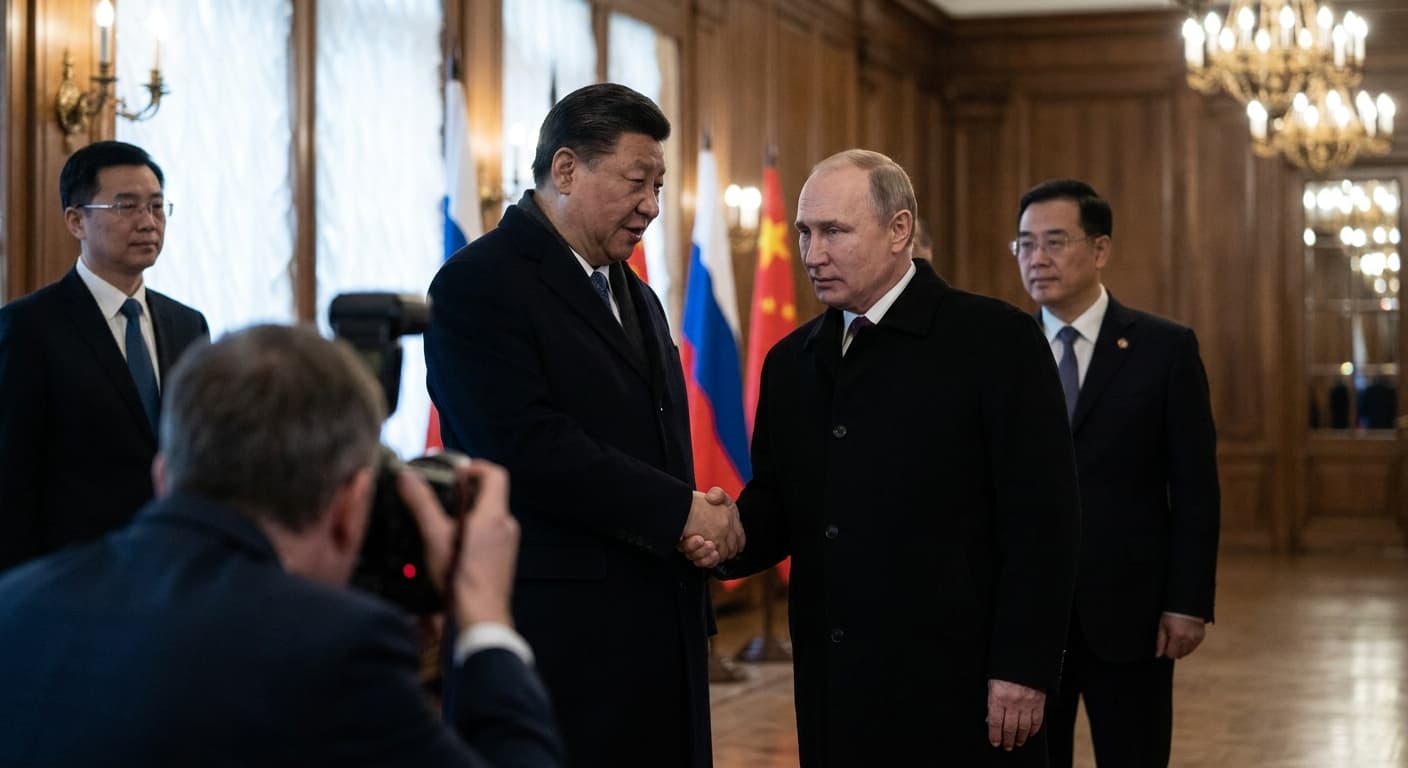
Xi Jinping Calls China-Russia Ties 'Precious'
Xi Jinping's description of China-Russia ties as 'precious' reflects a strategic imbalance, with Beijing dictating terms in the partnership.
India
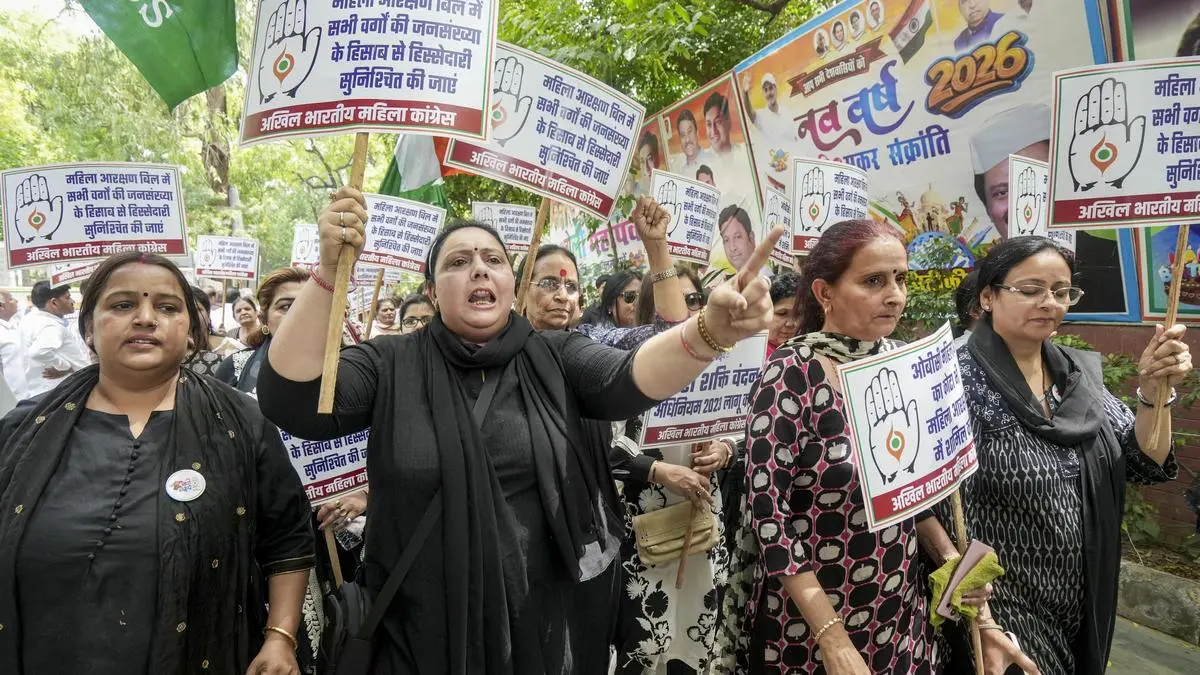
BJP's Misunderstanding of Women's Quota Needs
The BJP's linking of the Women Reservation Bill to delimitation risks delaying women's empowerment in India, misreading the aspirations of female voters.
US Politics
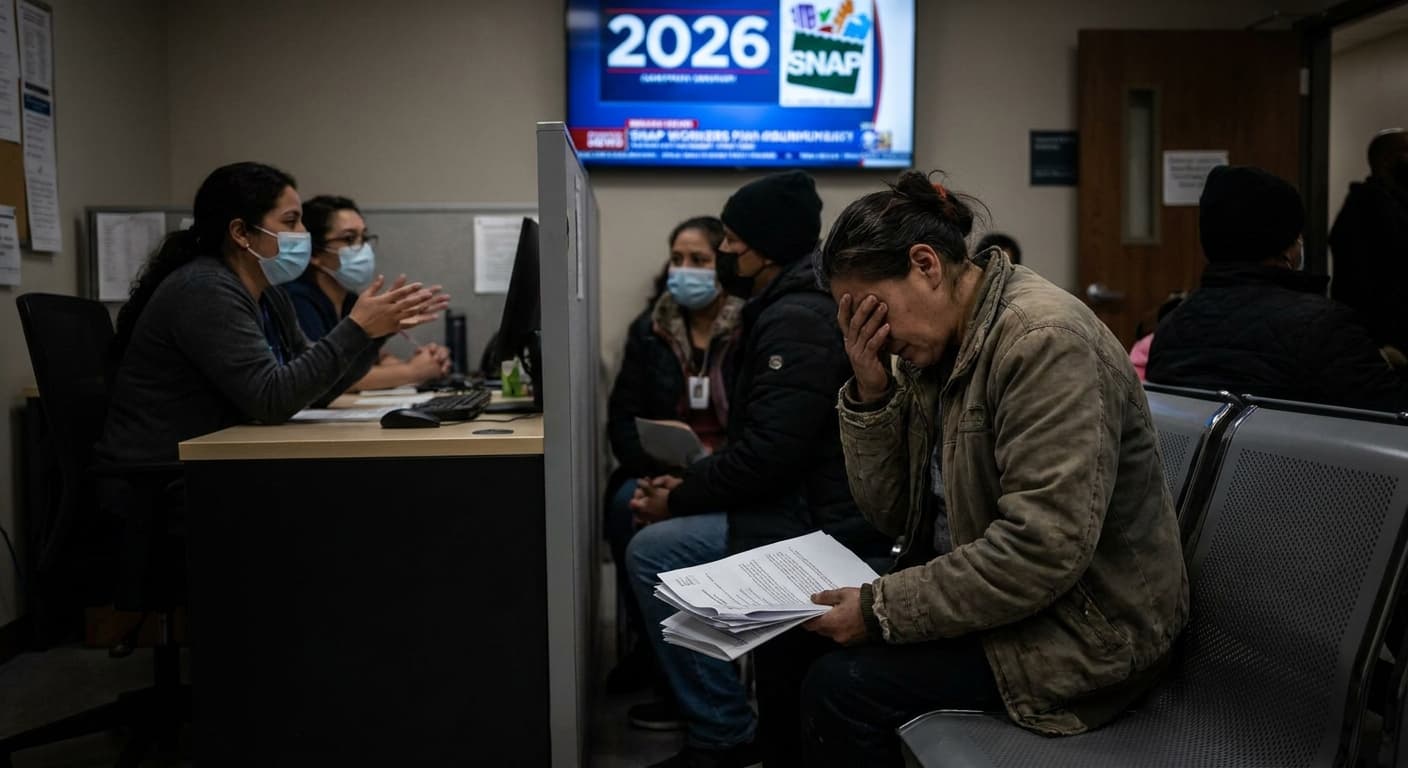
SNAP Food Assistance Faces Legal Challenges
In 2026, SNAP faces stricter eligibility rules and mounting legal challenges, threatening food assistance for the millions of Americans who rely on the program.
Global
Zimbabwe's 2030 Gambit: Mnangagwa's Rule
Zimbabwe's Constitutional Amendment No. 3 ends direct presidential elections, extending Mnangagwa's rule to 2030 and raising concerns over democratic integrity.