Trump's Victory Declaration
US intelligence assesses Iran's potential reactions to Trump's moves.
Model Diplomat3 min readMiddle East

Intelligence Scrambles as Trump Eyes a "Victory" Over Iran
US spy agencies are war-gaming Tehran's responses to a Trump declaration of victory — revealing the gap between political optics and strategic reality.
On April 28, Reuters reported that senior White House officials have tasked US intelligence agencies with assessing how Iran would respond if Trump formally declared victory in the ongoing US-Iran conflict. The request didn't emerge from a battlefield breakthrough — it emerged from political pressure, with the war's unpopularity threatening midterm calculations.
The Intelligence Gap Trump Is Trying to Close
The assessment's findings cut two ways. A victory declaration paired with a meaningful US troop withdrawal could be received in Tehran as a genuine off-ramp — something the regime could sell domestically. But a declaration issued while heavy US military pressure remains in place — including the naval blockade of Iranian ports announced after Islamabad talks collapsed on April 11 — would likely be read by Iran as a negotiating tactic, not a war-ending signal.
The agencies warn that even a de-escalation scenario carries a long-term cost: Iran could quietly rebuild its nuclear and missile programs over time, and regional proxies could re-emerge under reduced pressure. The short-term political win would purchase a medium-term proliferation problem.
This is the core tension. Trump wants an announcement. His intelligence community is telling him the announcement's value depends entirely on what accompanies it.
The Negotiating Landscape Is Broken
The backdrop makes this harder. On April 28, a separate Reuters report confirmed Trump is unhappy with Iran's latest proposal, which would defer all nuclear discussions until after the war ends — a sequencing Washington flatly rejects. Trump stated publicly that Iran told him it is in "a state of collapse" and needs time to reconstitute its leadership, an extraordinary admission if accurate. The IRGC's influence has grown following leadership losses, hardening Tehran's internal negotiating posture even as its external leverage weakens.
Iran closed the Strait of Hormuz to Gulf shipping at the war's outset — roughly 20% of global oil and LNG flows — then offered a partial Hormuz proposal through the Omani corridor on April 15. The US rejected it as insufficient. 39 ships have been redirected since the US blockade began. Oil sits near $95/barrel.
Pakistan's mediation effort — the only active diplomatic channel — is effectively in suspension after Iran refused to join a new Islamabad round on April 20, citing US ceasefire violations.
Who Holds Leverage, Who Loses
Trump holds short-term military and economic leverage but faces a political clock. A declared victory without a nuclear concession hands his critics — and Iran — a ready-made narrative that the war achieved nothing durable. Iran's IRGC benefits from prolonged ambiguity; every week without a deal is a week the regime regroups. Global energy markets and Gulf exporters — particularly Saudi Arabia and the UAE — are the clearest losers in any extended impasse, with Hormuz uncertainty repricing risk premiums across the board.
On International Relations, the structural issue is familiar: a US president seeking an exit ramp from a costly conflict while an adversary delays on the issue — nuclear capability — that matters most to Washington.
What to Watch
The ceasefire's extension timeline is the immediate pressure point. If Pakistan cannot broker even a 60-day MoU, the military posture hardens again before any declaration becomes politically viable. Watch whether Steve Witkoff — Trump's envoy whose Islamabad trip was canceled — reschedules. A rescheduled visit signals the declaration is being prepared. No visit by mid-May signals the impasse deepens into summer, with midterm pressure growing and Iran's reconstruction window quietly opening.
Discover more
Global Politics
Trump's Conflicting Messages on Iran War
Trump's mixed messages on Iran reflect a strategy of audience management, benefiting Tehran amid a complex geopolitical landscape.

Global Politics
US Seizes Iranian Ship, Tensions Surge
The US seizure of the Iranian ship Touska highlights a shift in control over the Strait of Hormuz, favoring Iran's strategic position.

Conflict & Security
Drone Warfare Killing Aid Workers at Unprec
Over 1,000 humanitarian workers killed in three years as cheap armed drones collapse legal protections. Gaza, Sudan, Ukraine, and DRC see deliberate targeting of aid convoys and hospitals with zero prosecutions.
Global
World Normalises Taliban as Afghan Women Eras
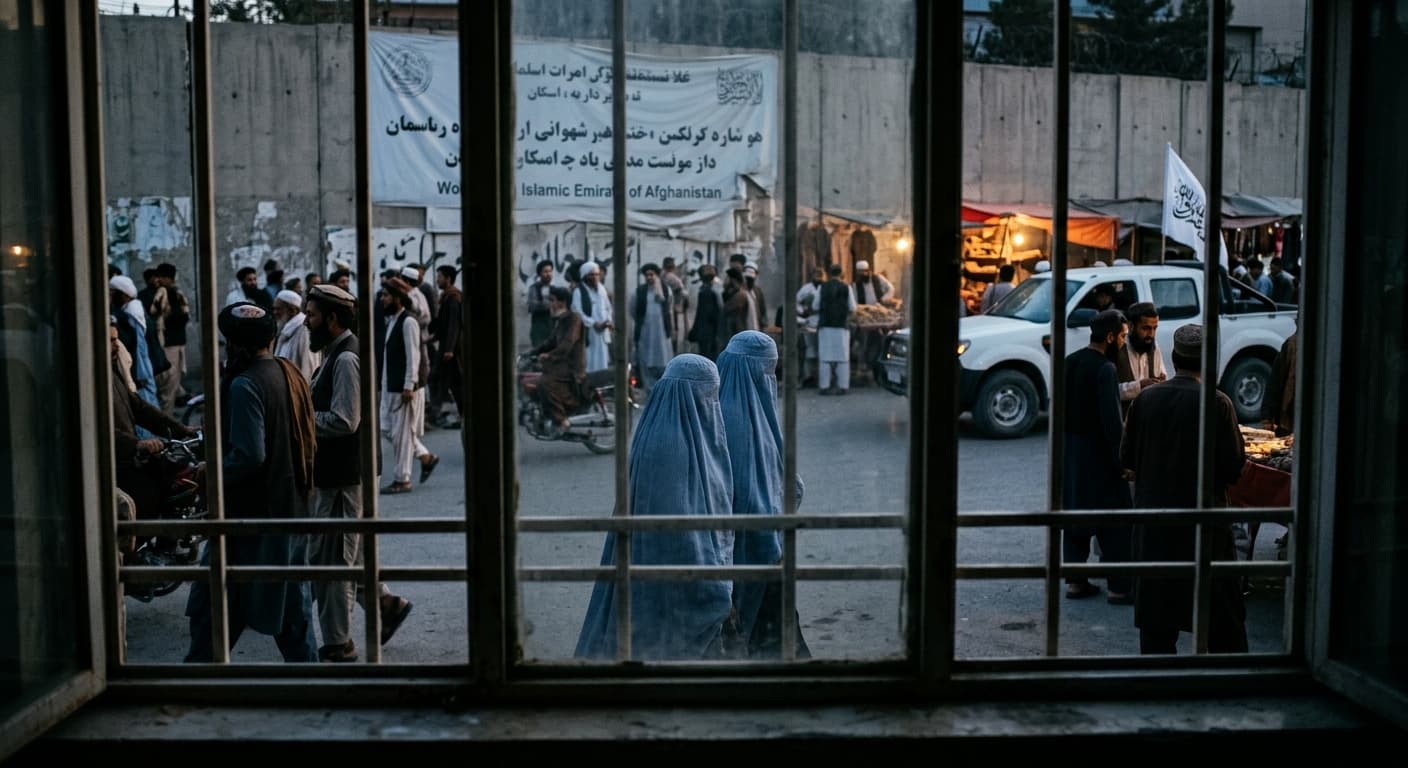
UN data shows Afghan women erased from public life as Russia recognises the Taliban, EU hosts officials in Brussels, and ICC warrants for gender persecution go unenforced.