Iran's Hormuz Crisis
Exploring how the Hormuz conflict influences clean energy discussions
Model Diplomat3 min readMiddle East

Iran's War Dividend: How Hormuz Is Rewriting the Fossil Fuel Exit Debate
With Brent crude above $107 and the Strait of Hormuz near standstill, two simultaneous diplomatic gatherings are asking whether crisis accelerates the clean energy shift.
The same conflict that sent oil prices above $107 per barrel and reduced Hormuz tanker traffic to fewer than 10 vessels a day — against a normal flow of roughly 140 — is now injecting unexpected urgency into two parallel forums: a fossil fuel phaseout summit in Santa Marta, Colombia (April 24–29), and the International Maritime Organization's (IMO) decarbonisation negotiations in London. The question both rooms are asking is the same: does a shooting war in the Gulf accelerate the energy transition, or simply expose how dependent the world remains on the routes it's trying to exit?
The Hormuz Shock Is Real — and Structural
Iran's IRGC has seized at least two foreign-flagged vessels — the MSC Francesca and Epaminondas — and issued navigation warnings forcing ships through Iranian-controlled waters near Larak Island, effectively weaponising the strait that carries roughly 20% of global oil and gas supply. Al Jazeera reports that stalled US–Iran peace talks — with Tehran's Foreign Minister Araghchi pivoting to Moscow — have removed any near-term relief valve. The price signal is unambiguous: energy security built on Hormuz transit is structurally fragile.
This is precisely the leverage that climate advocates are trying to monetise diplomatically. Colombia's Environment Minister Irene Vélez Torres told AP News the Middle East crisis "should spur the energy transition," framing the Santa Marta summit not as a binding negotiation but as a political pressure campaign for phaseout timelines. President Gustavo Petro's government has already lifted Colombia's renewable share from roughly 1% to 16% of electricity — but Bogotá still depends heavily on oil and coal export revenues, which complicates its maximalist posture.
The IMO Fight: Carbon Price vs. Great Power Veto
At the IMO in London, the stakes are more concrete. The Net-Zero Framework (NZF) — the IMO's first proposed global carbon price for shipping — calls for a $150 per tonne CO₂ levy and could raise $10–12 billion annually for clean-energy transition funds. Vanuatu's representative Ralph Regenvanu has accused unnamed "powerful states" of tactically diluting the framework. The 2026 London session is the pivotal adoption window ahead of IMO's 2050 net-zero deadline — but with major shipping nations hedging, the NZF risks being watered down to irrelevance.
Who benefits from the status quo? Large flag states and petrostate exporters whose revenue models depend on cheap, unpriced maritime fossil fuel transit. Who loses from delay? Pacific Island nations, whose economic survival depends on binding global decarbonisation, and European ports racing to build green-fuel infrastructure before competitors do.
The Hormuz disruption cuts both ways at the IMO table: it strengthens the energy-security argument for green shipping fuels, but it also gives fossil-fuel incumbents a crisis-management rationale for deferring structural reform.
What to Watch Next
The Santa Marta summit closes April 29 — watch whether its communiqué explicitly links the Hormuz crisis to phaseout urgency, which would give negotiators in London political cover to hold the $150/tonne levy line. The more critical date is the IMO Marine Environment Protection Committee vote, expected before mid-year, on whether the NZF advances in full or is gutted by amendment. If US–Iran talks remain stalled through May, Brent above $100 becomes the backdrop for that vote — and historically, high prices are as likely to entrench fossil-fuel incumbents as to dislodge them.
Track the International Relations dimension here closely: this is no longer just a climate negotiation. It's a geopolitical auction over who controls the terms of the energy transition — and the Strait of Hormuz has just raised the bidding.
Discover more

Global Politics
US Seizes Iranian Ship, Tensions Surge
The US seizure of the Iranian ship Touska highlights a shift in control over the Strait of Hormuz, favoring Iran's strategic position.

Economics
Fed's Amex AML order puts correspondent banking on notice
Federal Reserve's Amex AML order requires board-level controls and a 90-day plan; OCC fined the bank $350 million over enterprise-wide deficiencies.
Conflict & Security
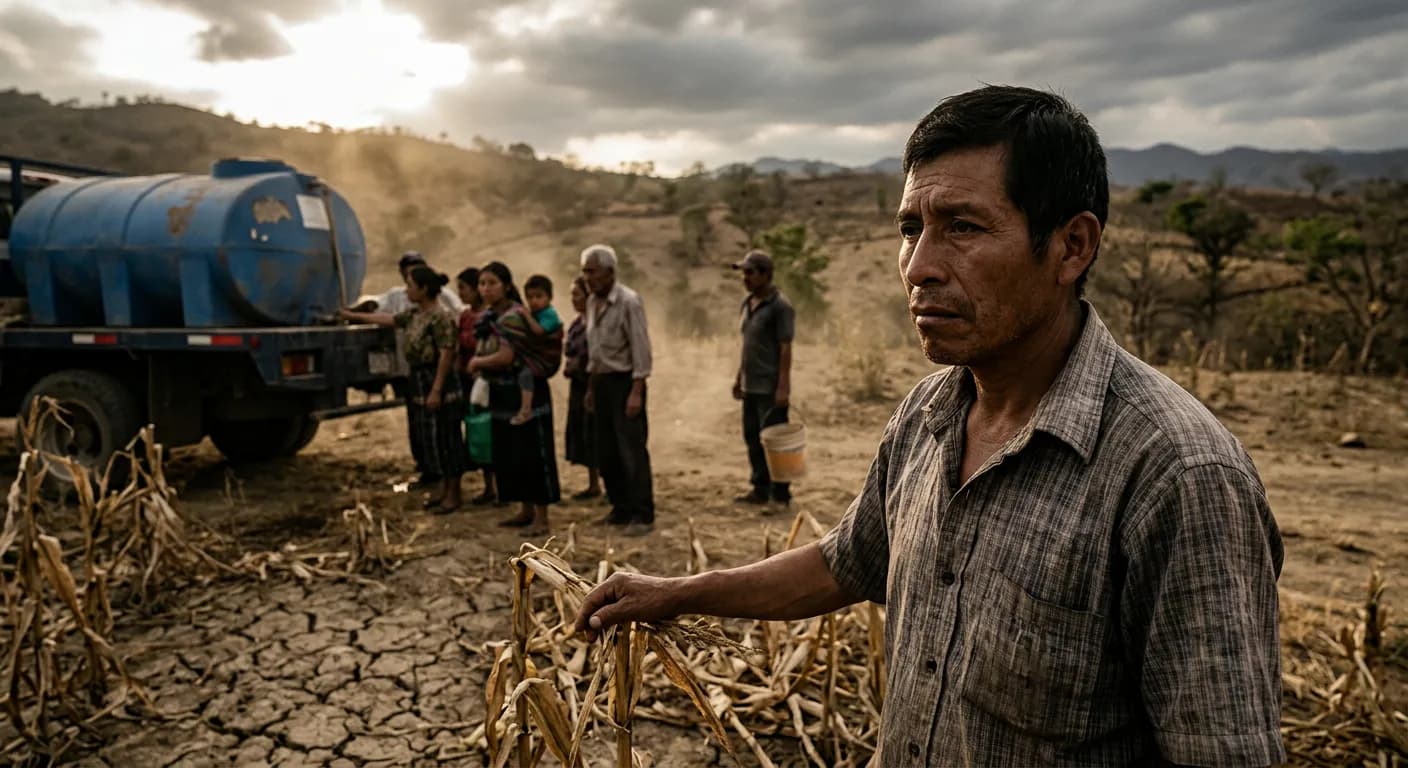
Guatemala: El Niño 2026–27 becomes regional security test
UNICEF: 25.8M children face El Niño risks in Latin America; Guatemala maps 188 municipalities for drought and food insecurity amid regional security test.

Economics
Fed's stress-test overhaul is a capital-smoothing exercise
Federal Reserve finalized stress-test overhaul: two-year averaging for bank capital buffers and public input, expected to halve volatility.