Trump's Troop Withdrawal
Analyzing the implications of 5,000 U.S. troops leaving Germany
Model Diplomat3 min readEurope
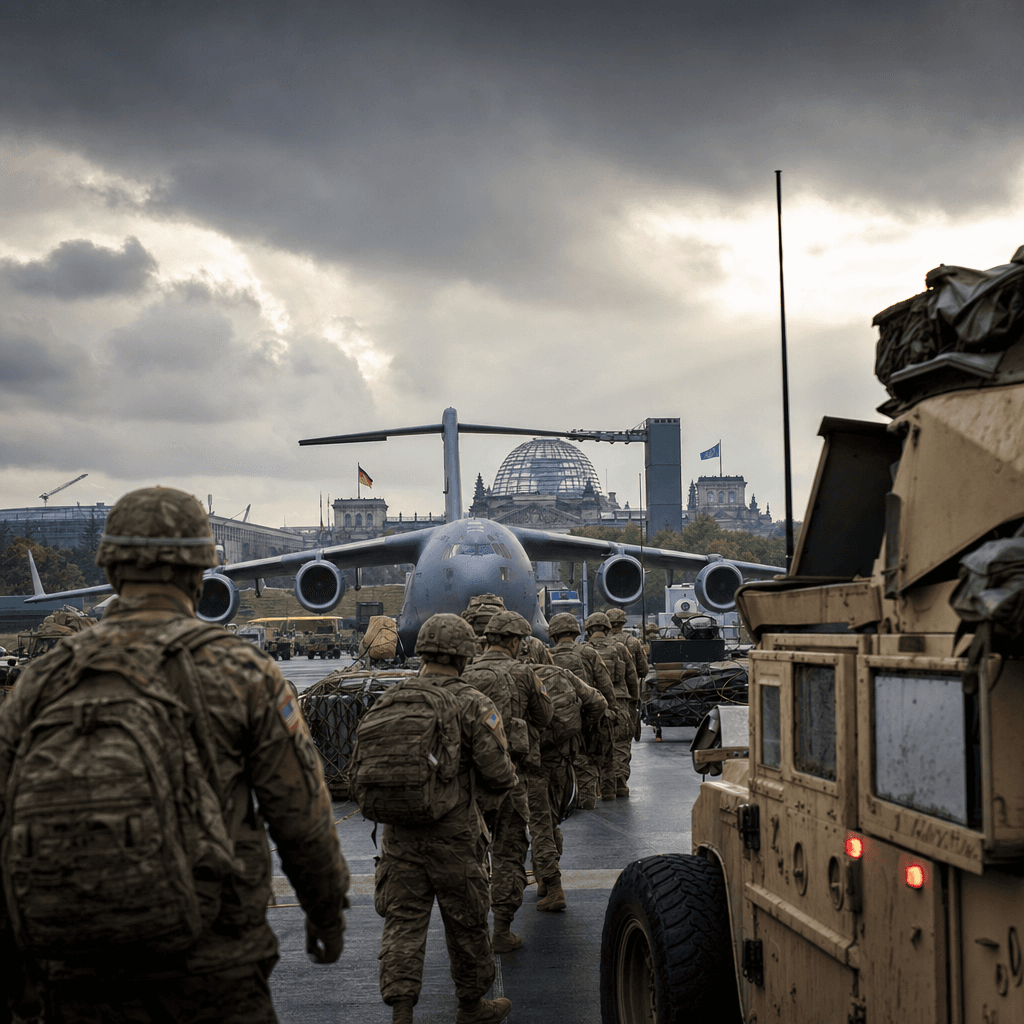
Trump’s 5,000-Troop Cut Targets Germany’s NATO Role
Washington is using troop basing as leverage on Berlin and NATO. The cut is limited militarily, but it weakens Germany’s hub status and alliance trust.
Washington holds the leverage because Germany is still the main U.S. military platform in Europe. President Donald Trump’s decision to withdraw 5,000 troops from Germany over the next 6–12 months turns that leverage into pressure on Berlin after his clash with Chancellor Friedrich Merz. The cut equals roughly 14% of the U.S. force in Germany, where about 36,000 American troops are based. Germany also hosts Ramstein Air Base, Landstuhl Regional Medical Center, and major U.S. command infrastructure for Europe and Africa. That makes this less about manpower than about who sets terms inside the alliance. US to withdraw 5,000 troops from Germany in next 6-12 months | AP News
Why this matters
The White House is not abandoning Europe; it is repricing the U.S. security guarantee. Reuters reporting says Pentagon officials are framing the drawdown as a return toward pre-2022 troop levels in Europe and part of a broader push for Europeans to carry more of their own defense burden. That gives Trump a strategic argument for what is also a political signal: access to U.S. military presence is no longer treated as automatic, even for a central ally. U.S. withdrawing 5,000 troops from Germany, Pentagon announces | CBC News
Germany loses most immediately. Its value inside NATO rests partly on being the indispensable host nation for U.S. logistics, command, and medical infrastructure. A visible reduction chips away at that status. Trump benefits politically because he can show his domestic base that he is forcing allies to absorb more costs while punishing a government he sees as publicly defiant. The issue sits squarely at the intersection of US Politics and
International power bargaining.
There is also a clear historical parallel. In 2020, Trump sought to pull about 12,000 troops from Germany, but Congress pushed back in the 2021 National Defense Authorization Act, effectively requiring force levels in Germany to stay at or above 34,500 absent a formal review. The difference this time is that the package is smaller and already has a Pentagon implementation window. This is no longer just a threat. U.S. Congress defense bill defies Trump on Germany withdrawal, base names | Reuters
What to watch next
The key question is which troops move. If the Pentagon pulls support, headquarters, or medical enablers tied to Germany’s basing network, the strategic effect will be larger than the headline number. If forces are repositioned elsewhere in Europe rather than sent home, eastern allies could gain at Germany’s expense. If they return to the United States, NATO’s overall readiness and responsiveness take the hit. US to withdraw 5,000 troops from Germany in next 6-12 months | AP News
The next decision point is the Pentagon’s unit-by-unit implementation plan in the coming weeks, followed by Congress’s defense bill later this year. That is where this move either hardens into a broader U.S. retrenchment from Germany—or is fenced in, as it was in 2020.
Discover more
Global Politics
Trump's Conflicting Messages on Iran War
Trump's mixed messages on Iran reflect a strategy of audience management, benefiting Tehran amid a complex geopolitical landscape.

International Relations
Pakistan's Key Role in US-Israel-Iran Meddle
Pakistan is seeking to mediate the US-Israel-Iran conflict, balancing high-stakes diplomacy against severe economic pressures and steep regional challenges.

Conflict & Security
Drone Warfare Killing Aid Workers at Unprec
Over 1,000 humanitarian workers killed in three years as cheap armed drones collapse legal protections. Gaza, Sudan, Ukraine, and DRC see deliberate targeting of aid convoys and hospitals with zero prosecutions.

Global
World Normalises Taliban as Afghan Women Eras
UN data shows Afghan women erased from public life as Russia recognises the Taliban, EU hosts officials in Brussels, and ICC warrants for gender persecution go unenforced.