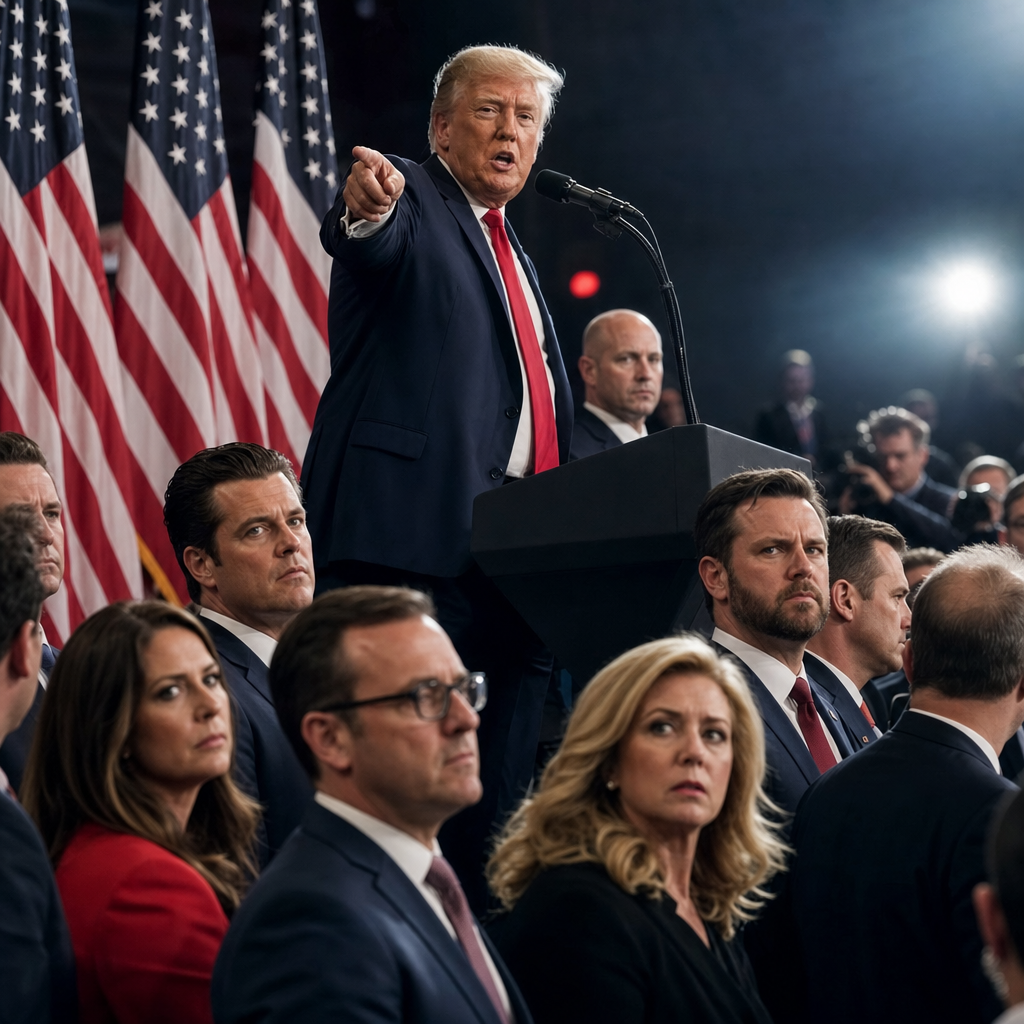
Trump’s Revenge Tour Is Spilling Into the 2028 Cycle
Trump is using primary power to enforce loyalty now, but the bigger effect is strategic: GOP lawmakers may start retiring or self-censoring before 2028.
Donald Trump is no longer just settling old scores inside the Republican Party; he is teaching the next class of candidates what obedience costs.  Politico reports that Trump’s “revenge tour” may run past the 2026 midterms and into the 2028 cycle, even as he keeps his attention on this year’s races. The leverage is simple: Trump still dominates the GOP primary electorate, so he can decide which Republicans survive and which get forced into expensive, humiliating fights.
The primary is the weapon
The clearest proof came in Kentucky, where Trump-backed challenger Ed Gallrein beat Rep. Thomas Massie, one of Trump’s most persistent critics, in what  The Washington Post said was the most expensive U.S. House primary on record. That race was not just about Massie; it was a warning shot to every Republican who thinks committee seniority or donor support can protect them from the president.
Texas shows why this matters beyond one seat. Politico says Trump’s late endorsement of Ken Paxton over Sen. John Cornyn has alienated even some Republicans in Washington, because it puts a deeply controversial ally ahead of a veteran incumbent many donors and senators see as safer for the general election.  The New York Times described the reaction in the Senate as “pretty sour,” because Trump is using his power to punish disloyalty rather than strengthen the party for November.
That is the point. Trump does not need to win every race to be effective. He only needs enough wins to make retirement look rational.
Why 2028 could be worse
The next phase is more dangerous for the party because it moves from midterm discipline to long-term succession politics. Politico says Republicans are already watching possible 2028 fights involving Sens. Lisa Murkowski and Todd Young, while Rand Paul could also become a target. That creates a structural problem for the GOP: the president’s loyalty test can outlive his current term and force senators to campaign against a hostile White House while still needing it for base turnout.
This is where Trump’s power turns from tactical to institutional. If lawmakers believe a Trump-backed primary challenge is more threatening than a general election, they will either retire early or move closer to his line. Politico quotes Sen. Thom Tillis saying some colleagues may choose to step aside rather than risk a Trump-fueled challenge, and he added that Trump may matter less in 2028 if Republicans lose one or both chambers in 2026. That is the real off-ramp: not policy disagreement, but declining political utility.
For readers tracking  US Politics, the key shift is that Trump is no longer using endorsements only to shape the next election. He is using them to shape who is still willing to run.
What to watch next
The immediate test is whether Trump keeps spending his capital on 2026 primaries or starts pre-positioning 2028 challengers after November. Watch Texas first, where Paxton’s result will tell Republicans whether the president’s muscle still trumps donor resistance. Then watch post-midterm retirements: if senior Republicans start leaving before 2028, Trump’s revenge tour will have done more than settle scores — it will have reordered the party’s future bench.