Shah’s Anti-Drone Push in Rajasthan Border
Delhi tests new security model with drone systems.
Model Diplomat3 min readAsia
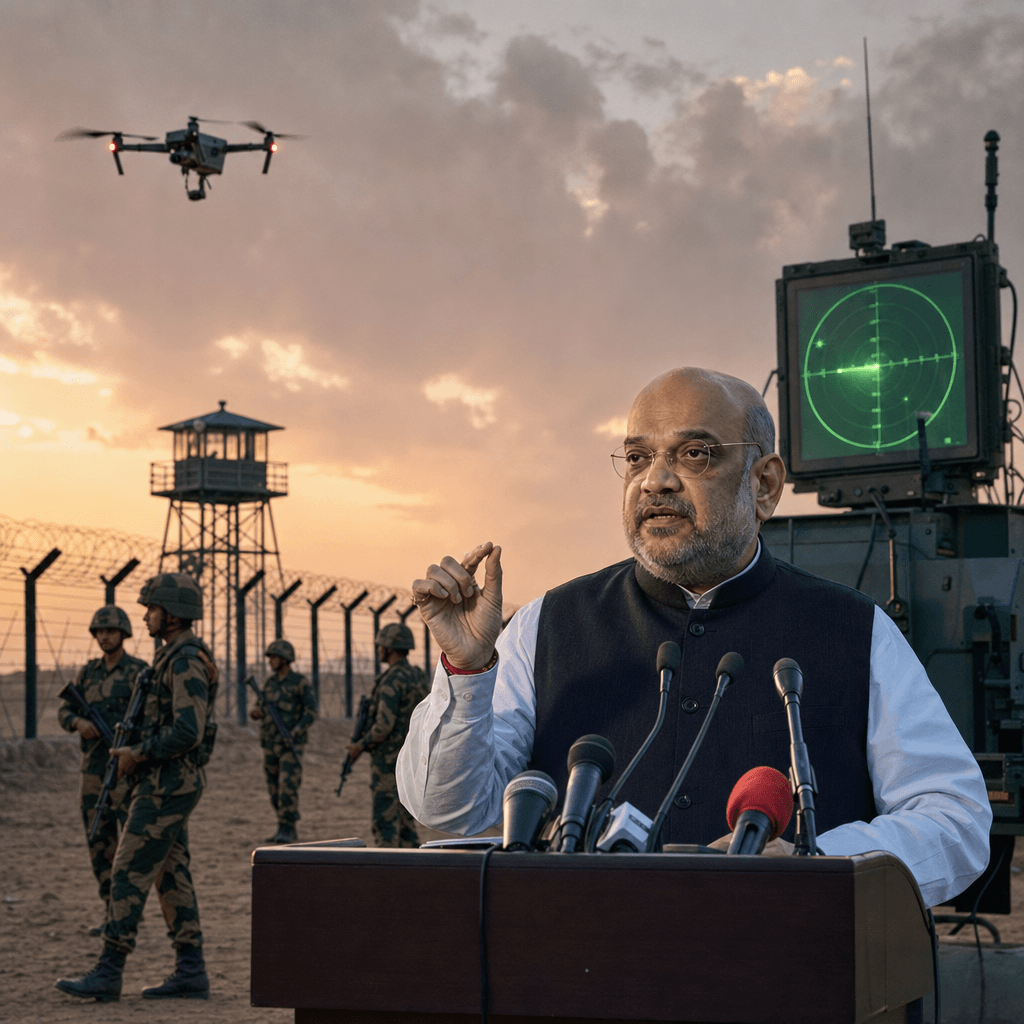
Shah’s Anti-Drone Push Turns Rajasthan Border into Test Case
Delhi is using the Bikaner border to test a new security model: drone interception, wider BSF jurisdiction, and tighter civilian oversight.
Union home minister Amit Shah said on Tuesday that anti-drone systems will be deployed along India’s international border within six months, while speaking near the border in Bikaner, Rajasthan, and linking the move to the Border Security Force’s expanding role in the 50-kilometre border belt (The Indian Express). The announcement is not just about equipment. It is Delhi signaling that the next phase of border control will be tech-enabled, centrally directed, and much more intrusive in the civilian space behind the fence.
A security upgrade with a political edge
Shah’s language matters as much as the timeline. He told BSF personnel to stay alert not only to smuggling, infiltration and drone drops, but also to illegal construction and “artificial demographic change” inside villages in the expanded 50-kilometre zone, according to The Indian Express (The Indian Express). That broadens the BSF’s mission from border guarding to a force that feeds intelligence into civil administration and state government.
That is a power shift. The Centre is effectively asking the BSF to become a forward sensor for internal control, not just a perimeter force. For Rajasthan’s border districts — especially Bikaner and Sri Ganganagar — the practical effect will be more scrutiny over settlement patterns, construction activity and movement close to the frontier. For the state government, it means more dependence on Delhi’s security architecture, even in matters that normally sit in the civilian domain.
Why drones have become the pressure point
The timing is driven by the changing threat profile on the western border. The Times of India reported earlier this week that Shah was expected to visit Rajasthan to review cross-border drone smuggling of narcotics and weapons, with officials in the five border districts already in preparatory meetings with BSF, police and intelligence agencies (Times of India). Hindustan Times separately reported that Shah would chair a high-level review on border security and anti-drone measures during his Bikaner visit (
Hindustan Times).
That matters because drones are cheaper, deniable and harder to police than traditional infiltration routes. They also let smugglers move drugs and weapons without relying on human couriers, reducing the risk of interception. If Delhi can build an effective counter-drone layer in Rajasthan, it will have a template for other vulnerable stretches of the Pakistan and Bangladesh frontiers. That puts the BSF, the Home Ministry and technology vendors in a strong position — and it sidelines the old assumption that fencing and patrols are enough.
What to watch next
The key test is whether this becomes a procurement announcement or an operational system. Shah’s six-month deadline runs to late November 2026. By then, watch for three decisions: where the first systems are installed, whether they are paired with radar and surveillance networks, and how much authority BSF officers get to trigger action once a drone lands. Also watch the Rajasthan government’s response. The Centre is asking for cooperation in a 50-kilometre security belt; the state may accept the security logic, but it will not want permanent central oversight over land-use and local administration.
For now, the power dynamic is clear: Delhi is setting the terms. The border is becoming a laboratory for smarter surveillance — and for a more assertive Centre.
Discover more
India
Rajnath Singh's Durga Squad for 2026 Polls
Rajnath Singh's Durga Squad promised women's safety in Bengal but has since disappeared from the agenda, revealing BJP's true priorities.
India
Modi's Women’s Convention in Varanasi
Modi's Varanasi rally frames women's reservation as a national mission, targeting the 2027 Uttar Pradesh elections with a strategic narrative.
India
BJP's Delimitation Strategy
Congress leader K.C. Venugopal claims the BJP uses women's reservation to advance delimitation, raising fears over electoral fairness ahead of the 2029 polls.

Economics
Fed's Amex AML order puts correspondent banking on notice
Federal Reserve's Amex AML order requires board-level controls and a 90-day plan; OCC fined the bank $350 million over enterprise-wide deficiencies.