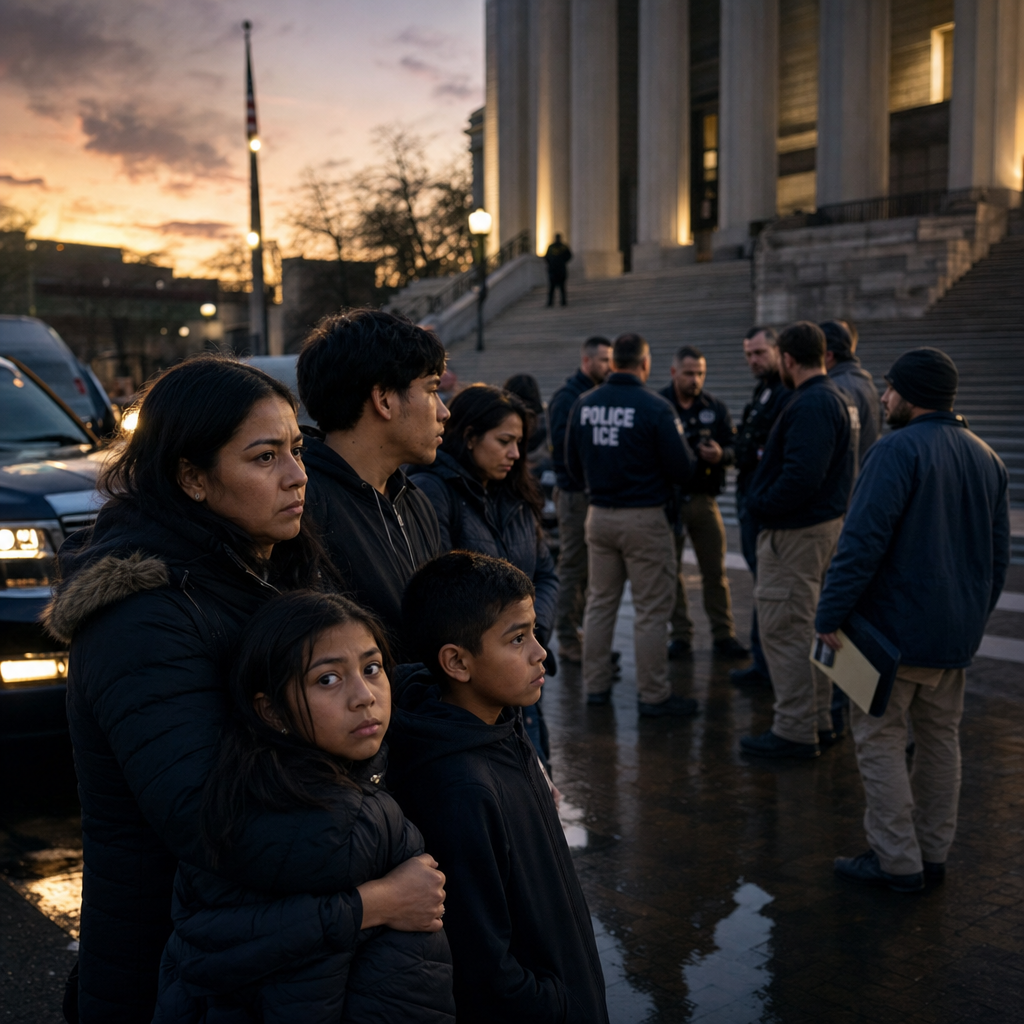
Trump’s Deportation Machine Went Quiet, Not Away Yet
After backlash, Trump is favoring quieter ICE tactics and self-deportation claims while still expanding the machinery behind mass removal.
Trump’s immigration team has changed the optics, not the policy: after the Minneapolis backlash to high-profile enforcement, the White House is retreating from flashy social-media raids and moving to a quieter, more targeted posture, even as arrests continue and the administration still claims the broader deportation campaign is on track ( CNN Politics). The key shift is political, not operational. The government is trying to keep the coercion while lowering the visibility.
Quiet enforcement is still enforcement
That matters because the Trump team has learned that mass-deportation politics are easiest to sell when they are invisible. On  United States, immigration has become a test of executive power, and the administration is now trying to exercise that power without the same front-page images that triggered protests earlier this year (CNN Politics). The substance remains hard-line: ICE is still arresting undocumented immigrants nationwide, including people without criminal records, even if the rollout is less theatrical (CNN Politics).
The AP’s reporting shows the scale of the machinery behind that quieter approach. ICE arrests have fallen in recent months, detention has dropped from about 72,000 in January to 58,000 this week, and yet the agency still says it plans to remove 1 million people this fiscal year and the next ( Associated Press). That combination tells you what the administration is optimizing for: less public blowback, more durable enforcement capacity.
The real target is wider than undocumented migrants
This is not just about removing people already in the country illegally. The administration is tightening the whole immigration system, including protections for people who are here legally but temporarily. CNN notes the White House has rescinded Temporary Protected Status, and AP says advocates expect more pressure on those temporary legal categories because they can be stripped without the spectacle of street raids (CNN Politics, Associated Press).
That broader squeeze also helps explain who is being removed. The Washington Post reported that most men deported under Trump’s second term do not have criminal convictions, and that a significant share had been in the U.S. for years before removal ( The Washington Post). The political message is clear: the system is not just hunting “criminals.” It is making everyday life harder for the undocumented and less secure for anyone whose status can be revisited.
What to watch next
The next test is whether the administration can raise removals without restoring the spectacle it is trying to avoid. Watch ICE’s detention buildout, the expansion of 287(g) agreements with local police, and whether the White House leans harder into worksite enforcement and status revocations to hit its numbers (Associated Press, CNN Politics). If arrests stay subdued but detention and local cooperation keep rising, the administration will have found a way to keep the campaign alive while reducing the political cost.