Trump Targets Green Cards to Narrow Legal Immigration
The White House is moving from border enforcement to gatekeeping legal migration, forcing most green-card applicants to apply from abroad and testing how far executive power can go.
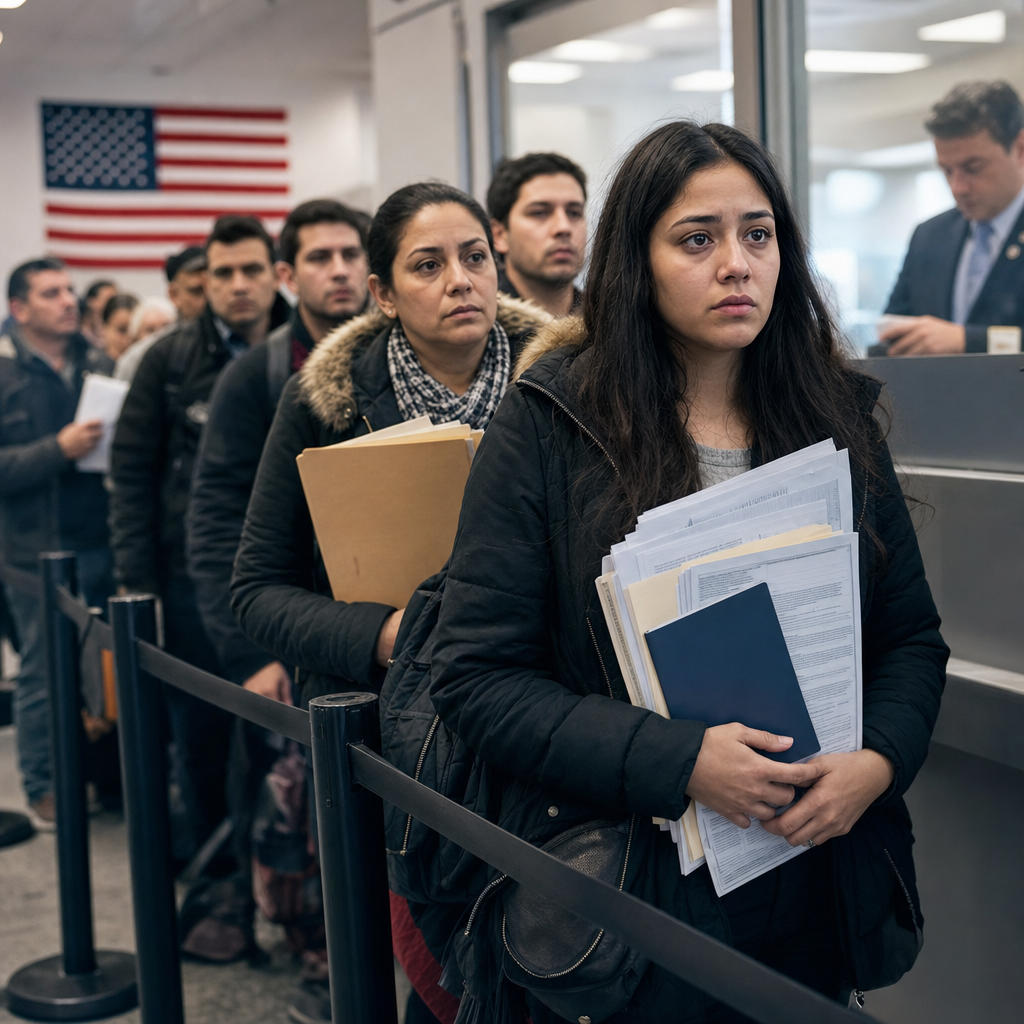
Trump is raising the cost of legal entry, not just illegal entry. The new rule from U.S. Citizenship and Immigration Services would require most immigrants already in the United States on temporary visas to leave the country and apply for permanent residency from abroad, according to  The New York Times and
  CBC News/AP. That is a sharp break from a system that has long let many applicants adjust status inside the U.S., including spouses of citizens, workers, students and some people with humanitarian protection.
What Trump is doing
The administration is framing the move as a cleanup of fraud and “loopholes,” with USCIS saying nonimmigrants should not be able to treat a temporary stay as the first step to a green card, according to CBC News/AP and  Bloomberg. But the practical effect is broader than the rhetoric suggests. The Times reports that the policy sits alongside a wider tightening: travel limits on more than 35 countries, a pause in a visa lottery program, and freezes on some immigrant visa processing for people from restricted countries, all part of a campaign to make legal immigration harder as well as unauthorized entry. The New York Times
That matters because legal immigration is where the U.S. state has the most control and the least political ambiguity. Border crackdowns are messy and visible; green-card rules are bureaucratic, technical and easier to sell as administration rather than ideology. Trump is using that space to turn immigration policy into a two-track filter: keep out the unauthorized, then slow the authorized.
Who gains, who loses
The immediate winners are the restrictionists inside the administration and its base, who get a policy that signals toughness without another mass-deportation headline. The White House says this is about protecting jobs and stopping abuse of the system, according to The New York Times.
The losers are more concrete. Families with mixed immigration status face longer separations, employers that rely on global talent face more uncertainty, and immigration lawyers are already scrambling to determine who is covered. CBC News/AP says exceptions will be rare and handled case by case, which gives USCIS enormous discretion over who gets to stay. That kind of discretion is leverage: it lets the administration deter applications even before any case is decided.
There is also a political calculation here. The Times notes Trump has pulled back some of his most aggressive city operations after bad polling, suggesting the administration sees more room to push on legal immigration than on highly visible street enforcement. The New York Times In other words, if the border fight costs too much, shift the fight to the paperwork.
What to watch next
The key question is implementation. USCIS has not clearly said when the rule takes effect, whether pending cases are covered, or how broadly “extraordinary circumstances” will be applied, according to CBC News/AP. That uncertainty is the point and the risk: it gives the administration room to narrow legal immigration while forcing applicants to absorb the cost.
Watch for two things next: the first lawsuits from immigration lawyers and employers, and the first USCIS guidance on exceptions. If the agency keeps the rule broad, this becomes a structural squeeze on legal immigration. If it starts carving out large exceptions, the administration will have signaled toughness without changing much on the ground.