Trump's Iran Ultimatum: A Weak Threat
Analysis of Trump's rhetoric amid Iran's leverage
Model Diplomat8 min readMiddle East
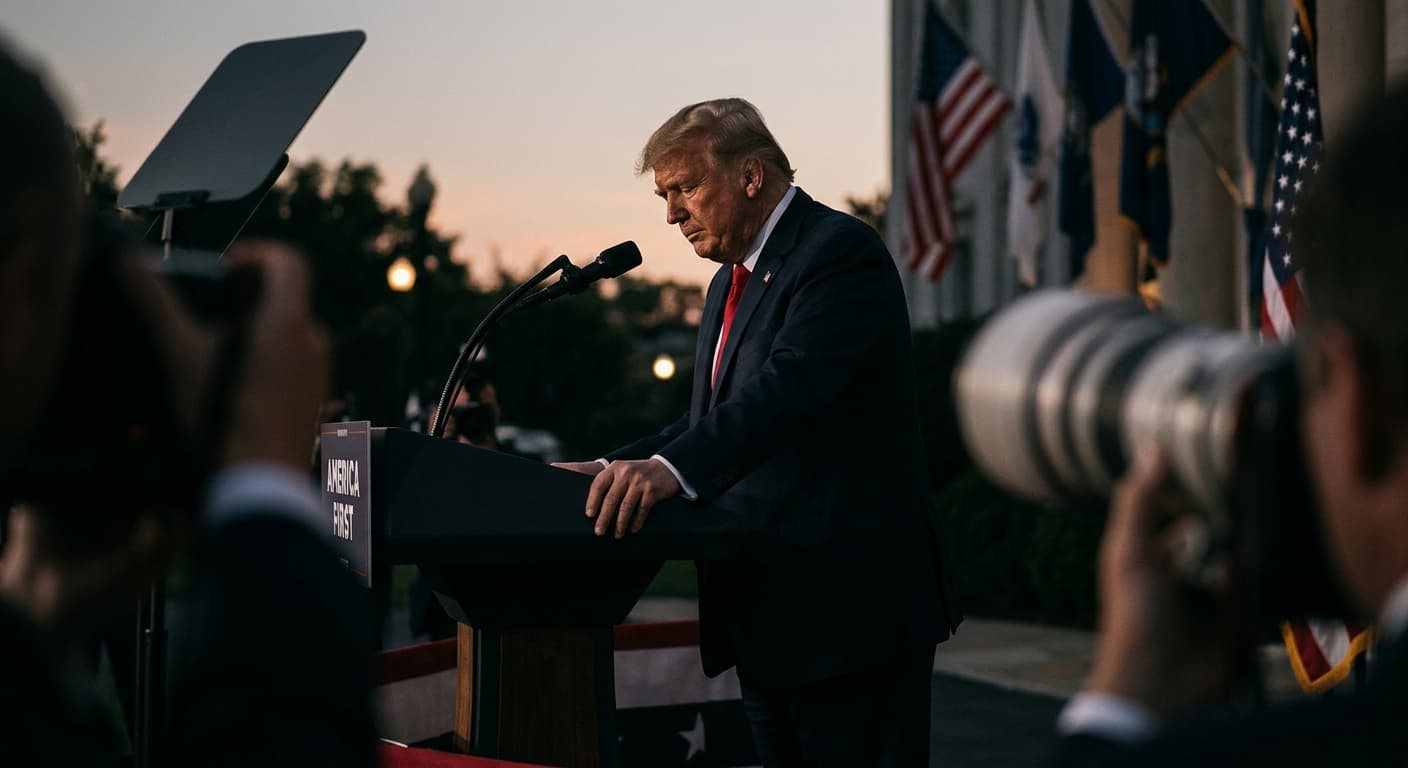
Trump's 'finish the job' threat masks the leverage Iran now holds
Trump's Iran ultimatum during Khamenei's funeral raises war fears — but the ceasefire, oil markets and IAEA data show Tehran, not Washington, holds the leverage now.
Donald Trump's threat on July 6, 2026 that Iran must strike a deal or the United States will "finish the job" reads as maximum pressure. It is closer to the opposite: a rhetorical cover for a settlement Washington signed because it was running out of options, not because Iran had run out of time. Nine weeks of naval blockade drained the US Strategic Petroleum Reserve to its lowest level since the Reagan era, Brent crude hit $126, and on June 17 the president signed a 14-point memorandum of understanding at Versailles that lifted the blockade, waived oil sanctions, and dangled a $300 billion Gulf-financed reconstruction fund in front of Tehran. The "finish the job" line, delivered as millions marched behind Ayatollah Ali Khamenei's coffin in Tehran, is aimed at Republican hawks and Israeli hardliners — not at an Iranian regime that has already priced in the threat.
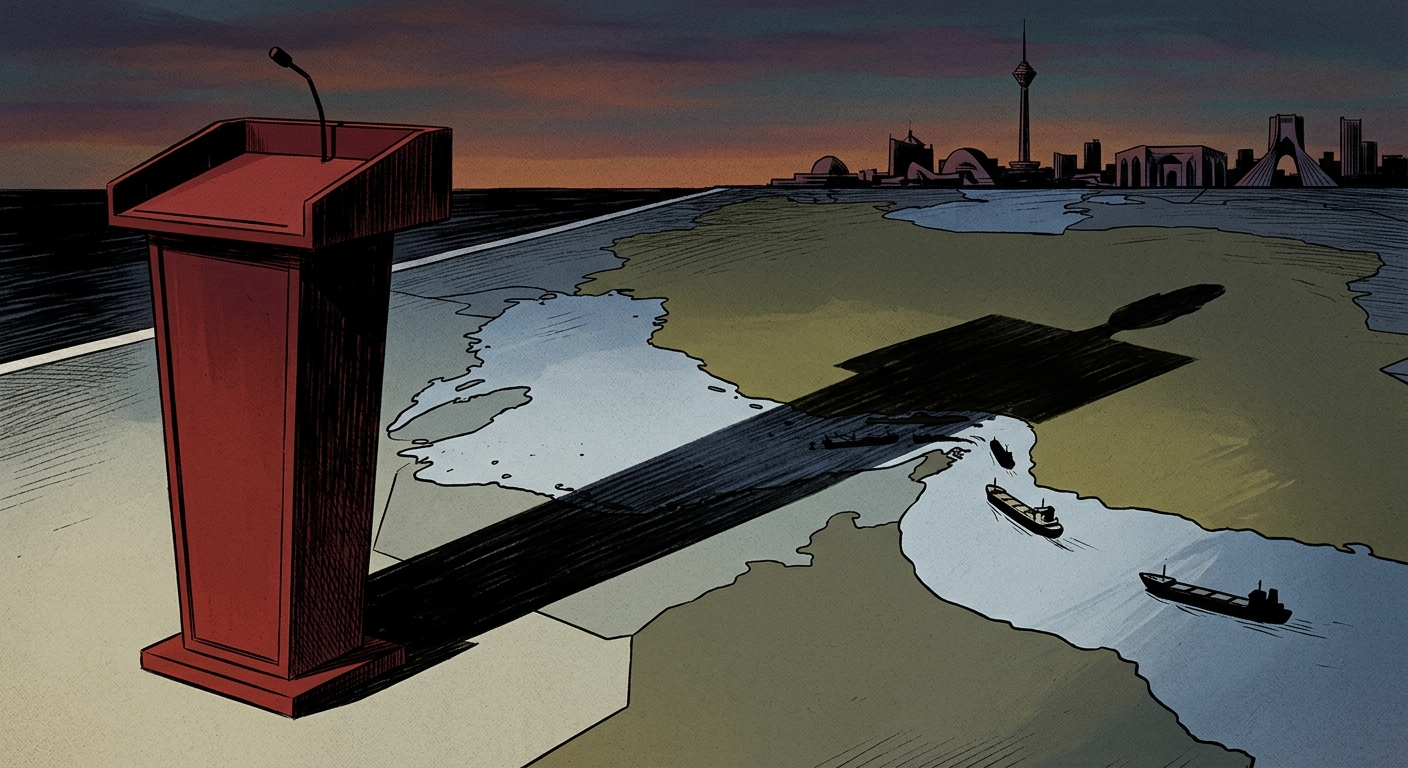
What Trump actually said, and where
Speaking to reporters as Khamenei's six-day funeral procession moved through Tehran, Qom, Najaf, Karbala and on to Mashhad, Trump said Iran would either agree to a final deal or "we'll have to just finish the job," according to Nikkei Asia and
Channel News Asia. It is not new phrasing. Trump used the same line at his May 27 cabinet meeting and again at a March 12 rally in Hebron, Kentucky, per
Al Jazeera. What is new is the timing: he delivered it while Iranian mourners chanted "death to America" and hurled stones at billboards of his face, as the
BBC reported from the Tehran procession.
The Iranian response was calibrated, not hysterical. The current secretary of Iran's Supreme National Security Council, ex-IRGC commander Mohammad Bagher Zolghadr — installed after Israel killed his predecessor Ali Larijani on March 25, according to Al Jazeera — told Republicans to address Iranians "with respect." New Supreme Leader Mojtaba Khamenei, publicly unseen since the February 28 strikes that killed his father and severely wounded him, has authorised the negotiations while calling the deal a product of American "desperation," per the
BBC. That is the language of a regime that believes it survived — and won something.
The document, not the rhetoric
Anchor the story to the paper Trump signed. The 14-point US-Iran memorandum of understanding, published in full by the BBC, commits the United States to an "immediate and permanent termination of military operations on all fronts, including in Lebanon," to lifting "all types of sanctions," and — in Point 6 — to developing with regional partners a "mutually agreed plan with at least $300 billion" for Iranian reconstruction. Point 11 obliges Washington to make Iran's frozen assets "fully usable" and to issue the licences to do so. In exchange, Iran "reaffirms that it shall not procure or develop nuclear weapons" and gives itself 60 days, extendable, to negotiate a final deal covering the nuclear programme, inspections and sanctions architecture.
The 60-day clock, set on June 17, expires on or about August 16. Talks in Doha on July 1–2 ended with what mediator Qatar called "positive progress" but no substantive movement on the two files that actually matter — nuclear inspections and the interim Hormuz transit regime, per Al Jazeera. Negotiations were then paused for the funeral. That is the window into which Trump dropped his threat.
Why Iran, not the US, holds the whip
The uncomfortable analytic point — the one Republican hawks in Washington and Netanyahu's cabinet in Jerusalem understand — is that the leverage inverted in April. According to CSIS energy analyst Clay Seigle, the nine-week export hiatus drained global oil inventories by more than 340 million barrels and the US SPR by more than 60 million, leaving reserves at their lowest level since the strategic stockpile was first filled. Trump himself, per CSIS, acknowledged that "we run out of reserves at about four weeks." The naval blockade was hurting the United States and its allies faster than it was hurting an Iranian regime that had already absorbed decapitation strikes.
The market has priced the outcome. Brent crude closed at $72 on July 6, below the $72.48 settlement of February 27 — the day before the war began — with OPEC+ announcing a fifth consecutive monthly production increase. Iran has "pushed close to 50 million barrels" to market since the blockade lifted, one analyst told Al Jazeera. Iranian oil exports are projected by CSIS to head back toward the 2017-2018 peak of 2.4 million barrels per day, a "Venezuela trajectory" that will bring international capital into Iran's upstream despite ongoing rhetoric about pressure.
At the same time, US Treasury data shows the sanctions architecture is only half-lifted. OFAC issued General License W on May 1, and the June 17 waivers now permit oil trade, but the Office of Foreign Assets Control is still designating shadow-fleet tankers and warning of "sanctions risks of Iranian demands for Strait of Hormuz passage." Any "finish the job" campaign would have to snap those waivers back — and re-tighten a blockade Washington already found unsustainable at nine weeks.
The nuclear file — the real red line
If the war restarts, it restarts here. The IAEA's June 2026 report, GOV/2026/33, states that after the February 28 attacks the Agency "stopped conducting verification activities in Iran" and has been unable to verify Iranian inventories of low- and highly-enriched uranium for more than eight months. A Board of Governors resolution,
GOV/2026/40, records "grave concern" that inspectors have had no access to the affected facilities — Fordow, Natanz, Isfahan — with only the Russian-built Bushehr plant still under safeguards.
Parliament speaker Mohammad Bagher Ghalibaf confirmed on July 2 that a law passed by the Majlis bars inspectors from the bombed sites, and that the Supreme National Security Council has ratified that position, per Al Jazeera. Director General Rafael Grossi's counter — that access is required under the MoU — has not moved Tehran. This is the sticking point, not $300 billion or Hormuz transit fees. If Trump's team cannot deliver the IAEA back into Fordow before August 16, the "finish the job" threat becomes operational language, not rhetorical.
"The situation today is very concerning. We cannot rule out a possible radiological release with serious consequences, including the necessity to evacuate areas as large or larger than major cities." — Rafael Mariano Grossi, IAEA Director General, Special Session of the Board of Governors,
March 2, 2026.
Who's driving Iran's side now
The Carnegie Endowment's succession analysis, published in March, predicted Mojtaba Khamenei's elevation would "further entrench the IRGC and Basij" within the state. That has been borne out. The Gulf International Forum's Madeline Stahle argues Mojtaba was "pushed by the IRGC and hardline power centres" as a pliable figure, and that Iran is not becoming a classic military dictatorship so much as one in which "the IRGC is not simply protecting the system; it is increasingly organising it." Zolghadr, a former IRGC commander whose approval any Iranian negotiator now needs, per
Al Jazeera, personifies the shift.
That has two implications Washington policymakers should absorb. First, the IRGC's interest in the deal is transactional — sanctions relief and reconstruction cash — but its tolerance for concessions on missiles or on Hormuz transit control is near zero. Second, Iran's negotiators can point to genuine domestic constraints: parliament, the SNSC and hardline Paydari faction figures such as Saeed Jalili all oppose the deal, and each Trump threat strengthens their hand at the table.
The audience for the threat
Read Trump's line as domestic politics, not strategy. Republican Senator Bill Cassidy called the June 17 deal "the worst foreign policy blunder in decades." Senator Ted Cruz publicly attacked the $300 billion fund. The BBC reported that JD Vance, in a New York Times interview, named Israeli ministers Itamar Ben Gvir and Bezalel Smotrich as vocal critics. CSIS's Raad Alkadiri notes that Trump has "weathered the initial political storm, but pressure for more aggressive measures is likely to grow again if the complex nuclear talks slip past their initial 60-day deadline."
"Finish the job" is designed to buy Trump time with his own coalition — and to remind Iran that the political cost of appearing to accommodate Tehran is real. But the operational threat is thin. Restarting the war would require re-imposing the blockade with an even lower SPR, re-closing the Strait of Hormuz, and torching the OPEC+ production ramp that just returned petrol prices to pre-war levels. It would also mean bombing a regime whose leadership Mojtaba Khamenei has already restaffed to survive decapitation.
What Gulf states are doing while Washington shouts
The quiet story is that Qatar, Pakistan and — increasingly — the UAE and Saudi Arabia are becoming the executors of this settlement. Qatar and Pakistan mediate the talks. Riyadh, Abu Dhabi and Iraq have expanded pipeline evacuation capacity to reduce reliance on Hormuz, per Al Jazeera. The
$300 billion fund, Vance told CBS, would be "funded by the Gulf Coast coalition," not US taxpayers. That structure gives Gulf capitals a veto over pace and scope of Iranian reintegration — and lets Washington outsource both the money and the political risk. It is the clearest signal since 2019 that Gulf-state diplomacy, not US pressure, is doing the operational work in the Persian Gulf.
Diplomat View
The "finish the job" threat is bluster masking a weaker position. Trump signed the June 17 MoU because the Strategic Petroleum Reserve had four weeks left, not because Iran folded. The regime that emerged from the February strikes — Mojtaba Khamenei fronted, IRGC-led, Zolghadr-negotiated — has absorbed decapitation, replaced its dead, and priced in another round of strikes. Its concession list is short: no missile talks, no inspector access to Fordow, no giving up Hormuz leverage. The most likely path is a scrappy extension of the 60-day window past August 16, with the nuclear file kicked into a longer process while sanctions waivers roll over and Gulf capital slowly rebuilds Iran's oil sector. The forecast changes if Israel acts unilaterally — Netanyahu's cabinet was not a party to the MoU, and Alkadiri's CSIS analysis identifies Israeli action as the most plausible trigger for a return to war. If Ben Gvir or Smotrich force a strike on Iranian infrastructure, or if Mojtaba Khamenei is targeted, the "finish the job" line stops being domestic theatre and becomes a policy Washington cannot easily refuse.
What to watch
- August 16, 2026 — expiry of the 60-day MoU negotiating window. Extension by mutual consent is the base case; failure to extend is the trigger event.
- IAEA September Board of Governors meeting — Grossi's next report will formally document whether Iran has readmitted inspectors to Fordow, Natanz and Isfahan, or whether GOV/2026/40's non-compliance finding hardens.
- Congressional appropriations, autumn 2026 — Republican revolt over the $300 billion reconstruction fund could force Trump to renegotiate Point 6 with the Gulf partners funding it, weakening Tehran's core incentive to comply.
The Bottom Line
Trump's "finish the job" ultimatum is a message to Republican hawks and Israeli hardliners, not a credible military threat: he signed the June 17 deal because the US Strategic Petroleum Reserve had four weeks left, and Iran's post-Khamenei IRGC-run system is built to survive another round of strikes. The real leverage now sits with Tehran and with Gulf capitals financing the $300 billion reconstruction envelope — and the file that will decide war or peace is not Trump's rhetoric but whether IAEA inspectors get back into Fordow before August 16.
Discover more

US Politics
SNAP Food Assistance Faces Legal Challenges
In 2026, SNAP faces stricter eligibility rules and mounting legal challenges, threatening food assistance for the millions of Americans who rely on the program.

US Politics
House Ethics Committee Pushes Sexual Miscond.
The House Ethics Committee has shifted responsibility for sexual harassment settlement records to the Office of Congressional Workplace Rights, complicating disclosure efforts.
US Politics
Congress Targets AI Chatbot Access for Terror
The House passed the Generative AI Terrorism Risk Assessment Act, focusing on AI's role in terrorism and potential surveillance implications.

Conflict & Security
Drone Warfare Killing Aid Workers at Unprec
Over 1,000 humanitarian workers killed in three years as cheap armed drones collapse legal protections. Gaza, Sudan, Ukraine, and DRC see deliberate targeting of aid convoys and hospitals with zero prosecutions.