Trump's Iran Flag Post Complicates Diplomacy
Trump's provocative post complicates U.S.-Iran negotiations.
Model Diplomat3 min readMiddle East
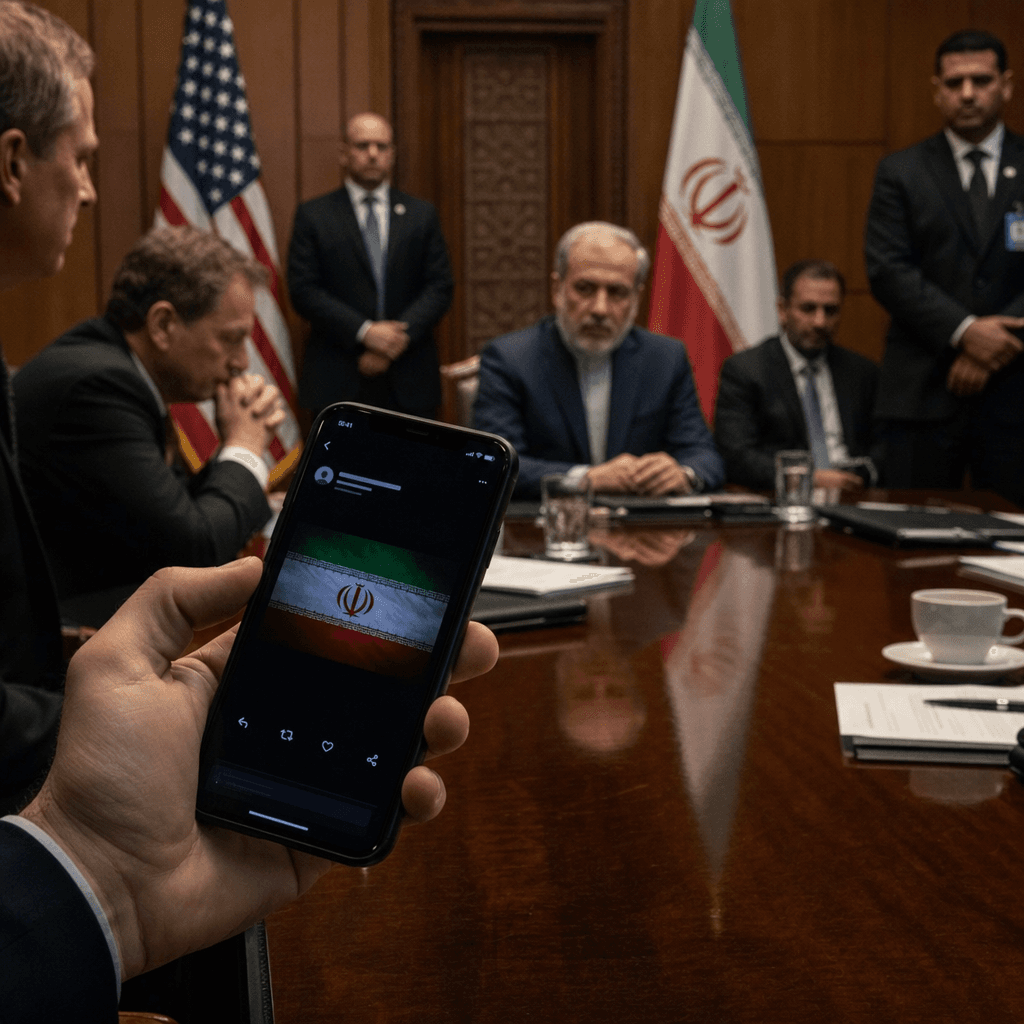
Trump’s Iran Flag Post Raises the Cost of Diplomacy
Trump’s flag-over-Iran post is a coercive signal, but it risks stiffening Tehran just as U.S.-Iran talks are narrowing.
President Donald Trump is using social media to project leverage over Iran, not to clarify policy. On Saturday, he posted an image of the U.S. flag covering Iran with the caption “United States of the Middle East?” on Truth Social, a move Al Jazeera described as another incendiary message while Washington and Tehran were still discussing a more lasting ceasefire. The timing matters: Trump and Secretary of State Marco Rubio were also signaling that a deal could be close, with Trump telling CBS the sides were “getting a lot closer” and Rubio saying there could be news soon, according to
HuffPost/AP.
The message is leverage, not nuance
The post is aimed at two audiences. To Tehran, it is a reminder that Trump is still willing to escalate if diplomacy stalls. To domestic and regional audiences, it projects a president who wants to dictate the terms of the region’s security order. But that is also the problem: the image blurs deterrence with annexation. Al Jazeera noted that the message cuts against repeated White House claims that Washington is not seeking a prolonged occupation of Iran, even if it says regime change would be an acceptable byproduct of military pressure.
That contradiction gives Iranian hardliners a political gift. Vali Nasr, quoted by Al Jazeera, argued that the post “undermines diplomacy” and helps unite Iranians around the state in a moment when negotiators are trying to keep talks alive. In other words, Trump may be trying to squeeze concessions, but he is also advertising maximalist intent. That is useful for coercion; it is damaging for bargaining.
Why this lands in a fragile moment
The leverage contest is running through three channels at once: military pressure, economic pressure, and mediation. HuffPost/AP reported that Iran said differences were narrowing and that the sides were trying to finalize a memorandum of understanding, while also noting the U.S. position that Iran must give up highly enriched uranium and keep the Strait of Hormuz open. Al Jazeera’s wider coverage the same day said Pakistan’s army chief, Asim Munir, was in Tehran as part of a growing mediation effort, with Qatar also involved and both Washington and Tehran saying the talks had moved closer.
That makes Trump’s post more than online theater. It raises the cost for the mediators—Pakistan, Qatar, and any Gulf state trying to keep the channel open—because they now have to persuade Tehran that Washington is serious about a deal while Washington is publicly flirting with domination imagery. For readers tracking the wider strategic picture, this sits squarely inside Conflict and the U.S. file on
United States.
What to watch next
The next decision point is immediate: whether the White House backs the social-media signal with a formal statement, strike warning, or concessions in the talks. HuffPost/AP said Rubio suggested an update could come within hours, while Al Jazeera reported that key sticking points remain unresolved, especially Iran’s nuclear program, its enriched uranium stockpile, and control of the Strait of Hormuz. If no announcement comes in the next 48 to 72 hours, the post will look less like a negotiating tactic and more like a sign that Trump is keeping military pressure on the table while the diplomats work.
Discover more
Global Politics
Trump's Conflicting Messages on Iran War
Trump's mixed messages on Iran reflect a strategy of audience management, benefiting Tehran amid a complex geopolitical landscape.

Conflict & Security
Drone Warfare Killing Aid Workers at Unprec
Over 1,000 humanitarian workers killed in three years as cheap armed drones collapse legal protections. Gaza, Sudan, Ukraine, and DRC see deliberate targeting of aid convoys and hospitals with zero prosecutions.

Global
World Normalises Taliban as Afghan Women Eras
UN data shows Afghan women erased from public life as Russia recognises the Taliban, EU hosts officials in Brussels, and ICC warrants for gender persecution go unenforced.
Conflict & Security
West Africa Food Crisis: Three Shocks in 2026
Conflict, climate extremes, and the Strait of Hormuz closure drive a severe food crisis in West and Central Africa, with fertilizer prices surging 80% and millions displaced.