Trump's Hormuz Toll Collapsed In 24 Hours
Gulf states forced reversal of Trump's Hormuz toll; insurance is the real leverage.
Model Diplomat5 min readMiddle East
Trump's Hormuz Toll Collapsed In 24 Hours — The Real Leverage Is Insurance
President Trump's 20% Strait of Hormuz cargo fee lasted one day before Gulf states forced a reversal; the binding constraint on the US-Iran war is now the marine insurance market, not naval firepower.
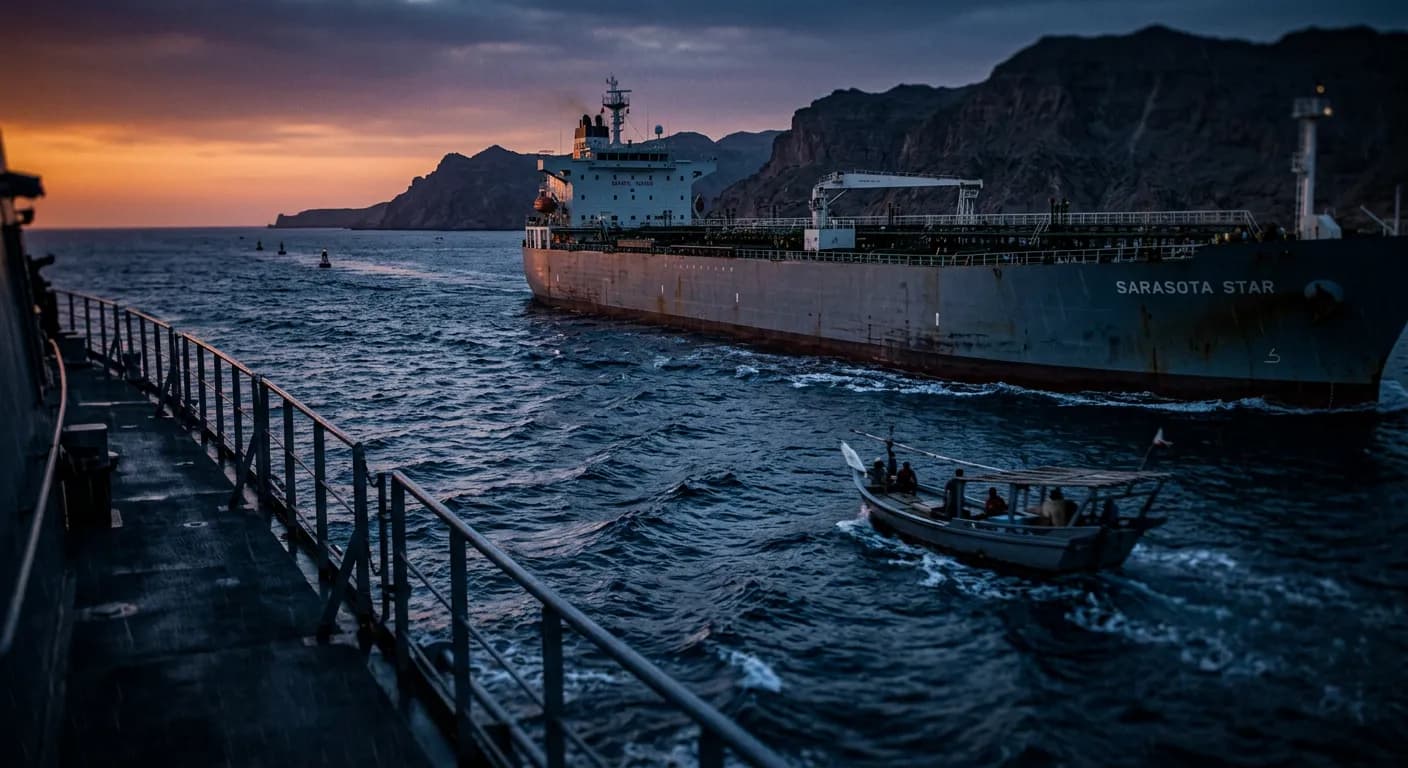
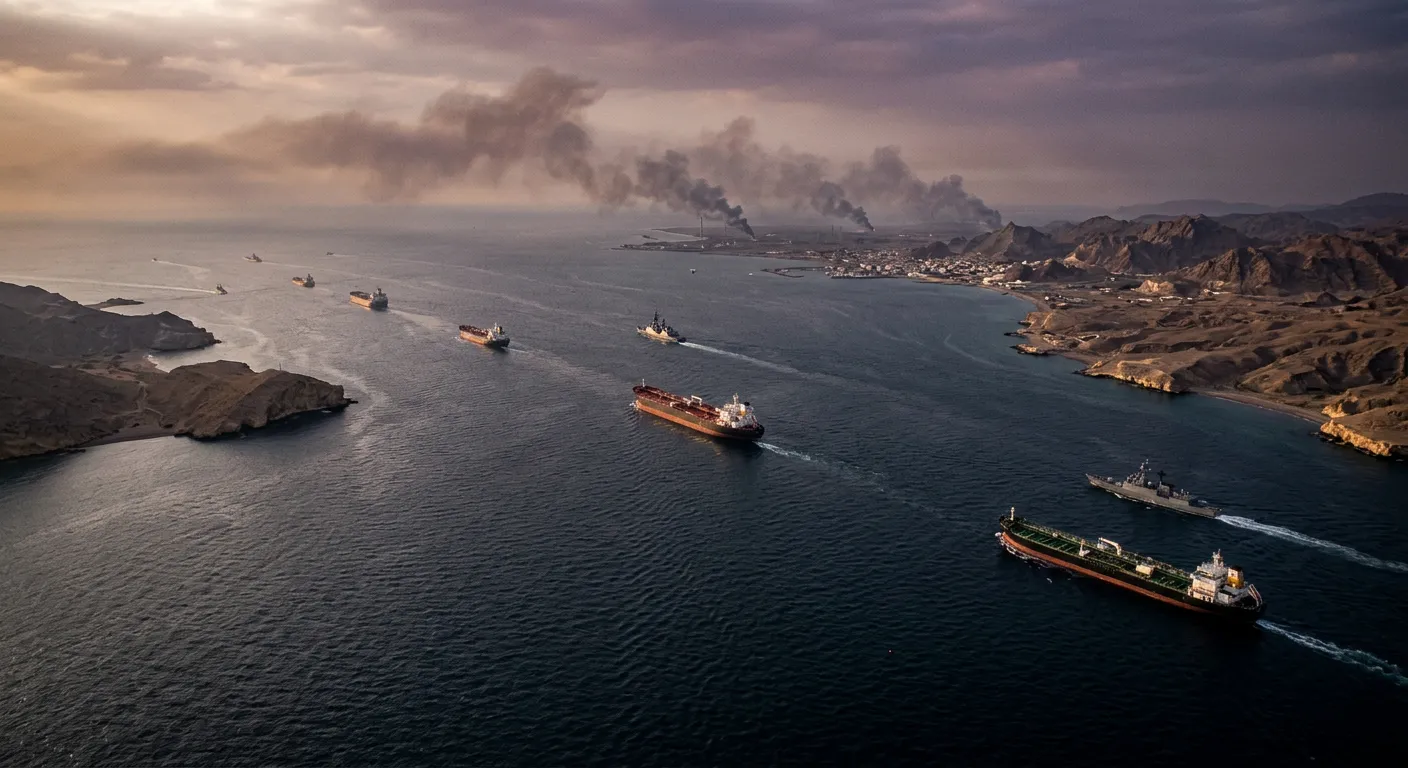
President Donald Trump said on July 14, 2026 that air strikes on Iran will continue "until I say it's enough," and warned that next week brings power plants and bridges. Yet the most revealing move of the week was the one he abandoned: a 20 percent toll on every ship transiting the Strait of Hormuz, announced July 13, scrapped by July 14 after Gulf states refused. The reversal exposes the core constraint on Washington's strategy — the Gulf monarchies whose exports depend on an open strait will not let the US monetize the chokepoint they rely on — while Iran, despite absorbing a fourth consecutive day of strikes, retains the one lever that actually moves markets: the ability to make Hormuz uninsurable.
The toll that died in 24 hours
Trump declared on Truth Social on July 13 that the US would be "from this point forward known as 'THE GUARDIAN OF THE HORMUZ STRAIT," and would charge 20 percent on all cargo to reimburse American forces for keeping the waterway open. By July 14 he reversed course entirely, writing that he had "decided to replace the 20% United States Reimbursement Fee with Trade and Investment Deals that the various Gulf States will be making into the United States." He provided no details on any commitments, saying only the investments would be "MASSIVE." The BBC's diplomatic correspondent characterized the reversal as the latest evidence of a president without a clear path forward.
The pivot came after what Trump described as pushback from Gulf leaders, telling reporters that regional rulers had asked to "do it a different way." The episode reveals the actual hierarchy of leverage in this conflict. The US commands overwhelming naval and air superiority — CENTCOM can strike Iranian coastal infrastructure at will — but it cannot impose a transit fee on the very states whose oil and LNG exports flow through the strait, because those states can withhold the cooperation that keeps the waterway functioning. Saudi Arabia's Foreign Ministry separately condemned Iran's attacks on Gulf states, holding Tehran "responsible for the consequences of continuing these cruel attacks," according to RFE/RL. But condemnation of Iran is not endorsement of a US toll.
The UK, France, and Germany — the E3 — issued a joint statement on July 12 condemning Iran's "reckless attacks on commercial shipping" and reaffirming support for full resumption of shipping through the strait. Crucially, their E3 statement grounded its demand in "freedom of navigation" as a principle of international law — not in any US claim of guardianship or right to charge tolls. The International Maritime Organization's Council, meeting on July 13, stressed that any arrangement between littoral states "shall guarantee the non-discriminatory and unimpeded right of transit passage of all ships" and that passage should remain "free of any tolls and charges," per
UN News. The IMO Convention dates to 1948. Trump's toll idea was dead before CENTCOM's next sortie launched.
Blockade reinstated, MoU buried
The toll reversal did not stop the escalation. CENTCOM announced at 4 p.m. Eastern on July 14 that the naval blockade against vessels entering or leaving Iranian ports was reinstated. "CENTCOM forces will enforce the blockade against vessels transiting to or from Iranian ports and coastal areas," the command said in a statement. The first enforcement action came quickly: CENTCOM reported it had struck and disabled the Curaçao-flagged tanker Belma with a Hellfire missile as it transited international waters toward Kharg Island, after the vessel "ignored multiple warnings as it attempted to violate the U.S. blockade," according to
NPR. Two other commercial vessels were redirected.
This is the second US blockade of Iranian ports in four months — the first ran from April 13 to June 18, when it was lifted as a condition of the memorandum of understanding signed June 17. That MoU committed Tehran to use "its best efforts for the safe passage of commercial vessels with no charge for 60 days" and committed Washington to ease sanctions on Iranian oil. Both provisions are now dead. Iran's deputy foreign minister Kazem Gharibabadi declared the MoU "no longer valid" on July 15, and the country's top negotiator Mohammed Bagher Ghalibaf said Iran was "in an essential and existential war with America," per Al Jazeera.
The US Treasury piled on. On July 14 it sanctioned more than 50 individuals, entities, and vessels tied to Mohammad Hossein Shamkhani, described as a "major force" behind Iran's oil exports who has expanded into global containerized shipping and commodities trading. "The Iranian regime survives on deception, and the Shamkhani network is one of its most profitable engines," Treasury Secretary Scott Bessent said in a Treasury statement. The action was the latest in a sanctions campaign under Executive Order 13902 that has designated over 1,000 Iran-linked persons, vessels, and aircraft since February 2025, according to
Treasury. The Treasury also revoked the 60-day waiver on Iranian oil sales that had been a pillar of the MoU; the waiver expires July 17.
The chokepoint neither side can afford — but only one can survive
The Strait of Hormuz carried roughly one-fifth of global oil and gas exports before the war, with about 130 vessels transiting daily. Traffic has collapsed. Ship-tracking platform MarineTraffic recorded 57 transits over July 11–13, a drop of more than 50 percent from the prior week. Lloyd's List Intelligence reported that no vessel above 10,000 deadweight tonnes had transited the US-coordinated "Southern Highway" with its AIS transponder on since July 7, according to Al Jazeera. Windward tracked just five crossings on July 9–10, down from 45 on July 7.
Discover more

US Politics
House Ethics Committee Pushes Sexual Miscond.
The House Ethics Committee has shifted responsibility for sexual harassment settlement records to the Office of Congressional Workplace Rights, complicating disclosure efforts.
US Politics
Virginia's Redistricting Referendum
Virginia's redistricting referendum is drawing a flood of dark money, shaping future elections and the fight for congressional control amid party stakes.
India
700 Activists Accuse PM Modi of MCC Breach
Over 700 activists allege PM Modi breached election code with a televised address attacking opposition parties just before state elections.

Conflict & Security
Drone Warfare Killing Aid Workers at Unprec
Over 1,000 humanitarian workers killed in three years as cheap armed drones collapse legal protections. Gaza, Sudan, Ukraine, and DRC see deliberate targeting of aid convoys and hospitals with zero prosecutions.