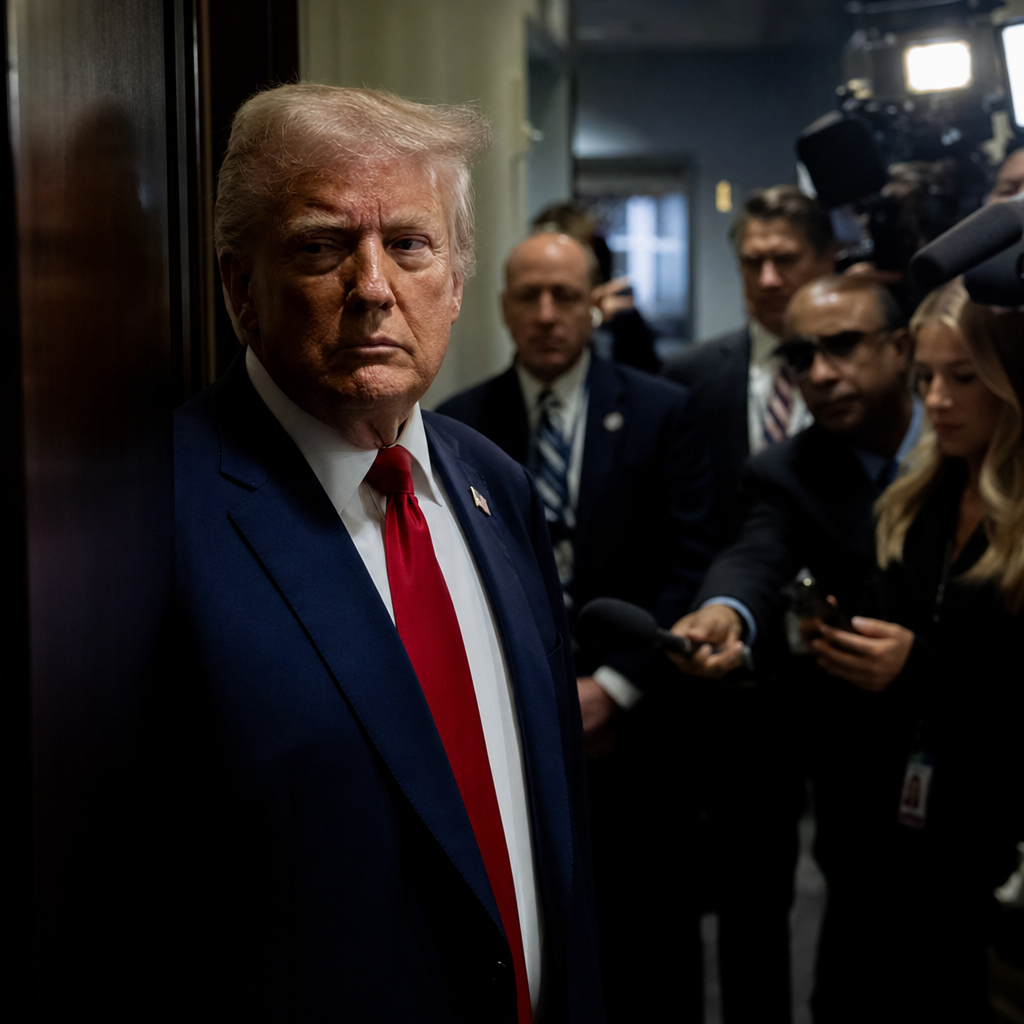
Trump’s Health Secrecy Is a Power Test for the White House
Trump’s Walter Reed exam will likely reassure on paper, but age, injuries and assassination threats keep his real condition politically open.
Donald Trump’s next medical checkup is unlikely to settle anything. CNN reports that the White House will almost certainly release another upbeat summary after Tuesday’s Walter Reed visit, even as Trump has begun making muted references to mortality and security after repeated threats on his life ( CNN Politics). The leverage sits with Trump: he controls how much the public learns, and the White House can keep projecting strength while revealing very little.
The White House controls the story
That is the core power dynamic. Trump is 79, turns 80 next month, and has already faced questions over bruised hands, swollen legs and a medical report that has repeatedly said he is in good health while withholding detail ( The New York Times,
  ABC News). The White House has blamed the leg swelling on chronic venous insufficiency and the hand bruising on aspirin and handshakes, but those explanations have not ended the scrutiny (The New York Times, CNN Politics).
This is why the politics matter. Presidents do not have to publish full medical records, and ABC notes that the results of their exams are filtered through the White House and approved by the president himself (ABC News). That means Trump can use the appearance of transparency without surrendering control of the facts. For the broader pattern, see  US Politics.
Age is now a governing issue, not a side story
Trump’s age is no longer a background concern; it is part of the presidency’s operating conditions. CNN says he has privately acknowledged mortality and has even reflected aloud on whether he would make it into heaven, while also saying he may stop taking the cognitive tests that have become a recurring public ritual at his events (CNN Politics). That matters because Trump spent years attacking Joe Biden over age and stamina; now the same logic is being turned back on him.
The White House can dismiss the concern, but it cannot make it disappear. Trump’s public appearances already show the strain of constant scrutiny, and every new medical disclosure invites a new round of speculation about what is being left out (ABC News, The New York Times). That is the cost of governing through selective disclosure: it buys short-term control and long-term distrust.
Security is now part of the health question
The other force shaping this story is physical danger. CNN reports multiple attempts on Trump’s life, alleged Iranian plotting, and a Saturday shooting near the White House while he was inside — reminders that “mortality” is not just a health issue but a security one (CNN Politics). The Globe and Mail separately reported that federal security officials are already reworking protections after recent violence around Trump and his public events ( The Globe and Mail).
That reinforces Trump’s instincts. A president who sees threat everywhere will keep information tight, move fast, and treat medical disclosure as another front in the security perimeter. The beneficiaries are Trump and his team, who preserve message discipline. The losers are voters and even allies, who are left with staged reassurance instead of clarity.
What to watch next: the White House readout from Dr. Sean Barbabella, whether it mentions the CT scan Trump had in 2025, and whether any procedure requiring anesthesia raises temporary-transfer questions under the 25th Amendment (ABC News, The New York Times). If the statement is as thin as before, the gap between Trump’s image and his actual condition will keep widening.