Trump's DOJ vs Preservationists: Ballroom Dis
Historic preservationists stand firm against DOJ pressure tactics.
Model Diplomat3 min readUnited States
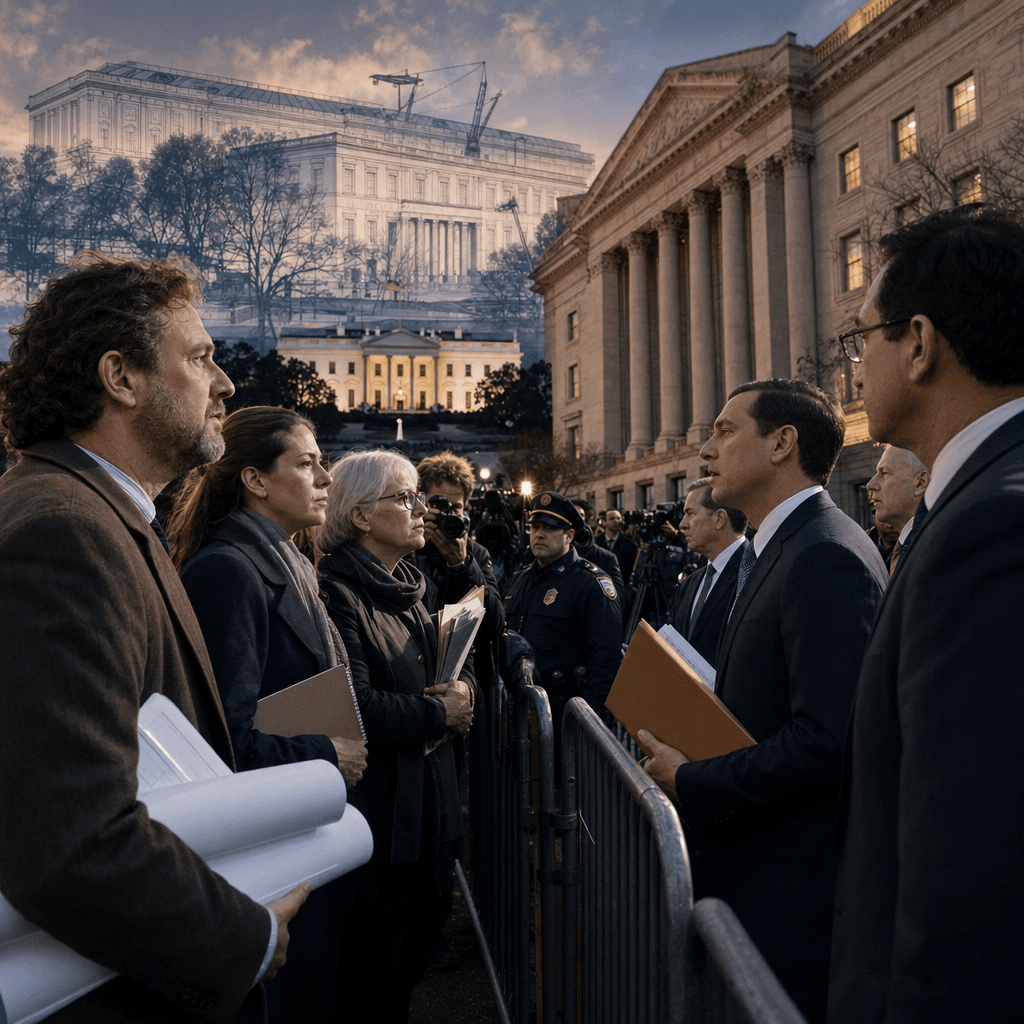
Trump's DOJ Pressures Historic Preservationists — They Refuse to Back Down
The National Trust for Historic Preservation has rejected a Justice Department ultimatum to drop its White House ballroom lawsuit, escalating a constitutional showdown over a $400M project.
The National Trust for Historic Preservation has flatly refused a Justice Department demand to abandon its legal challenge to President Trump's $300–400 million White House ballroom project — and the DOJ's decision to invoke last weekend's White House Correspondents' Dinner shooting as justification has dramatically sharpened the political stakes.
The Leverage Play and Why It's Failing
The DOJ's move was a pressure tactic, not a legal argument. The administration tried to use the shooting — a violent incident at a high-profile media event — to argue urgency around security infrastructure, hoping to collapse the litigation before it produced more adverse rulings. It didn't work. The National Trust's refusal, issued April 27, signals that preservation groups calculate the judicial track is more favorable than any negotiated exit.
That calculus looks sound. Federal Judge Richard Leon has already ruled — on April 16 — that Trump cannot shield the entire ballroom under a national security exemption, pausing above-ground construction and finding that the project lacks congressional authorization. The DOJ has appealed, but Leon's framing was pointed: the administration's "safety-and-security exception" does not excuse unlawful overhead construction. The bench is not friendly terrain for the White House here.
Meanwhile, the National Capital Planning Commission — stacked with Trump loyalists and chaired by Will Scharf — approved the project on April 2 despite receiving over 32,000 public comments, roughly 97% opposed. That commission vote gives the administration a procedural fig leaf, but it doesn't resolve the congressional authorization question that Judge Leon flagged as dispositive.
Who Holds the Cards
Trump holds political momentum and a loyalist-packed planning body. The project is privately funded — estimated at $300–400 million — which lets the White House sidestep appropriations fights. But private funding doesn't confer legal authority to demolish a historically protected site without congressional sign-off.
The National Trust, the DC Preservation League, and the American Institute of Architects hold the better legal argument, at least at the district court level. Their refusal to settle forces the DOJ to win on appeal — a harder task given Leon's detailed ruling. The Correspondents' Dinner gambit, if anything, hands preservationists a public-relations advantage: it looks like the administration is exploiting a tragedy to bulldoze a landmark.
Congress is the silent power broker. If the courts hold that authorization is required, the White House must either secure a legislative carve-out — difficult in a distracted Capitol — or watch the project stall indefinitely. No Republican leader has visibly championed that authorization fight.
For deeper background on the US political dynamics driving Trump's second-term executive assertiveness, and how courts are increasingly the friction point, see our running coverage.
What to Watch
Three decision points define the next 60 days:
- The appeals court ruling on Judge Leon's April 16 injunction — the outcome will determine whether above-ground construction can legally resume.
- Any congressional move to authorize the project, which would pull the legal rug from under the preservationists' core argument.
- The National Trust's next legal filing — having rejected the DOJ ultimatum, the organization is positioned to push for a stronger, permanent injunction.
The administration bet that invoking national security and a shooting would force a retreat. The National Trust called that bet. The courthouse, not the negotiating table, decides this now.
Sources: Washington Post — DOJ Pressure Tactic ·
CNN — Judge Leon Ruling ·
CNN — NCPC Commission Vote*
Discover more
US Politics
House Ethics Committee Pushes Sexual Miscond.
The House Ethics Committee has shifted responsibility for sexual harassment settlement records to the Office of Congressional Workplace Rights, complicating disclosure efforts.

US Politics
SNAP Food Assistance Faces Legal Challenges
In 2026, SNAP faces stricter eligibility rules and mounting legal challenges, threatening food assistance for the millions of Americans who rely on the program.

Global Politics
US Seizes Iranian Ship, Tensions Surge
The US seizure of the Iranian ship Touska highlights a shift in control over the Strait of Hormuz, favoring Iran's strategic position.

Conflict & Security
Drone Warfare Killing Aid Workers at Unprec
Over 1,000 humanitarian workers killed in three years as cheap armed drones collapse legal protections. Gaza, Sudan, Ukraine, and DRC see deliberate targeting of aid convoys and hospitals with zero prosecutions.