EU's Article 42.7
Brussels tests mutual defense clause amid U.S. disengagement.
Model Diplomat3 min readEurope
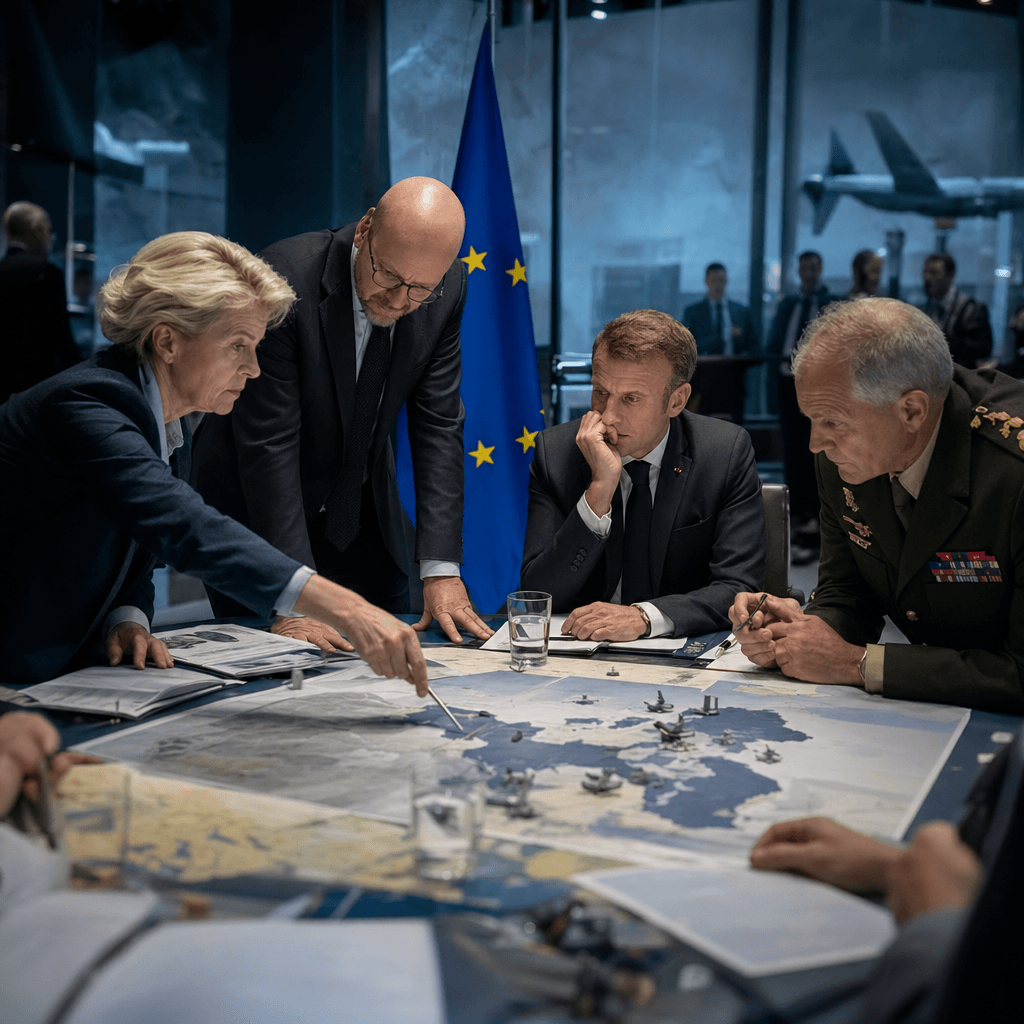
EU's Article 42.7 Stress Test: Europe Prepares for a World Without Washington
Brussels is stress-testing its mutual defense clause — not for show. With Trump's attention elsewhere, the EU is quietly building a security architecture that doesn't need U.S. sign-off.
The European Union is ramping up live exercises to test Article 42.7 — the bloc's mutual defense clause, which obligates member states to assist one another "by all the means in their power" in the event of armed aggression. The move is deliberate, and the timing is not coincidental: EU officials are increasingly convinced that the Trump administration's security priorities do not include Europe.
The Clause Nobody Has Really Tested
Article 42.7 of the Treaty on European Union predates NATO and sits awkwardly alongside it — technically binding, practically untested. France invoked it once, after the 2015 Paris attacks, receiving political solidarity but little operational muscle from partners. Brussels is now stress-testing the mechanism through structured crisis simulations, signaling that the EU is done treating it as a paper commitment.
The driver is straightforward. Trump's second term has reproduced the same transatlantic friction as the first, with Washington signaling reduced appetite for European security guarantees. A Politico European Pulse poll found 36% of Europeans now view the United States as a threat — higher than the 29% who said the same of China, though Russia remains the dominant concern at 70%. When publics feel this way, governments move.
EU Defense Commissioner Andrius Kubilius has been explicit: Europe must reduce structural dependence on the U.S., up to and including the creation of a common European military force. 86% of Europeans polled back stronger EU defense capacity; 69% support a common military force — political cover that was simply not available five years ago.
Who Benefits, Who Doesn't
France is the clearest winner. Paris has long pushed for European strategic autonomy and is now reaping diplomatic dividends — including a landmark meeting between Macron and Polish PM Donald Tusk in Gdańsk on April 20, exploring Poland's potential role in France's nuclear deterrence umbrella. That conversation alone would have been unthinkable during the Obama era. France also announced a €36 billion defense spending increase through 2030, targeting a budget of €76.3 billion annually by 2030 —
2.5% of GDP — while expanding missile and drone stockpiles by up to 400%.
NATO's institutional role is the quiet loser. Every EU crisis mechanism that works is a data point for those who argue Europe no longer needs the Alliance's command structure. Washington loses leverage incrementally — not through rupture, but through redundancy.
Eastern flank states, particularly Poland, are hedging: deepening EU ties while maintaining the U.S. bilateral relationship as insurance. Warsaw isn't choosing sides; it's building optionality.
What to Watch
The critical test isn't the exercise itself — it's whether Article 42.7's operational commitments get codified into actual defense agreements with binding timelines, force contributions, and logistics chains. The EU's next International security agenda meeting and the June 2026 European Council will reveal whether this is institutional muscle-building or an expensive rehearsal.
Watch Germany's posture. Berlin's defense budget trajectory and willingness to contribute real capability — not just funding — will determine whether Article 42.7 becomes functional or remains aspirational. If Germany commits forces to an EU crisis response framework before year-end, the architecture becomes real.
Discover more
Global Politics
Trump's Conflicting Messages on Iran War
Trump's mixed messages on Iran reflect a strategy of audience management, benefiting Tehran amid a complex geopolitical landscape.

Economics
Fed's Amex AML order puts correspondent banking on notice
Federal Reserve's Amex AML order requires board-level controls and a 90-day plan; OCC fined the bank $350 million over enterprise-wide deficiencies.

Conflict & Security
Guatemala: El Niño 2026–27 becomes regional security test
UNICEF: 25.8M children face El Niño risks in Latin America; Guatemala maps 188 municipalities for drought and food insecurity amid regional security test.

Economics
Fed's stress-test overhaul is a capital-smoothing exercise
Federal Reserve finalized stress-test overhaul: two-year averaging for bank capital buffers and public input, expected to halve volatility.