Trump's Court Defiance
Exploring Trump's leverage over lower court rulings
Model Diplomat3 min readNorth America
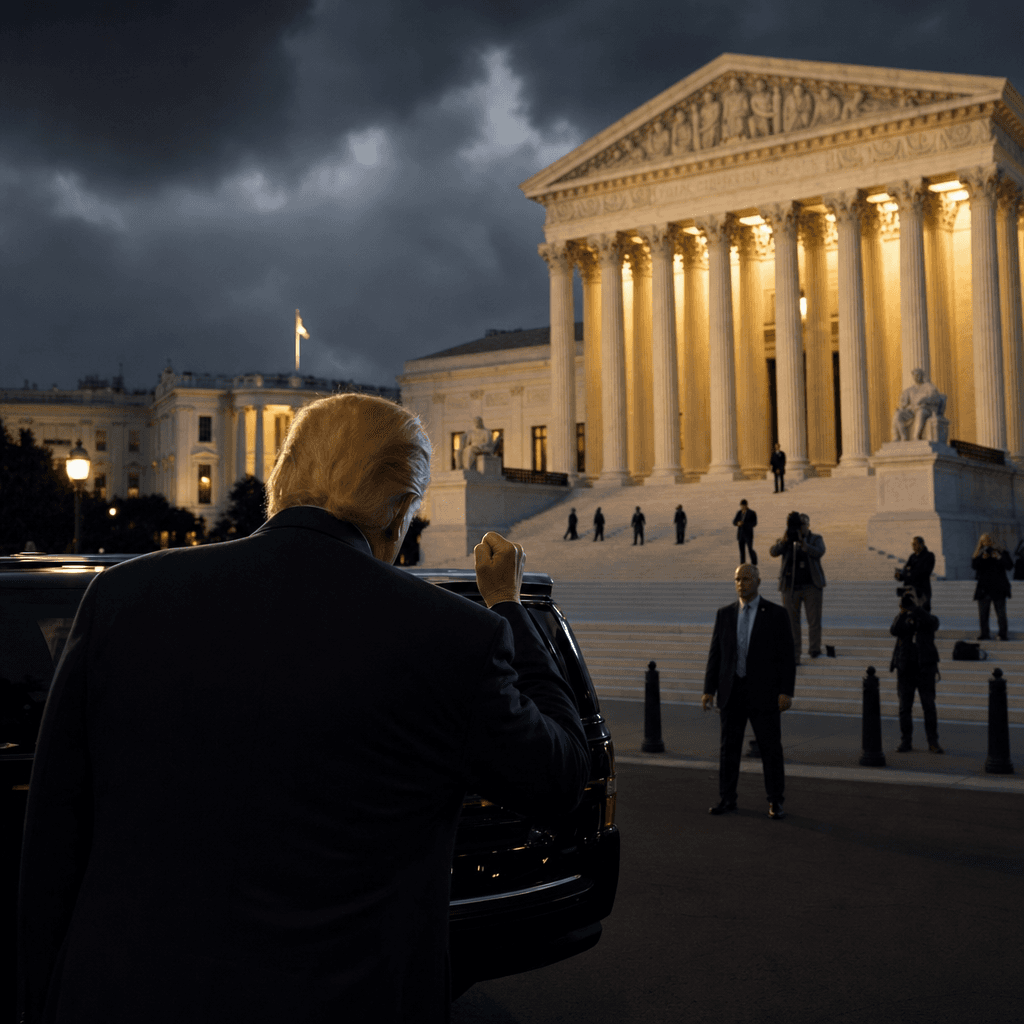
Trump’s Court Defiance Shifts Power to the Supreme Court
The administration is testing whether lower-court orders still bite when agencies can delay, narrow compliance, and win emergency relief above.
President Donald Trump’s leverage is not that he can formally ignore the courts; it is that the executive branch controls the machinery of compliance and can force lower-court judges into a slower, weaker fight over enforcement. AP describes the pattern as an “extraordinary defiance of court rulings,” with Trump officials resisting or narrowly reading adverse orders in ways that push judges toward contempt threats and emergency appeals rather than immediate compliance. Trump officials show extraordinary defiance of court rulings | AP News
Why Trump holds the operational advantage
The White House and Justice Department benefit from time. A district judge can issue an injunction in hours; forcing executive compliance can take days or weeks, especially when agencies claim national-security, immigration, or administrative urgency. That gap is where power now sits. The administration can make a lower-court loss provisional, then ask appellate courts or the Supreme Court to narrow it, pause it, or kill it outright. That is no longer theoretical. On April 14, a divided D.C. Circuit ordered Judge James Boasberg to end a criminal contempt inquiry into Trump officials tied to deportation flights, with Judges Neomi Rao and Justin Walker in the majority and Judge Michelle Childs dissenting. Court orders DC judge to end criminal contempt inquiry into Trump officials involved in deportation flights | CNN Politics
That matters because it changes incentives across the system. If officials believe an aggressive lower-court order is likely to be softened on appeal, resistance becomes a rational litigation strategy, not a one-off act of defiance. In that environment, plaintiffs win headlines but not always policy control. This is becoming a defining separation-of-powers contest in US Politics and across the
United States.
Why this is bigger than one Trump case
The second-order effect is institutional: lower courts risk looking advisory unless they can impose costs that survive appeal. Justice Ketanji Brown Jackson warned on April 15 that roughly two dozen emergency Supreme Court orders over the past year had allowed Trump to advance disputed policies even after lower courts signaled likely illegality. U.S. Supreme Court justice calls colleagues' use of emergency orders 'potentially corrosive' | CBC News
The winners are clear: the White House, agency heads, and DOJ litigators who can convert delay into policy momentum. The losers are district judges, litigants who depend on immediate injunctions, and Congress when statutory limits become negotiable pending emergency review. The administration’s defense is also clear: its lawyers argue some lower-court judges are overreaching into executive functions, especially on immigration and national security. Court orders DC judge to end criminal contempt inquiry into Trump officials involved in deportation flights | CNN Politics
What to watch next
Watch not the next angry judicial opinion, but the next enforcement step that carries personal risk: sanctions, contempt, compelled testimony, or an order that appellate courts refuse to freeze. If higher courts keep rescuing the administration on the emergency docket, Trump’s real precedent will be this: lower-court defeats are manageable, so long as the executive can outlast them. Trump officials show extraordinary defiance of court rulings | AP News
U.S. Supreme Court justice calls colleagues' use of emergency orders 'potentially corrosive' | CBC News
Discover more
Global Politics
Trump's Conflicting Messages on Iran War
Trump's mixed messages on Iran reflect a strategy of audience management, benefiting Tehran amid a complex geopolitical landscape.

Conflict & Security
Drone Warfare Killing Aid Workers at Unprec
Over 1,000 humanitarian workers killed in three years as cheap armed drones collapse legal protections. Gaza, Sudan, Ukraine, and DRC see deliberate targeting of aid convoys and hospitals with zero prosecutions.
Global
World Normalises Taliban as Afghan Women Eras
UN data shows Afghan women erased from public life as Russia recognises the Taliban, EU hosts officials in Brussels, and ICC warrants for gender persecution go unenforced.

Conflict & Security
West Africa Food Crisis: Three Shocks in 2026
Conflict, climate extremes, and the Strait of Hormuz closure drive a severe food crisis in West and Central Africa, with fertilizer prices surging 80% and millions displaced.