Trump's Branding Push on Federal Symbols
Exploring Trump's control over federal symbols and branding.
Model Diplomat3 min readNorth America
Trump Wants His Name on Federal Symbols. The Point Is Power.
By pushing Trump branding onto passports, park passes and currency before July 4, the White House is turning state symbols into a test of executive control.
Trump is exploiting the presidency’s simplest advantage: control of the bureaucracy. CNN reported on April 29 that the administration wants Trump’s name or image on passports, National Park passes and currency, using taxpayer-funded objects that millions of Americans see or carry every day.[Trump stamp: The president wants taxpayer dollars to put his name all over the place] This is not mainly about design. It is about demonstrating that the state’s most routine symbols now run through one political brand.
Why this matters
The leverage is institutional. Federal law gives the Secretary of State authority to “grant and issue passports,” and the National Park Service already administers the annual pass program.[22 U.S. Code § 211a][
National Park Service: Passes] That makes passports and park passes easier terrain for the White House than legislation or appropriations fights. In
US Politics, this is the key distinction: Trump does not need Congress to dominate the visual language of agencies he already controls.
The broader pattern is now clear. CNN reported in March that Treasury plans to place Trump’s signature on new paper currency, calling it the first time a sitting president’s signature would appear on U.S. bills and tying the move to the 2026 semiquincentennial.[Trump’s signature will soon appear on US dollar bills, a first for a sitting president] CNN also reported this month that Trump wants a National Garden of American Heroes ready by July 4, 2026, even though the project was still missing key approvals and had not erected a single statue.[
Trump wants a sculpture garden ready for America’s 250th birthday] The winner is Trump’s personal brand; the losers are agency neutrality and the old norm that federal symbols belong to institutions, not incumbent presidents.
Where resistance is strongest
Currency is the harder front. CNN reported legal questions around efforts to put Trump’s likeness on money and noted that lawmakers have introduced legislation to bar any living or sitting president from appearing on U.S. currency.[Trump’s signature will soon appear on US dollar bills, a first for a sitting president] Courts are probing the same boundary elsewhere: in January, a federal judge signaled skepticism that the White House had statutory authority to spend taxpayer funds on Trump’s proposed East Wing ballroom without explicit congressional authorization.[
Federal judge appears skeptical that Trump has legal authority to proceed with White House ballroom] For the
United States, the dividing line is straightforward: where executive design discretion is broad, Trump can move fast; where statute or spending law is tighter, he is exposed.
What to watch next
Watch three choke points: whether State and Interior formally roll out redesigned passports or park passes; whether Treasury publishes binding guidance on currency signatures or imagery; and whether Congress turns objections into a statutory block before July 4, 2026. If Trump can normalize branding on the small-bore symbols first, the larger fights over monuments, money and public space get easier after that.
Discover more
Global Politics
Trump's Conflicting Messages on Iran War
Trump's mixed messages on Iran reflect a strategy of audience management, benefiting Tehran amid a complex geopolitical landscape.

Conflict & Security
Drone Warfare Killing Aid Workers at Unprec
Over 1,000 humanitarian workers killed in three years as cheap armed drones collapse legal protections. Gaza, Sudan, Ukraine, and DRC see deliberate targeting of aid convoys and hospitals with zero prosecutions.

Global
World Normalises Taliban as Afghan Women Eras
UN data shows Afghan women erased from public life as Russia recognises the Taliban, EU hosts officials in Brussels, and ICC warrants for gender persecution go unenforced.
Conflict & Security
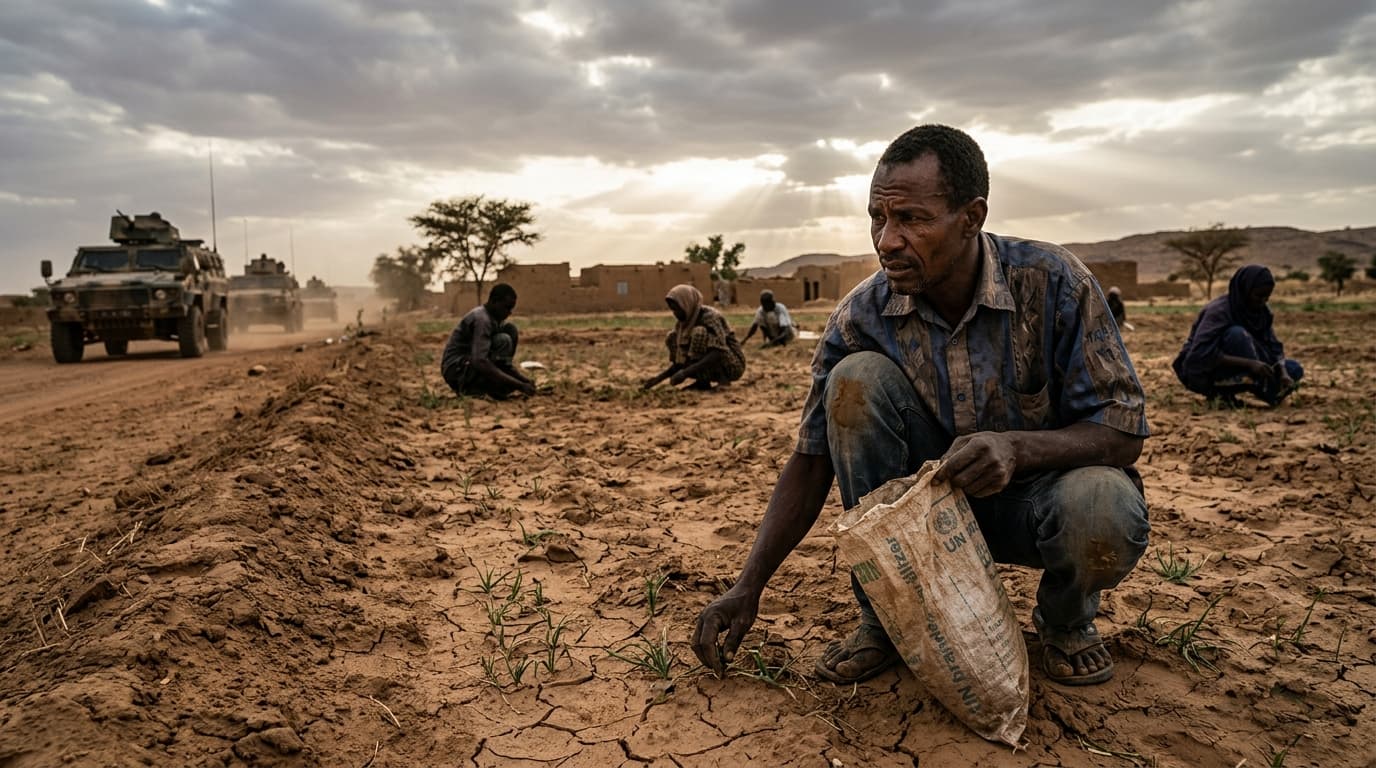
West Africa Food Crisis: Three Shocks in 2026
Conflict, climate extremes, and the Strait of Hormuz closure drive a severe food crisis in West and Central Africa, with fertilizer prices surging 80% and millions displaced.