Trump's Attacks on Judges
Judicial independence faces unprecedented challenges from Trump.
Model Diplomat3 min readNorth America

Trump’s Attacks on Judges Force the Courts to Respond
Trump benefits when adverse rulings look partisan. The judiciary is pushing back more openly, but enforcement still depends on compliance.
The Hill’s warning about protecting judges reflects a real shift in U.S. power politics: attacks on judges are no longer rhetorical spillover from court losses; they are becoming a tool for raising the political cost of ruling against the White House. That matters because federal courts remain one of the few institutions that can slow presidential action quickly, especially on immigration, spending, and executive authority in US Politics.
The Hill
CNN
The leverage fight is now out in the open
Trump’s leverage is political, not legal. He cannot overrule judges by post, but he can try to delegitimize them, rally supporters, and frame adverse rulings as partisan interference. Chief Justice John Roberts said in May 2025 that impeachment is “not an appropriate response” to disagreement with judicial decisions, reaffirming an earlier rebuke after calls to remove judges who ruled against the administration. CNN
Justice Ketanji Brown Jackson went further, warning in May 2025 that attacks on judges were not random and appeared designed to “intimidate” the judiciary. That is the key point: the immediate target is a ruling, but the broader target is judicial independence itself. USA Today
CNN
This is already visible in current disputes. On April 16, 2026, U.S. District Judge Richard Leon blocked the above-ground portion of Trump’s White House ballroom project, and Trump responded by attacking Leon as a “Trump Hating” judge while the administration prepared an appeal. CBC/AP
The judiciary is starting to behave like an institution under pressure
What changed over the past year is that judges are answering back more directly. In February 2026, new federal judicial ethics guidance said judges may speak out against “illegitimate” attacks on the courts and on judicial independence. That is unusual, and it signals that the judiciary no longer sees silence as cost-free. CNN
The pressure is not theoretical. The Washington Post reported in May 2025 that rising threats against judges and courthouses had prompted renewed calls for more security funding and stronger protection measures. The losers here are concrete: federal judges, court staff, and the U.S. Marshals Service teams responsible for protecting them. The beneficiary is any executive that can make court enforcement look optional or politically suspect inside the United States.
The Washington Post
What to watch next
Watch two things. First, whether attacks on individual judges are followed by actual noncompliance with court orders in the administration’s highest-stakes cases. Second, whether Congress and the judiciary move from speeches to money — specifically, added funding and authorities for judicial security.
The next real test comes in the final stretch of the Supreme Court’s term, when emergency applications and merits rulings will show whether lower-court resistance is being narrowed, upheld, or politically isolated. If the White House keeps personalizing adverse rulings, the issue stops being judicial etiquette and becomes a contest over which branch can make its orders stick.
Discover more
Global Politics
Trump's Conflicting Messages on Iran War
Trump's mixed messages on Iran reflect a strategy of audience management, benefiting Tehran amid a complex geopolitical landscape.

Conflict & Security
Drone Warfare Killing Aid Workers at Unprec
Over 1,000 humanitarian workers killed in three years as cheap armed drones collapse legal protections. Gaza, Sudan, Ukraine, and DRC see deliberate targeting of aid convoys and hospitals with zero prosecutions.

Global
World Normalises Taliban as Afghan Women Eras
UN data shows Afghan women erased from public life as Russia recognises the Taliban, EU hosts officials in Brussels, and ICC warrants for gender persecution go unenforced.
Conflict & Security
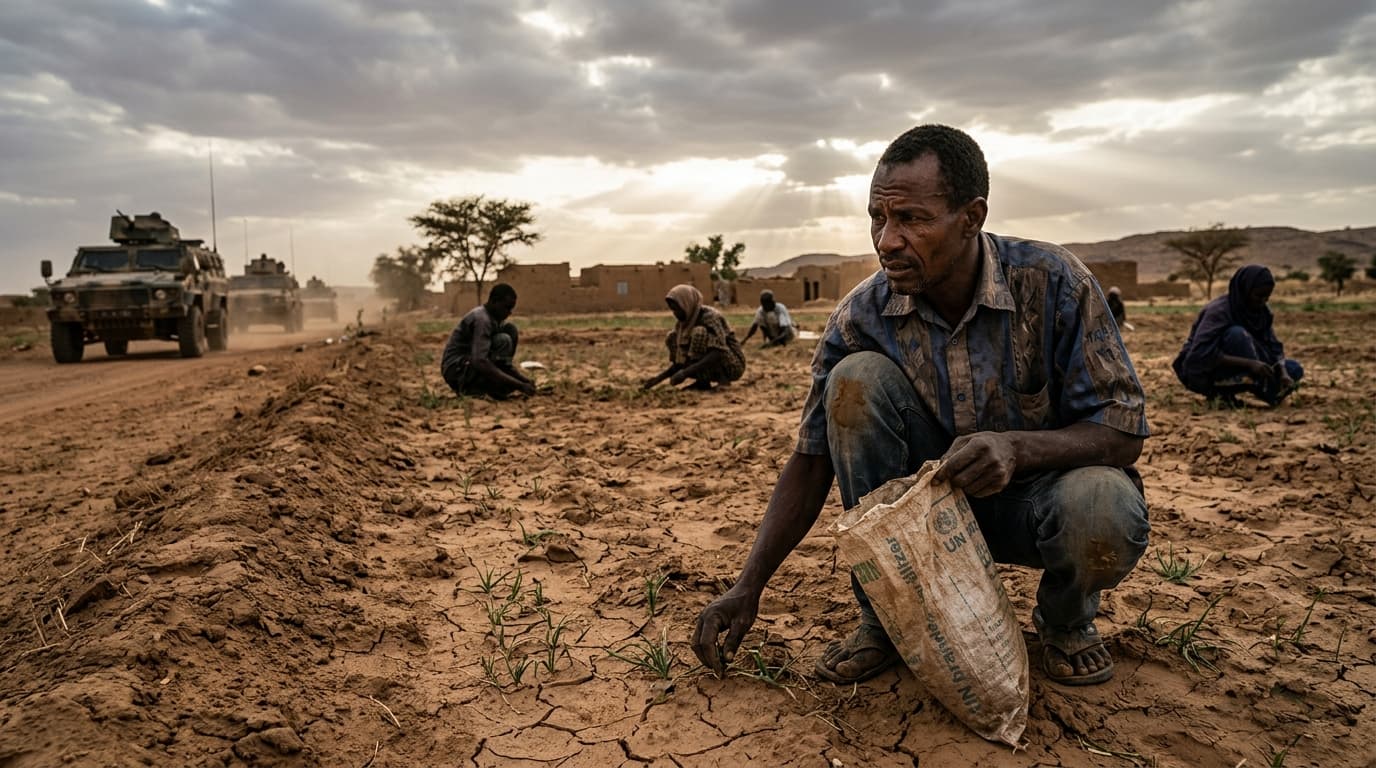
West Africa Food Crisis: Three Shocks in 2026
Conflict, climate extremes, and the Strait of Hormuz closure drive a severe food crisis in West and Central Africa, with fertilizer prices surging 80% and millions displaced.