Trump’s anti-weaponization fund is splitting Senate Republicans
Trump tried to attach a loyalty test to an ICE funding bill — and Senate Republicans are now choosing between deportation money and his compensation fund.
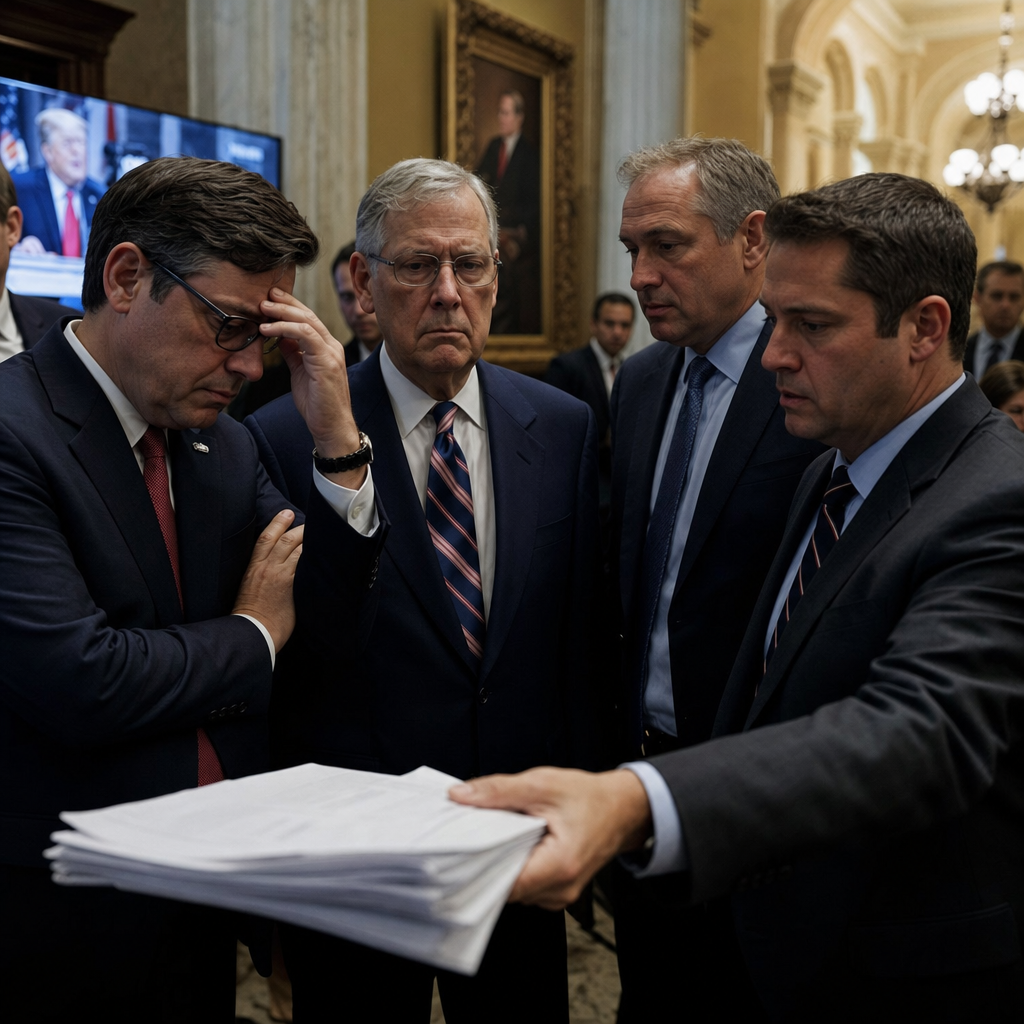
President Donald Trump’s push for a $1.776 billion “anti-weaponization fund” has blown up the GOP’s ICE and Border Patrol package, leaving roughly $72 billion in immigration enforcement money stalled after Republicans walked away from Thursday’s talks, according to  Axios. The immediate obstacle is not Democratic opposition; it is Republican anger that Trump added a separate fund for people who claim they were unfairly targeted by the government. Sen. Lisa Murkowski called it a “bomb” in the bill, while Sen. Ron Johnson called the episode a “galactic blunder,” Axios reported.
The leverage is now in the hands of Senate moderates
Trump is using the reconciliation process to try to bundle his immigration priorities with a politically loaded compensation fund, but that only works if Senate Republicans stay disciplined. They are not.  CNN reported that the fund would tap the Treasury’s Judgment Fund to compensate people Trump says were victims of “lawfare and weaponization,” with the commission running the program effectively under White House control. That is why even some Republicans are uneasy: the money is not just about legal settlements, but about formalizing a payout structure for Trump allies.
That helps explain the revolt from senators such as Bill Cassidy, Thom Tillis and Murkowski, who are already nervous about giving Trump another symbolic win after he has aggressively punished intraparty dissent. The White House is asking them to swallow a controversial fund while also backing a huge immigration-enforcement appropriation. That is a bad trade for moderates, who get the blame if the package stalls and no real upside if it passes.
ICE funding is the hostage, not the prize
The bigger story is that Trump is now using ICE funding as leverage for his own political priorities, but the tactic is backfiring. The immigration bill is the durable part of the package: Republicans broadly want to fund deportation operations and border enforcement, and  AP reported that Democrats have already blocked that money for months. But by grafting the anti-weaponization fund onto the same vehicle, Trump has turned a straightforward enforcement bill into a referendum on his personal grievance politics.
That is where the institutional risk shows up. Senate Republicans still need near-unanimity to move reconciliation legislation through the chamber, and CNN reported that GOP leaders were already struggling with other Trump add-ons because of the optics and the parliamentary rules. If the leadership strips out the compensation fund to save the ICE bill, Trump loses a signature side project. If they keep it, they risk blowing up the enforcement package altogether.
What to watch next
The next decision point is whether Senate leaders cut the fund before the bill reaches its next reconciliation test and whether Trump publicly lashes out at defectors. Watch the Senate Judiciary Committee markup and any revised language dropped into the bill next week; that will tell you whether Republicans are still trying to save both Trump priorities, or quietly choosing ICE funding over the “anti-weaponization” fund.