Acosta's $5M Claim Challenges Trump's DOJ
Jim Acosta's claim highlights control over Trump's fund.
Model Diplomat3 min readNorth America
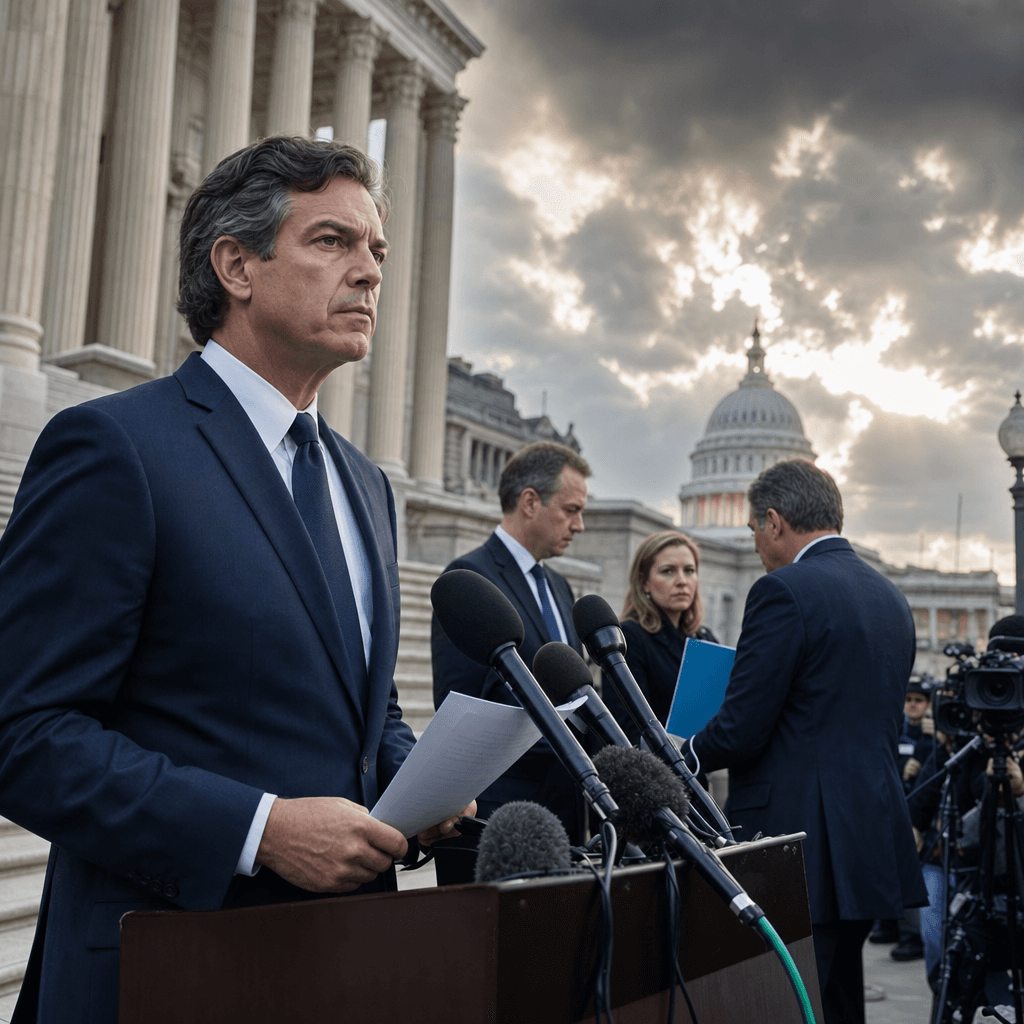
Acosta’s $5M Demand Tests Trump’s DOJ Compensation Fund
Jim Acosta’s satirical $5 million claim spotlights who controls Trump’s anti-weaponization fund and who could be paid from it.
Former CNN chief White House correspondent Jim Acosta asked acting Attorney General Todd Blanche to cut him a $5 million check from the Justice Department’s new “anti-weaponization” fund, arguing that Trump’s 2018 seizure of his White House press pass violated his rights and damaged his career (The Hill). The ask is a stunt, but the fund is real: DOJ says the $1.776 billion program will compensate people who claim they were wrongly targeted by prior administrations, with payments drawn from the department’s Judgment Fund (
The Washington Post;
CNN Politics).
The leverage sits with Blanche, not the claimants
The important fact is who gets to decide. DOJ says the fund will be run by a five-member commission appointed by Blanche, with one member chosen in consultation with congressional leadership, and CNN reports Blanche told senators there is “no limitation on the claims” and that anyone can apply (CNN Politics;
CBC News/AP). That gives the Trump administration broad discretion to define who counts as a victim of “weaponization” and who does not. It also explains why critics in both parties have attacked the arrangement as a taxpayer-backed payoff mechanism, not a neutral claims process (
The Washington Post).
Acosta is making the fund look absurd on purpose
Acosta is not really bidding for federal compensation. He is using Trump’s own grievance politics against the administration, forcing it to defend a program that was announced as a response to “lawfare and weaponization” but is already being read as a vehicle for rewarding allies (The Hill;
CNN Politics). His 2018 clash with Trump — the press-pass seizure, the lawsuit, and the eventual restoration of credentials — remains one of the clearest symbols of the first Trump term’s war with the press (
The Hill). By asking for cash in the same language Trump uses to demand retribution, Acosta makes the administration’s logic look elastic: if the state can compensate those it says were abused, the question becomes who gets to define abuse.
That is why the real loser here is institutional credibility. The obvious beneficiaries are Trump allies who faced investigations, prosecutions, or public censure and now have a route to seek money from a DOJ-run fund without judicial oversight (CNN Politics;
CBC News/AP). Acosta’s request may end as a punchline, but it sharpens the central issue: the administration is turning grievance into a government program.
What to watch next
The next decision point is Blanche’s follow-up defense of the fund and the appointment of the five-member commission, because that will determine whether this becomes a one-off political settlement or a standing payout system (CNN Politics). Also watch whether Democrats move to challenge the arrangement in Congress or in court, especially given the lack of judicial review and the fund’s open-ended eligibility rules (
The Washington Post;
CNN Politics). For broader context on the U.S. power struggle, see
US Politics and
United States.
Discover more
US Politics
House Ethics Committee Pushes Sexual Miscond.
The House Ethics Committee has shifted responsibility for sexual harassment settlement records to the Office of Congressional Workplace Rights, complicating disclosure efforts.

Conflict & Security
Drone Warfare Killing Aid Workers at Unprec
Over 1,000 humanitarian workers killed in three years as cheap armed drones collapse legal protections. Gaza, Sudan, Ukraine, and DRC see deliberate targeting of aid convoys and hospitals with zero prosecutions.

Global
World Normalises Taliban as Afghan Women Eras
UN data shows Afghan women erased from public life as Russia recognises the Taliban, EU hosts officials in Brussels, and ICC warrants for gender persecution go unenforced.
Conflict & Security
West Africa Food Crisis: Three Shocks in 2026
Conflict, climate extremes, and the Strait of Hormuz closure drive a severe food crisis in West and Central Africa, with fertilizer prices surging 80% and millions displaced.