Trump's $400 Million Ballroom Case
Legal battle reveals secrets of the White House bunker complex.
Model Diplomat2 min readUnited States
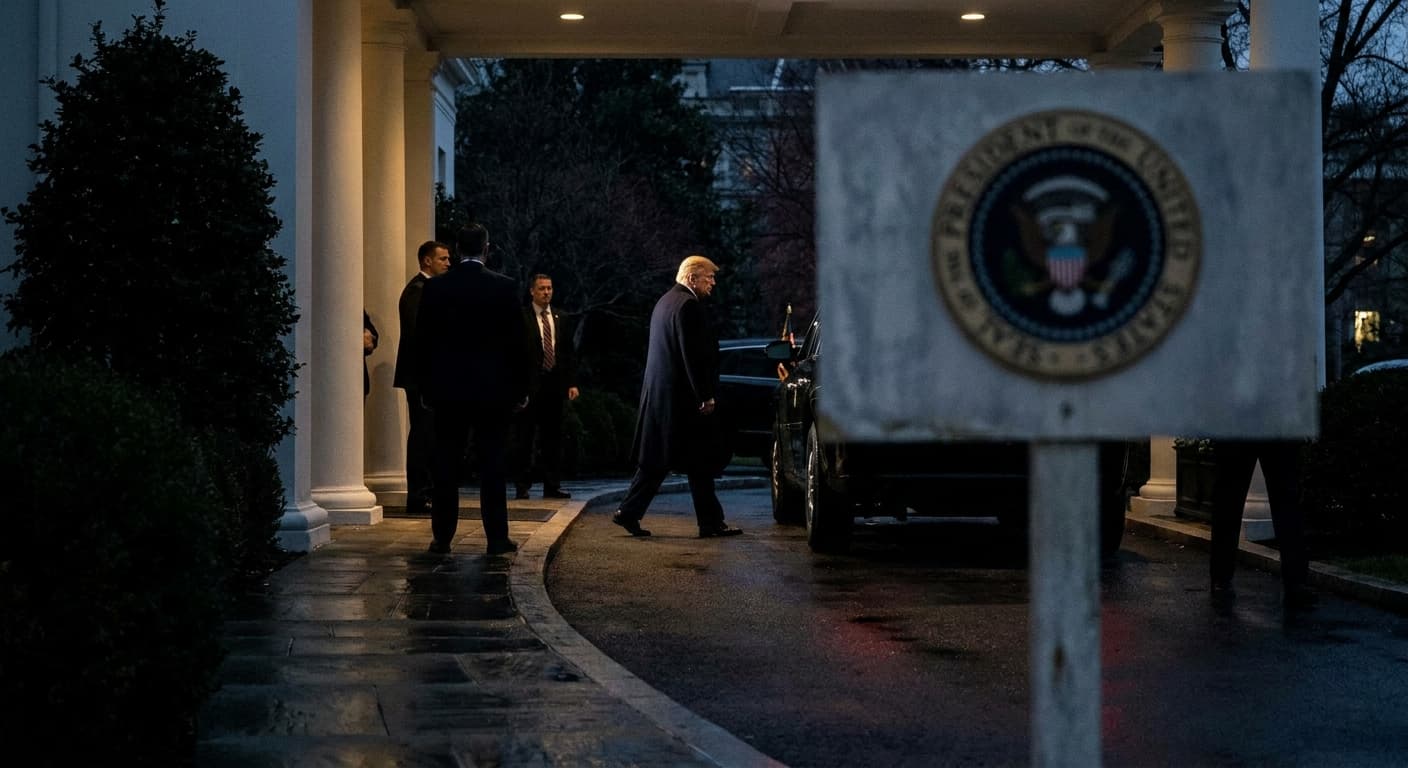
Trump’s $400 Million Ballroom Case Revives White House Bunker History
Legal battle over Trump’s extravagant White House ballroom underscores decades of secrecy and presidential security trade-offs.
Former President Donald Trump’s court fight over the $400 million White House ballroom project — built beneath the executive mansion — has peeled back layers of secrecy about the White House bunker complex. The dispute, reported by The Washington Post today, triggers renewed scrutiny over how much executive privilege and public transparency intersect with presidential security measures.
Why the Ballroom Project Matters
The ballroom and associated amenities, allegedly funded by Trump’s private resources, highlight a longstanding tension: presidential security demands often justify restricted information, but their scale and intentions can provoke political and legal challenges. The White House bunker, a secured underground facility expanded since JFK’s era, forms the backbone of executive continuity plans—designed to protect the president in crises.
Yet Trump’s expensive ballroom, reportedly doubling as extended bunker space, crosses into an opaque zone. The project’s finance and justification remain murky, sparking questions about misuse of public trust and executive overreach. Given the $400 million price tag, it far exceeds previous White House renovation norms, stirring debates on accountability.
Historical Context: The White House Bunker’s Evolution
White House bunkers date to Cold War fears, with significant expansions under presidents from Eisenhower through Obama to Trump. Designed for survival through nuclear or other threats, the bunker’s details are usually classified to ensure effectiveness. This tradition of secrecy—part national security, part presidential privilege—makes legal challenges like Trump’s rare but politically explosive.
Past conflicts around White House renovations have generally stayed out of the public eye. Trump’s case is unusual for becoming a high-profile legal and political issue, shedding light on an institution usually off-limits.
What to Watch Next
The key risk is how courts balance executive privilege against demands for transparency. Watch how judges assess Trump’s financial claims versus government oversight on securitized presidential spaces. This case could set a precedent for scrutiny over future White House expansions or expenditures, especially those funded by private means but linked to security.
Also, political opponents may leverage this controversy to frame broader critiques of Trump’s handling of presidential norms and expenditures. Given the high-profile nature, congressional inquiries could follow, challenging how presidents exploit or protect secret national security resources.
This episode also spotlights a larger paradox: securing democracy sometimes requires secrecy—but unchecked, secrecy fuels suspicion and legal entanglements. The White House bunker, once a silent safeguard, now sits at the center of public debate over presidential accountability.
For deeper context on presidential security and legal norms, see United States politics and
Global Politics.
Discover more
US Politics
House Ethics Committee Pushes Sexual Miscond.
The House Ethics Committee has shifted responsibility for sexual harassment settlement records to the Office of Congressional Workplace Rights, complicating disclosure efforts.
US Politics
Congress Targets AI Chatbot Access for Terror
The House passed the Generative AI Terrorism Risk Assessment Act, focusing on AI's role in terrorism and potential surveillance implications.

Conflict & Security
Drone Warfare Killing Aid Workers at Unprec
Over 1,000 humanitarian workers killed in three years as cheap armed drones collapse legal protections. Gaza, Sudan, Ukraine, and DRC see deliberate targeting of aid convoys and hospitals with zero prosecutions.

Global
World Normalises Taliban as Afghan Women Eras
UN data shows Afghan women erased from public life as Russia recognises the Taliban, EU hosts officials in Brussels, and ICC warrants for gender persecution go unenforced.