Trump to Lift Syria Terrorism Designation
Unlocking courts and IMF funding for Syria
Model Diplomat7 min readMiddle East
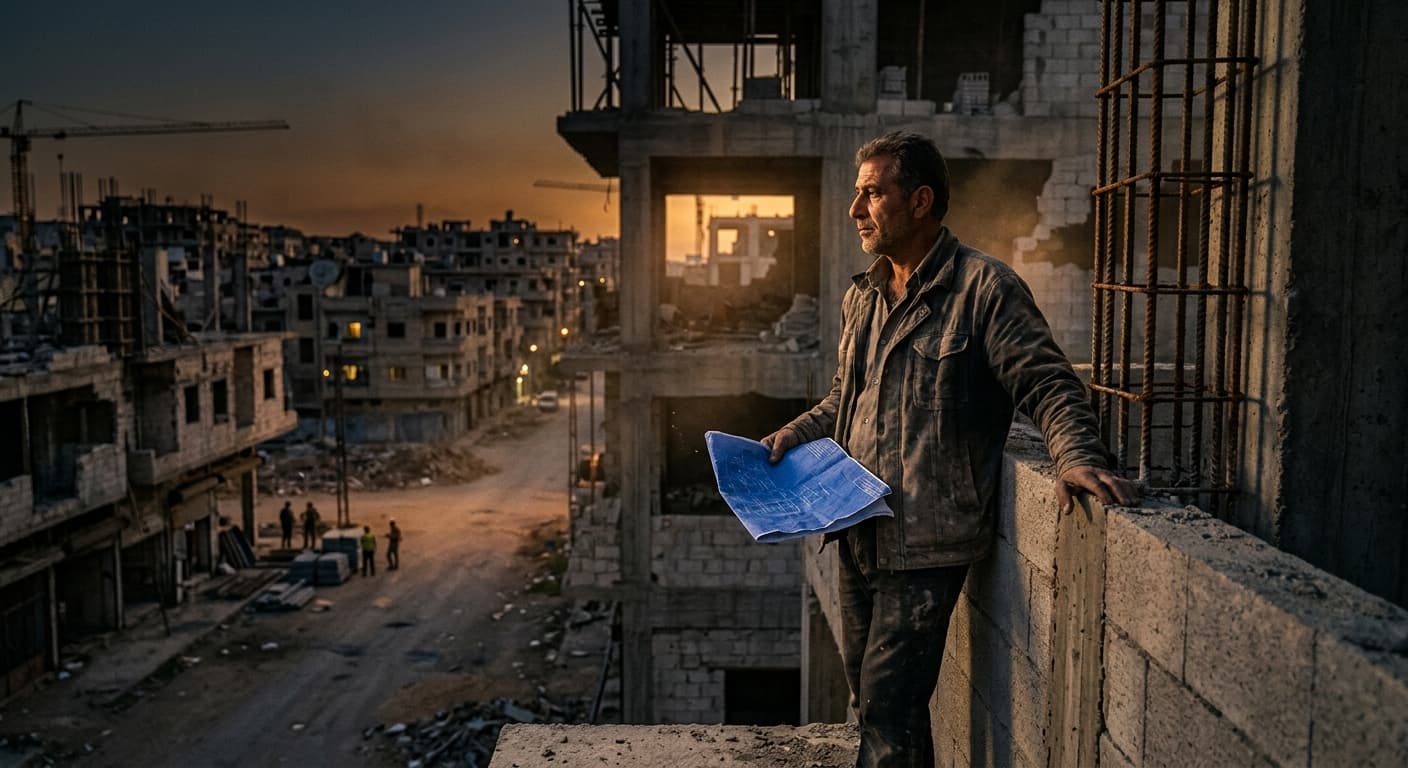
Trump moves to lift Syria terrorism designation, unlocking courts and IMF
Trump notified Congress July 8, 2026 he will remove Syria's state-sponsor-of-terrorism label — the last legal barrier to reconstruction finance and the door to sovereign immunity in US courts.
President Donald Trump's July 8 notification to Congress that he intends to strike Syria from the US state sponsors of terrorism (SST) list is not, at this point, a sanctions story. Washington already dismantled its Syria sanctions program on July 1, 2025. It is a litigation and multilateral-finance story: rescission would restore Syrian sovereign immunity in US federal courts, where hundreds of default judgments are accumulating, and lift the statutory US "no" vote against IMF and World Bank lending. That is what unlocks the $216 billion reconstruction bill the World Bank puts on the table, and it is why Ahmed al-Sharaa's government, not any American ally, is the immediate winner.
Secretary of State Marco Rubio confirmed the 45-day congressional review clock started on July 8, in a statement issued as Trump met al-Sharaa on the sidelines of the NATO summit in Ankara. Barring a joint resolution of disapproval, which the current Congress will not pass, Syria exits the list on or about August 22, 2026, ending a designation in place since December 29, 1979.
The designation was never mainly about sanctions
By the time Trump signed the notification, the SST label was a legal shell. Executive Order 14312, published in the Federal Register on July 3, 2025, revoked six Syria-related national-emergency orders and terminated the underlying emergency. The Treasury's Office of Foreign Assets Control
confirmed it removed 518 persons from the Specially Designated Nationals list and struck the Syrian Sanctions Regulations from the Code of Federal Regulations. HTS lost its Foreign Terrorist Organization tag on July 8, 2025, per
BBC News; al-Sharaa himself was pulled off the Specially Designated Global Terrorist list in November,
Al Jazeera reported. In December 2025, Senator Jeanne Shaheen
secured repeal of the Caesar Act inside the FY2026 National Defense Authorization Act.
What remained were the four statutory consequences that flow directly from the SST tag itself: a US "no" vote at international financial institutions under the International Financial Institutions Act; an arms-and-dual-use export ban under §40 of the Arms Export Control Act; a foreign-assistance prohibition under §620A of the Foreign Assistance Act; and the terrorism exception to sovereign immunity under 28 U.S.C. §1605A, the least discussed but arguably most consequential of the four. The Peterson Institute's taxonomy of these tools remains the cleanest single reference on what triggers what.
Why the courts matter more than the sanctions
US federal courts have spent the past two decades using the SST designation as a jurisdictional key to hold Syria liable, in absentia, for terrorist acts carried out by proxies. The pace has accelerated since Assad fell. On September 24, 2025, Judge James Boasberg found Iran and Syria liable, on default, for 115 attacks against US servicemembers and contractors in Iraq between 2003 and 2015 — the first tranche of a suit covering 277 attacks and over 1,000 plaintiffs, per the court's memorandum opinion. A second
order on January 27, 2026 added liability for 37 more attacks. Comparable cases against Damascus for al-Qaeda-in-Iraq killings — including Foley v. Syrian Arab Republic — have been running since 2017.
The relevant statute, 28 U.S.C. §1605A, abrogates a foreign state's immunity only if it was designated an SST at the time of the act or within six months of the filing. Once Syria is delisted, no new claim can attach — but every judgment already entered survives, and every claim already filed retains jurisdiction under §1605A(a)(2)(A)(i)(II). The result: Damascus keeps the legacy liability, loses the prospective exposure. For an economy the World Bank says is trying to attract international banks and issue sovereign debt, that shift matters more than any executive-order flourish.
The Sudan precedent is both the road map and the warning. Khartoum paid $335 million to victims of the 1998 East Africa embassy bombings before Washington delisted it in December 2020, Al Jazeera reported. Congress then passed legal-peace legislation that restored Sudan's sovereign immunity but explicitly preserved 9/11-related cases already pending. No such deal has been publicly negotiated with Damascus. That is the single largest legal ambiguity hanging over al-Sharaa's fundraising road show.
The IMF vote and the money that follows
Under §1621 of the International Financial Institutions Act, the US executive director at every multilateral development bank is required by law to vote against loans, grants, or use of funds for any state on the SST list. That is why, as the Brookings Congressional Study Group noted in January 2025, executive sanctions relief on its own could not restart programmatic IMF or World Bank engagement.
The workaround has been technical assistance and arrears clearance. In May 2025, Saudi Arabia and Qatar paid Syria's $15.5 million in IDA arrears, and the World Bank restarted operations after a 14-year pause. In June 2025 the Bank approved a $146 million IDA grant for electricity, its first Syria project in nearly four decades, per its
country brief. The IMF named Ron van Rooden as mission chief. But full programmatic lending — the kind that anchors a currency, backstops a bond issuance, and de-risks foreign direct investment — cannot happen while Washington is statutorily obliged to oppose it. Delisting removes that obligation.
Central Bank of Syria governor Abdulkader Husrieh, who returned from Canada to take the job, made the case bluntly in The Economist in May 2025: monetary stabilisation depends on reconnecting to global markets. The macro numbers give him cover. According to the
World Bank's April 2026 Macro Poverty Outlook, the Syrian pound has been appreciating since December 2024, inflation dropped from 72.1% in 2024 to an estimated 11.5% in 2025, and real GDP growth was between 2% and 4%. Port traffic increased sixfold; air traffic more than doubled; oil production rose after the February 2026 handover of northeastern fields.
But 90% of households still cannot cover the World Food Programme's Minimum Expenditure Basket, and end-2025 foreign-exchange reserves stood at roughly $200 million — down from $17 billion at the end of 2010, per Al Jazeera. The delisting is thus a precondition for the capital that closes that gap, not a substitute for it.
Who benefits, and who is uneasy
The immediate beneficiaries are Gulf sovereign wealth and Turkish contractors, not American firms. Since the May 2025 sanctions cessation, Syria has signed roughly $27 billion in publicly announced investment memoranda: a $6.4 billion Saudi package in July 2025, then $14 billion in infrastructure deals in August 2025, including a $4 billion Damascus airport project with Qatar's UCC Holding and a $2 billion Damascus metro with a UAE state entity. In February 2026, Riyadh and Damascus signed a further multi-billion-dollar package covering airports, telecoms and energy, per
Al Jazeera. US envoy Tom Barrack has applauded from the sidelines. No American infrastructure firm has yet signed a comparable deal.
The uneasy party is Israel. Trump proceeded with the delisting despite what Al Jazeera characterised as public Israeli misgivings and despite no tangible movement on Syrian-Israeli normalisation. In July 2025, Israeli strikes in Suweida province and the wider Druze crisis brought US Secretary of State Marco Rubio into a mediating role, per BBC News. Rubio himself warned the Senate Foreign Relations Committee in May 2025 that al-Sharaa's transitional authority was "weeks, not many months" from potential collapse absent Western support, a line reported by the
BBC that now reads as the strategic logic driving the whole 2025–26 policy cadence: prop up al-Sharaa or accept a state failure that reopens the door to Iran, Russia and Islamic State cells.
The Congressional Research Service captured the resulting posture in its June 2026 Syria and U.S. Policy brief: the US "no longer maintains a comprehensive Syria Sanctions program," Syria has joined the Global Coalition to Defeat the Islamic State, and until this week remained on the SST list. That contradiction is what Trump has now moved to resolve.
Diplomat View
The Trump administration's calculation is that the marginal cost of keeping Syria on the SST list — chilled bank correspondents, blocked IMF lending, an open litigation front — now exceeds the deterrent value of the label. On the evidence, that call is correct as far as it goes. Al-Sharaa's government has cleared the diplomatic bar the Trump team set: HTS dissolved, foreign fighters nominally under state command, cooperation with the Global Coalition against ISIS, restoration of Syria's voting rights at the Organisation for the Prohibition of Chemical Weapons on July 9, 2026.
The falsifiable call: delisting will produce a step-change in Syria's access to multilateral finance by the end of Q1 2027 — a first IMF Article IV mission concluding, at minimum a Staff-Monitored Program, and the World Bank Group moving beyond the electricity grant to a broader country partnership. If none of that has materialised by March 31, 2027, the read will be that private-sector de-risking, unresolved FSIA judgments, and Israeli veto pressure are structurally slowing reintegration in a way sanctions relief alone cannot fix. If instead Damascus prints a first sovereign eurobond in that window — as central bank rhetoric implies it wants to — the SST rescission will be remembered as the pivot. The sovereign eurobond yield at first pricing will be the market's unambiguous verdict on whether the SST rescission was the pivot or merely the precondition.
What to watch next
- August 22, 2026: 45-day congressional review window closes. A joint resolution of disapproval requires majorities in both chambers; none is drafted.
- September–October 2026: First IMF Article IV consultation under new leadership; expected mission chief Ron van Rooden's initial findings due.
- By December 31, 2026: US Treasury guidance on whether Syrian sovereign assets held in the US remain subject to attachment under §1605A judgments entered before rescission — the single largest legal question for any bank contemplating a Syria correspondent relationship.
- Q1 2027: Damascus has signalled intent to issue treasury bills and, later, a first sovereign bond. Yield at pricing will be the market's verdict on the delisting.
Discover more

US Politics
SNAP Food Assistance Faces Legal Challenges
In 2026, SNAP faces stricter eligibility rules and mounting legal challenges, threatening food assistance for the millions of Americans who rely on the program.

Global Politics
US Seizes Iranian Ship, Tensions Surge
The US seizure of the Iranian ship Touska highlights a shift in control over the Strait of Hormuz, favoring Iran's strategic position.
US Politics
Virginia's Redistricting Referendum
Virginia's redistricting referendum is drawing a flood of dark money, shaping future elections and the fight for congressional control amid party stakes.

Economics
Fed's Amex AML order puts correspondent banking on notice
Federal Reserve's Amex AML order requires board-level controls and a 90-day plan; OCC fined the bank $350 million over enterprise-wide deficiencies.