Trump ICC Sanctions Face Fourth Legal Free-Sp
Fourth lawsuit challenges Trump's ICC sanctions as courts side with free speech
Model Diplomat8 min readNorth America
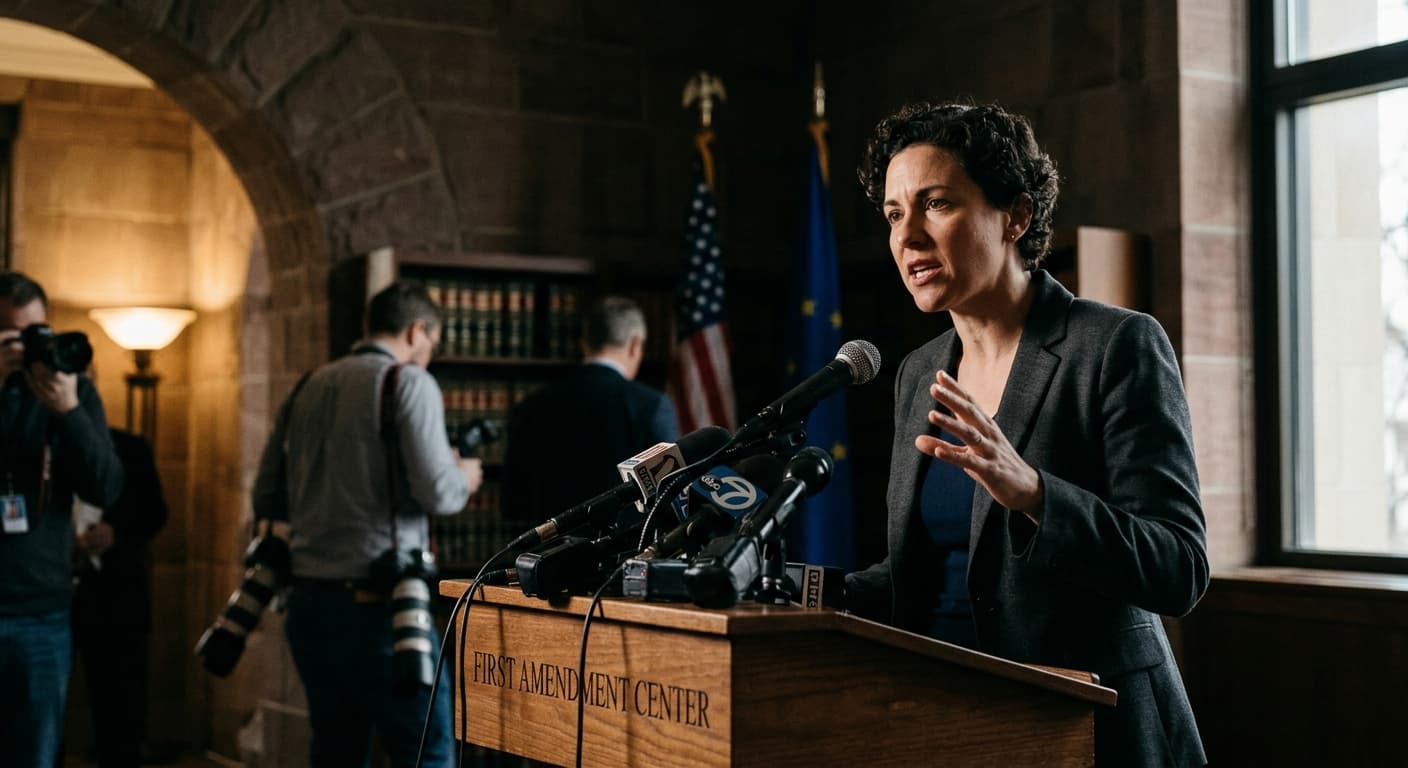
Trump's ICC Sanctions Face Fourth Legal Challenge as Courts Side With Free Speech
A lawsuit filed July 15, 2026 by DAWN and TAAG is the fourth challenge to Executive Order 14203 — and two federal courts have already ruled the order likely violates the First Amendment, raising the question of whether the administration can criminalize Americans' speech to a tribunal Congress explicitly shielded by statute.
A lawsuit filed on July 15, 2026 by two U.S.-based advocacy groups argues that Trump's sanctions on the International Criminal Court violate the First Amendment and exceed the president's statutory authority — and it is the fourth such challenge to reach federal court, joining suits by law professors, ICC judges, and a U.N. rapporteur, at a moment when two federal judges have already ruled the executive order likely unconstitutional. BBC News The real stakes are not the ICC's survival — the court has 125 member states and the backing of the European Union — but whether a president can criminalize Americans' speech to an international tribunal that Congress explicitly protected from sanctions when it wrote the underlying statute.
Four lawsuits, one executive order, one statute
Executive Order 14203, signed on February 6, 2025, invokes the International Emergency Economic Powers Act (IEEPA) to impose financial and visa sanctions on ICC officials who investigate U.S. citizens or allies, and to prohibit any person — including U.S. citizens — from providing "services … for the benefit of" sanctioned individuals. BBC News The order designated ICC Prosecutor Karim Khan on its first day and has since been used to sanction at least four ICC judges, three Palestinian rights organizations, and U.N. Special Rapporteur Francesca Albanese.
Al Jazeera
The legal challenges now stack four deep. The DAWN and Taxpayer Alliance Against Genocide (TAAG) suit, filed July 15, follows a parallel action by law professors Gabor Rona and Lisa Davis in the Southern District of New York; a suit by three sanctioned ICC judges — Kimberly Prost of Canada, Solomy Balungi Bossa of Uganda, and Reine Adelaide Sophie Alapini-Gansou of Benin — filed June 25; and a challenge by Albanese in the District of Columbia. Al Jazeera Each attack the same order on overlapping but distinct grounds.
The statutory core of every challenge is IEEPA's own text. 50 U.S.C. § 1702(b) expressly exempts from presidential sanctions authority "any postal, telegraphic, telephonic, or other personal communication" and "the importation from any country, or the exportation to any country … of any information or informational materials." Congress wrote that exemption in 1994 to prevent presidents from using economic-emergency powers to regulate speech. The DAWN/TAAG complaint alleges that EO 14203's prohibition on providing "services" to sanctioned ICC officials sweeps in exactly the informational and advisory exchanges Congress carved out.
Al Jazeera
The Congressional Research Service flagged this vulnerability in a formal report, noting that courts have found IEEPA-based provisions "likely constitute indirect regulations of 'personal communication[s]' or the exchange of 'information or informational materials'" in violation of § 1702(b). Congressional Research Service The plaintiffs' ultra vires claim — that the president exceeded the authority Congress granted — is not a novel theory. It is the government's own research arm describing the problem.
Why the First Amendment argument is winning
The DAWN/TAAG suit arrives with the strongest possible tailwind: two federal courts have already ruled that EO 14203's predecessor language — and EO 14203 itself — violates the First Amendment.
The precedent runs through Judge Katherine Polk Failla's 2021 ruling in Open Society Justice Initiative v. Trump, which struck down Trump's first-term ICC sanctions order (EO 13928) as a content-based speech restriction that could not survive strict scrutiny. CourtListener The Biden administration did not appeal, and rescinded the order.
EO 14203 reinstated "materially identical" language, as the Rona complaint puts it, including "the exact language" Judge Failla found likely unconstitutional. CourtListener The result was predictable. On July 18, 2025, Judge Nancy Torresen in the District of Maine granted a preliminary injunction in Smith v. Trump, finding the order "appears to restrict substantially more speech than necessary" and burdens "speech-based services that benefit the Prosecutor, regardless of whether those beneficial services relate to an ICC investigation of the United States."
CourtListener
Judge Jesse Furman in the Southern District of New York went further. Consolidating the preliminary injunction with a trial on the merits, he granted a permanent injunction in Rona v. Trump, concluding that EO 14203 "constitutes a content-based regulation of their speech-based activities and cannot survive strict scrutiny." CourtListener A permanent injunction — not a temporary hold — is an unusually firm judicial posture for an executive order still in its first year.
The constitutional logic is straightforward. The order prohibits speech that benefits sanctioned ICC officials but permits speech adverse to the ICC — a viewpoint-based distinction. It sweeps in all speech-based services to the Prosecutor regardless of whether they touch U.S. or allied personnel, meaning it burdens far more expression than the government's stated interest requires. Under strict scrutiny, that overbreadth is fatal. The government argued the order advances a "compelling" interest in protecting U.S. personnel from ICC prosecution; Judge Torresen assumed the interest was compelling but found the means not narrowly tailored. CourtListener
The DAWN/TAAG plaintiffs add a dimension the prior suits did not emphasize: the chilling effect on pro-Palestinian advocacy specifically. The groups allege they halted submissions to the ICC and ceased coordinating with sanctioned Palestinian organizations "for fear of potential fines and other reprisals," framing the order as a tool to "police the political expression of millions of Americans." BBC News This matters because it ties the constitutional claim to a live political constituency — advocacy organizations, academics, and human rights groups — whose self-censorship gives courts concrete injury to remedy.
The judges' suit adds a different dimension entirely. Prost, Bossa, and Alapini-Gansou argue that the sanctions amount to "the financial death penalty": blocked from banking services, credit cards, online platforms, travel booking, and in some cases health insurance. Al Jazeera Their complaint frames the sanctions as extrajudicial punishment for judicial decisions — an attempt to coerce future rulings by targeting judges' personal finances.
CourtListener That is a separation-of-powers argument with no direct precedent in U.S. sanctions law.
The escalation problem: dismantling what courts are protecting
The litigation pressure arrives as the administration is escalating, not retreating. On July 13, 2026, Secretary of State Marco Rubio announced a "whole-of-government response to systematically disable" the ICC, vowing to use "all the tools at our government's disposal" to "dismantle the ICC, brick by brick, if necessary." Al Jazeera The State Department's campaign document threatens "increased scrutiny" of nations that cooperate with the court while relying on U.S. assistance — meaning sanctions on governments, not just ICC officials.
Al Jazeera
This creates a collision course. The administration is moving from defensive sanctions on individuals to offensive pressure on sovereign states, while U.S. courts are systematically dismantling the legal authority for the underlying sanctions regime. A president cannot threaten allies for cooperating with an institution if courts have enjoined the executive order authorizing the threats — at least not credibly.
The European Union has drawn its own line. Commission President Ursula von der Leyen pledged "full support" for the ICC after the June 2025 judge sanctions, calling attacks on the court "simply not acceptable." Al Jazeera Slovenia proposed activating the EU's Blocking Statute — the mechanism that lets European companies disregard U.S. extraterritorial sanctions — a step last used against Iran and Cuba sanctions.
Al Jazeera Human Rights Watch and 57 other NGOs have formally urged the EU Commission to activate the statute.
Human Rights Watch
The diplomatic calculus is brutal for Washington. The ICC has 125 member states, including every EU nation. The U.S. and Israel are not members. Rubio's campaign asks those 125 states to choose between cooperating with a court their legal systems are built to support and maintaining access to U.S. assistance. The Carnegie Endowment's analysis frames this as "the first real effort to destroy an existing multilateral institution" — pure destruction rather than the defection, disruption, or conditional cooperation the administration has applied to other bodies. Carnegie Endowment
Who wins, who loses
The decisive numbers are already on the table. Two federal courts have ruled against EO 14203 on First Amendment grounds — one with a permanent injunction — before the DAWN/TAAG suit even filed. The government did not appeal the 2021 ruling that struck down the identical language. It now faces four active challenges on a statute the Congressional Research Service flagged as vulnerable on its own terms.
The losers are specific. ICC Prosecutor Karim Khan, the four sanctioned judges, the three Palestinian rights groups, and Francesca Albanese face the "financial death penalty" described in the judges' complaint. Al Jazeera But the broader loser is the architecture of U.S. human rights advocacy: DAWN, TAAG, and organizations like them have already self-censored, halting ICC cooperation under threat of 20-year prison sentences.
BBC News
The winner, paradoxically, is the First Amendment. The courts are not defending the ICC — they are defending Americans' right to speak to it. That distinction matters because it reframes the conflict from a foreign-policy dispute into a domestic constitutional one, where executive deference is at its weakest.
What to watch
- DAWN/TAAG preliminary injunction motion: No date set yet, but given the Rona permanent injunction and Smith preliminary injunction on identical claims, the Southern District of New York or assigned venue could rule within weeks. Watch for whether the government appeals the Furman permanent injunction — it has not yet, and a continued refusal signals acquiescence.
- EU Blocking Statute activation: Slovenia formally proposed it in June 2025; the Commission has not acted. A decision would materially shift the sanctions' effectiveness by shielding European ICC cooperation from U.S. penalties.
- Rubio's "diplomatic campaign" specifics: The July 13 announcement listed actions "under consideration" but no timeline. The first concrete designation of a country for ICC cooperation — not just an ICC official — would be the escalation point.
The Bottom Line
The DAWN/TAAG lawsuit is the fourth legal challenge to Executive Order 14203, and it arrives after two federal courts already ruled the order's identical language violates the First Amendment. The administration is escalating its campaign to dismantle the ICC at the precise moment the legal foundation for that campaign is collapsing — not on the merits of international criminal law, but on the U.S. Constitution's speech protections and a statute Congress wrote to prevent presidents from silencing advocacy through sanctions.
Discover more
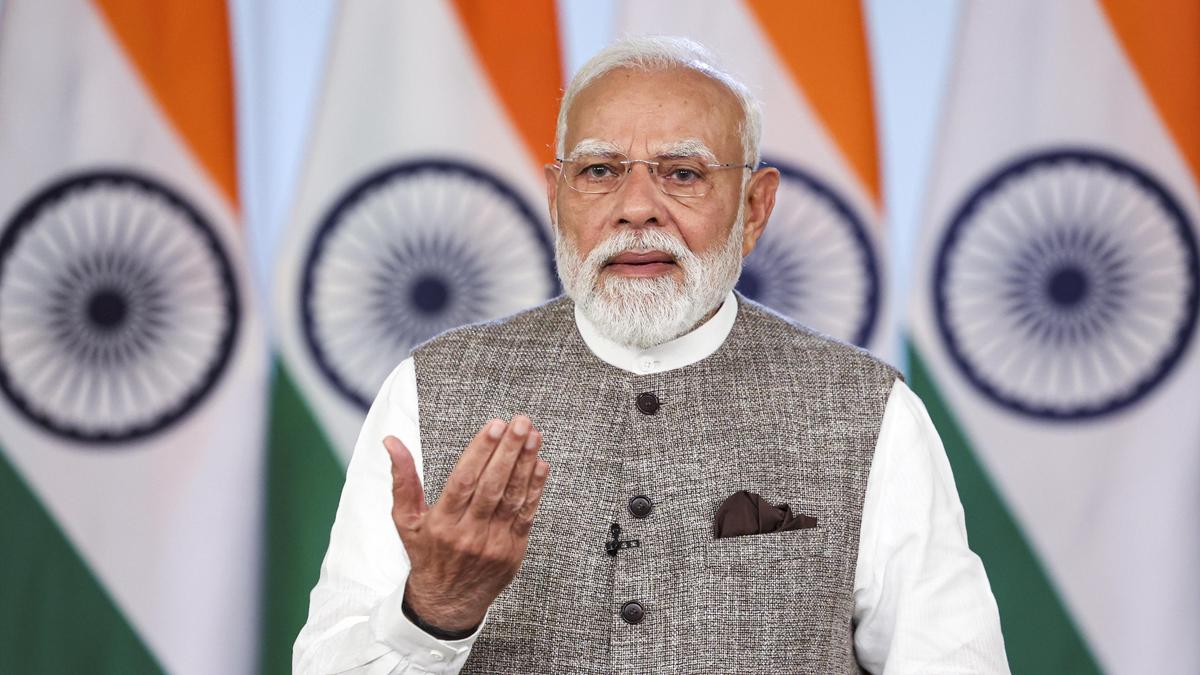
India
700 Activists Accuse PM Modi of MCC Breach
Over 700 activists allege PM Modi breached election code with a televised address attacking opposition parties just before state elections.
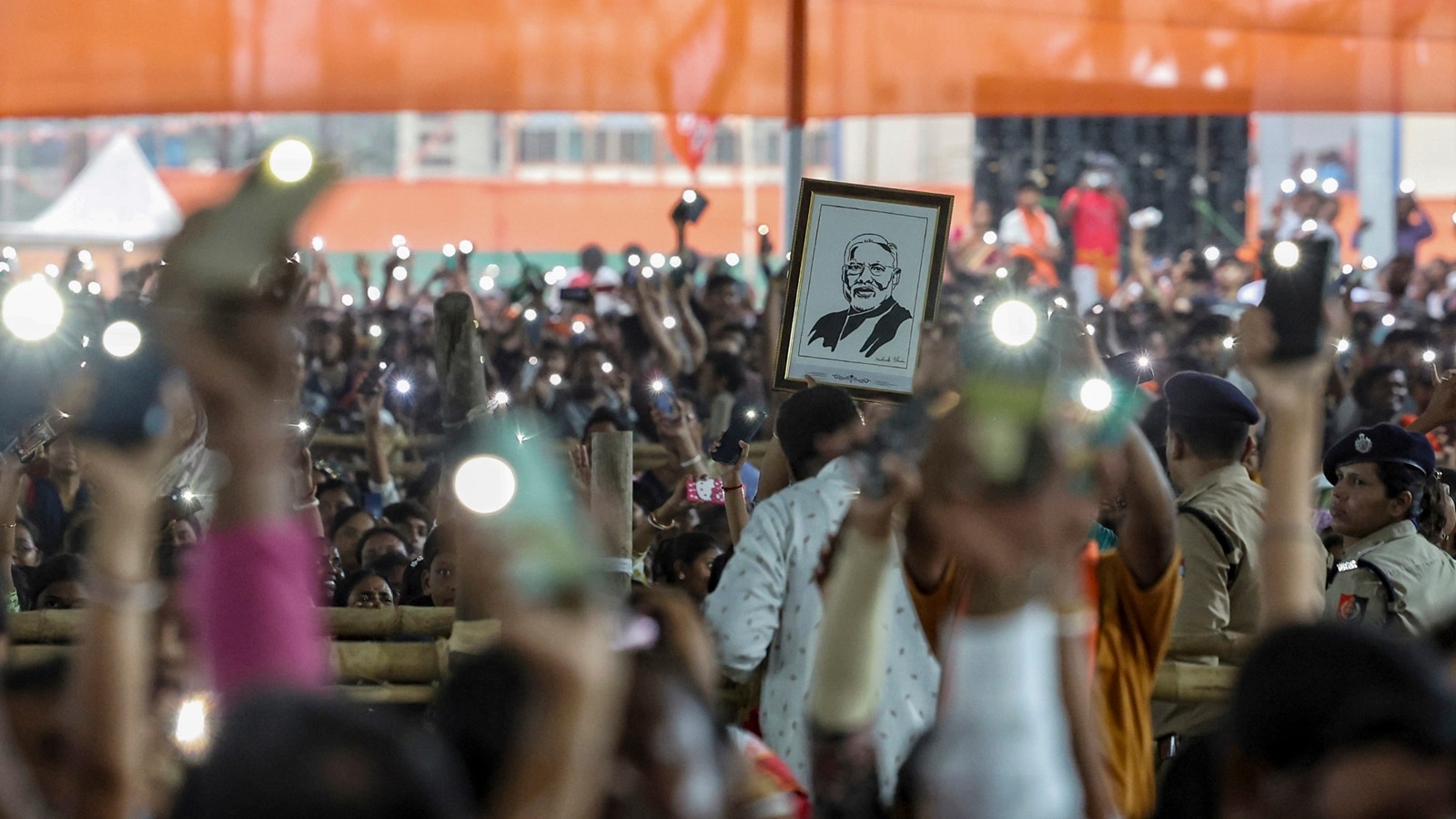
India
Modi's Women’s Convention in Varanasi
Modi's Varanasi rally frames women's reservation as a national mission, targeting the 2027 Uttar Pradesh elections with a strategic narrative.
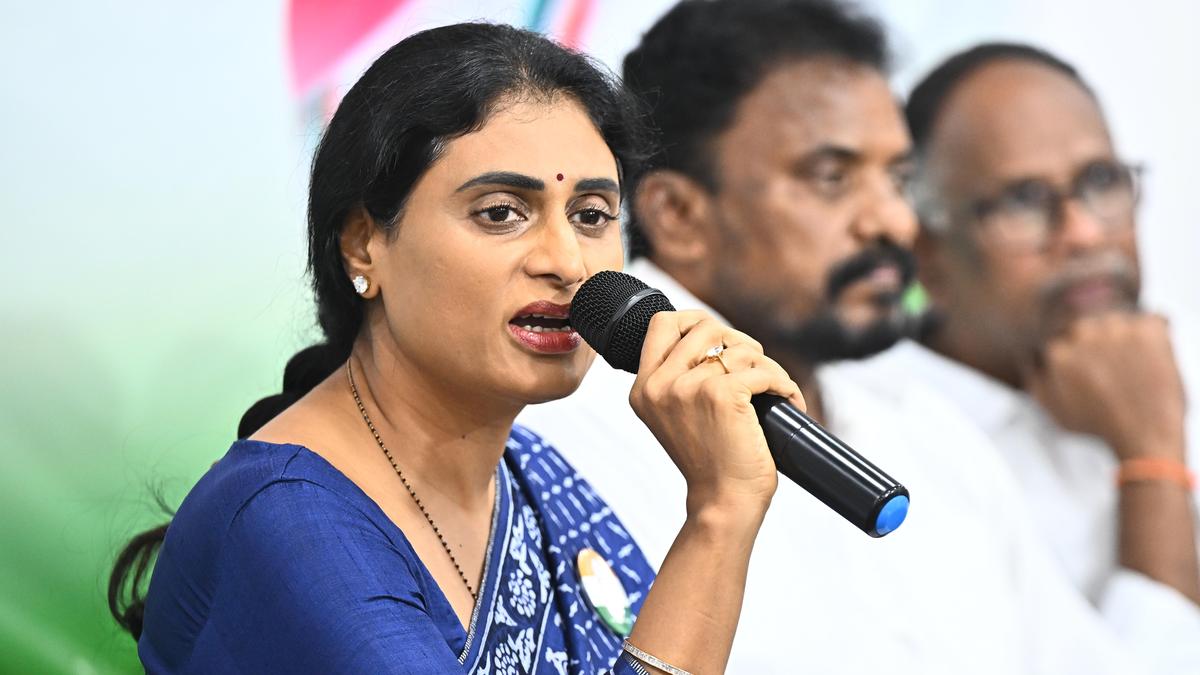
India
Congress Advocates 33% Women’s Quota
Congress calls for a 33% women's reservation in the existing 543 Lok Sabha seats, countering Modi's plan to expand the house to 850 seats.

Economics
Fed's Amex AML order puts correspondent banking on notice
Federal Reserve's Amex AML order requires board-level controls and a 90-day plan; OCC fined the bank $350 million over enterprise-wide deficiencies.