Trump Extends FISA 702 Surveillance Powers
Short-term renewal raises privacy concerns and political tensions
Model Diplomat3 min readUnited States
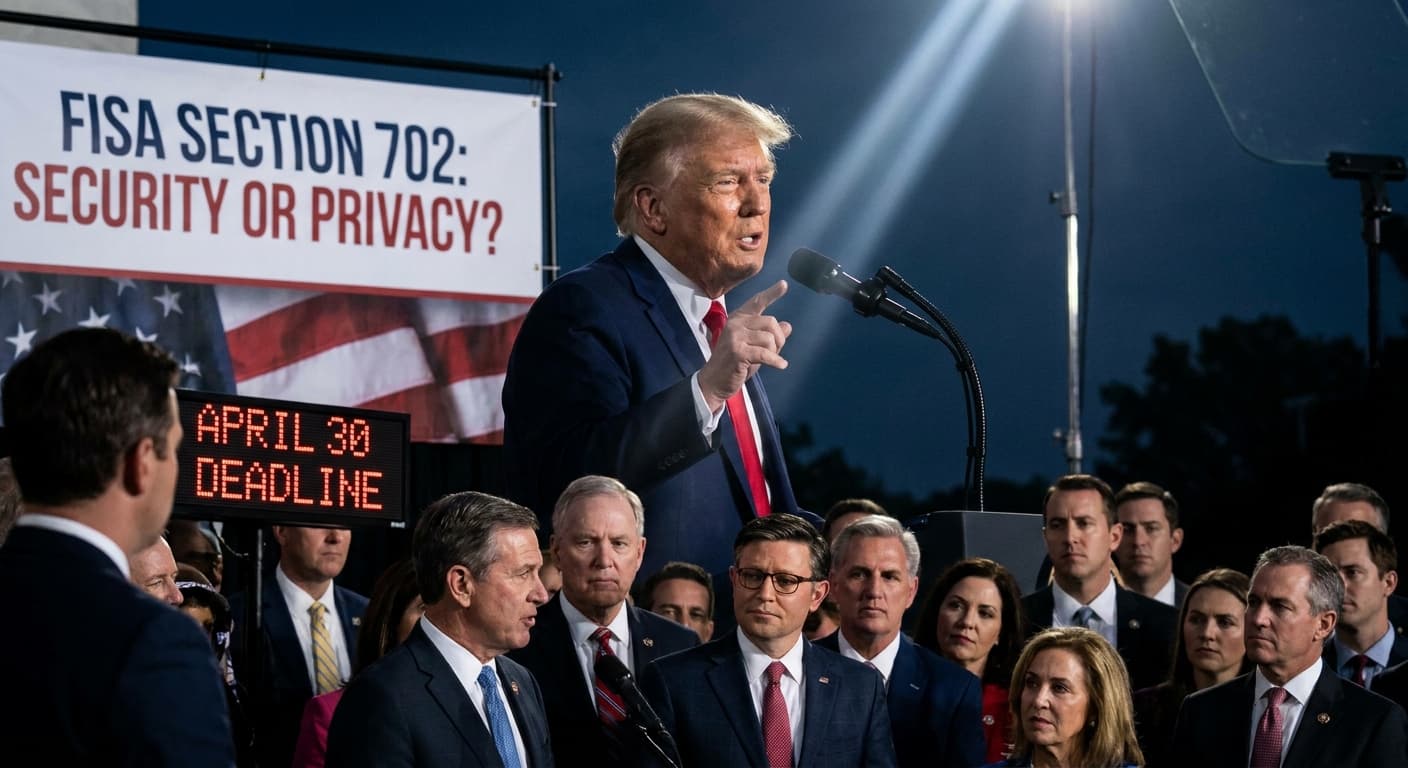
Trump Signs Short-Term Renewal of FISA Section 702 Surveillance Powers
Trump extends controversial Section 702 surveillance authorities until April 30 with a stopgap bill, staving off an immediate shutdown but leaving long-term reform uncertain.
On Saturday, former President Donald Trump signed a short-term bill renewing the Foreign Intelligence Surveillance Act (FISA) Section 702 authorities until April 30. This move extends a surveillance program used by U.S. intelligence agencies to collect foreign communications containing information about terrorists and other national security threats, a program that has been controversial due to concerns about the incidental collection of Americans' communications.
Why This Matters
Section 702 is a pillar of U.S. intelligence efforts post-9/11, allowing agencies like the NSA and FBI to collect data from non-U.S. persons reasonably believed to be outside the country without a warrant. However, critics argue this provision skirts Fourth Amendment protections because it often results in incidental collection of metadata or communications of Americans. Civil liberties groups have long pushed for reforms to increase transparency and impose stricter minimization rules.
The fact that Trump signed only a short-term renewal rather than a full reauthorization underscores the deep political divide on this issue. Congress has struggled for years to reconcile national security priorities with privacy rights. The expired authorization as of April 1 risked halting surveillance programs critical to counterterrorism efforts. This stopgap renewal buys more time but leaves lawmakers facing a tight deadline to negotiate comprehensive reforms.
The Political and Strategic Stakes
Renewing Section 702 is not just about surveillance mechanics—it is deeply tied to broader U.S. debates about security versus privacy, intelligence oversight, and even the role of technology companies who provide data. Many congressional Democrats demand greater safeguards, including enhanced warrant requirements, independent oversight, and better protections for Americans’ data. Some Republicans prioritize unfettered intelligence collection tools to keep pace with evolving global threats.
Trump’s involvement in signing the renewal adds an additional layer of political complexity. While no longer president, Trump’s actions and statements still hold sway in Republican circles. His decision to sign the bill may reflect an effort to project firmness on national security without alienating privacy advocates who oppose permanent renewals without reform. It also signals that FISA’s future will likely continue to be a contentious issue in U.S. politics through the 2026 midterms and beyond.
What to Watch Next
The clock is ticking toward April 30, when the temporary authorization expires. Congress must decide whether to pass a longer-term reauthorization, introduce meaningful reforms, or let critical surveillance powers lapse—each with significant consequences.
Watch for negotiations around specific changes, such as tightening rules for “about” collection (where communications mention a target but are not directly to or from them) and expanding transparency requirements toward the public and Congress. The Biden administration and intelligence agencies will also weigh in, emphasizing the operational importance of Section 702.
Lawmakers, privacy advocates, and intelligence officials alike will frame this debate as a litmus test for balancing national security and civil liberties in the digital age. The stakes touch on global intelligence cooperation, counterterrorism capabilities, and fundamental constitutional rights.
For a deeper dive into U.S. national security policy and surveillance debates, see our coverage of U.S. Politics and
Global Politics.
Trump signs bill extending controversial surveillance powers until April
Discover more
US Politics
Mike Johnson's House Leadership Struggles
Mike Johnson's House leadership is being tested as warring GOP factions threaten the agenda amid fights over DHS funding and FISA renewal in Congress.
US Politics
Mike Johnson's FISA Vote Reveals GOP Divides
Mike Johnson's handling of the FISA vote has laid bare deep GOP divisions over government surveillance and privacy, splitting the party on civil liberties.

US Politics
House Rules Committee Advances FISA, Farm, &
The House Rules Committee has advanced FISA reauthorization, the farm bill, and DHS funding, but each measure may still face hurdles before any floor votes.

US Politics
House GOP's Partisan Failures on FISA, DHS
House GOP's partisan-only strategy has faltered on FISA renewal, the Farm Bill, and DHS funding, exposing the limits of governing without Democratic support.