Trump Ends Iran MoU: Gulf States Hold Power
Gulf monarchies gain veto power over US-Iran tensions
Model Diplomat8 min readMiddle East
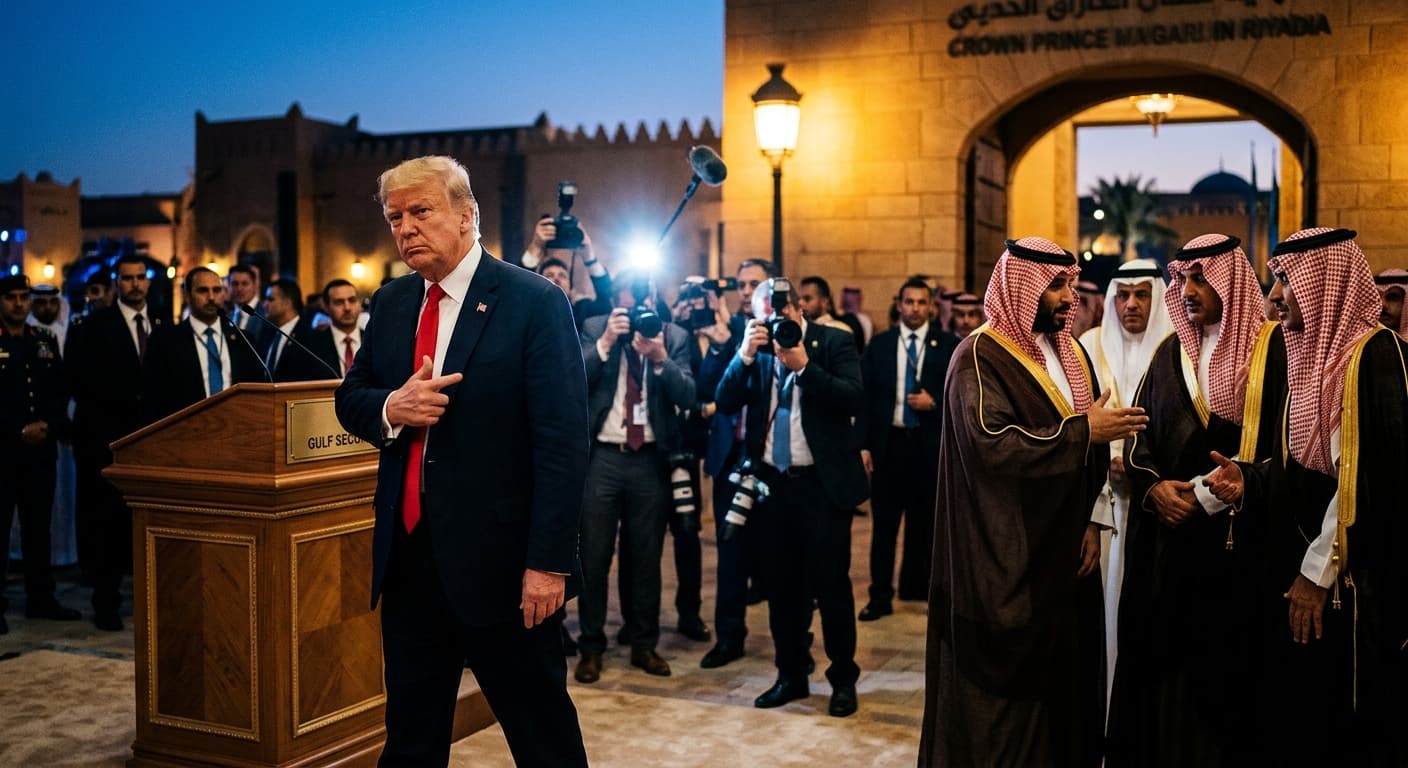
Trump ends Iran MoU: Gulf states become the swing vote
Trump declared the June 17 US–Iran memorandum "over" on July 8, 2026 after fresh strikes on southern Iran and Iranian attacks on Bahrain and Kuwait. The Gulf monarchies now hold the veto.
President Donald Trump's declaration on July 8, 2026 that the June 17 US–Iran memorandum of understanding is "over" — delivered at a NATO summit in Ankara hours after CENTCOM struck more than 80 targets in southern Iran and the Islamic Revolutionary Guard Corps fired at US bases in Bahrain and Kuwait — has not restarted the war. It has done something more consequential: it has handed effective veto power over the next phase to Saudi Arabia, Qatar, the UAE, Kuwait and Bahrain, whose ports, tankers and airbases now sit on both sides of every US–Iranian exchange. Washington needs the Gulf Cooperation Council to legitimise further military action; Tehran needs it to legitimise its bid to administer the Strait of Hormuz. Neither will get a clean answer, and that ambiguity — not Trump's rhetoric — is what will shape the next 30 days.
The 14-point MoU signed by Trump and Iranian President Masoud Pezeshkian at Versailles on June 17 promised a 60-day ceasefire, a US naval blockade lift, a Treasury waiver on Iranian oil sales through August 21, and a "toll-free" reopening of the Strait of Hormuz. It has now survived 21 days. According to the BBC's published text of the memorandum, Point 1 committed both parties to "the immediate and permanent termination of military operations on all fronts, including in Lebanon." That clause is now dead in practice, though not formally renounced. Trump himself hedged in Ankara: negotiators Steve Witkoff and Jared Kushner may keep talking, he said, but he considered it "a waste of time."
What broke, and how fast
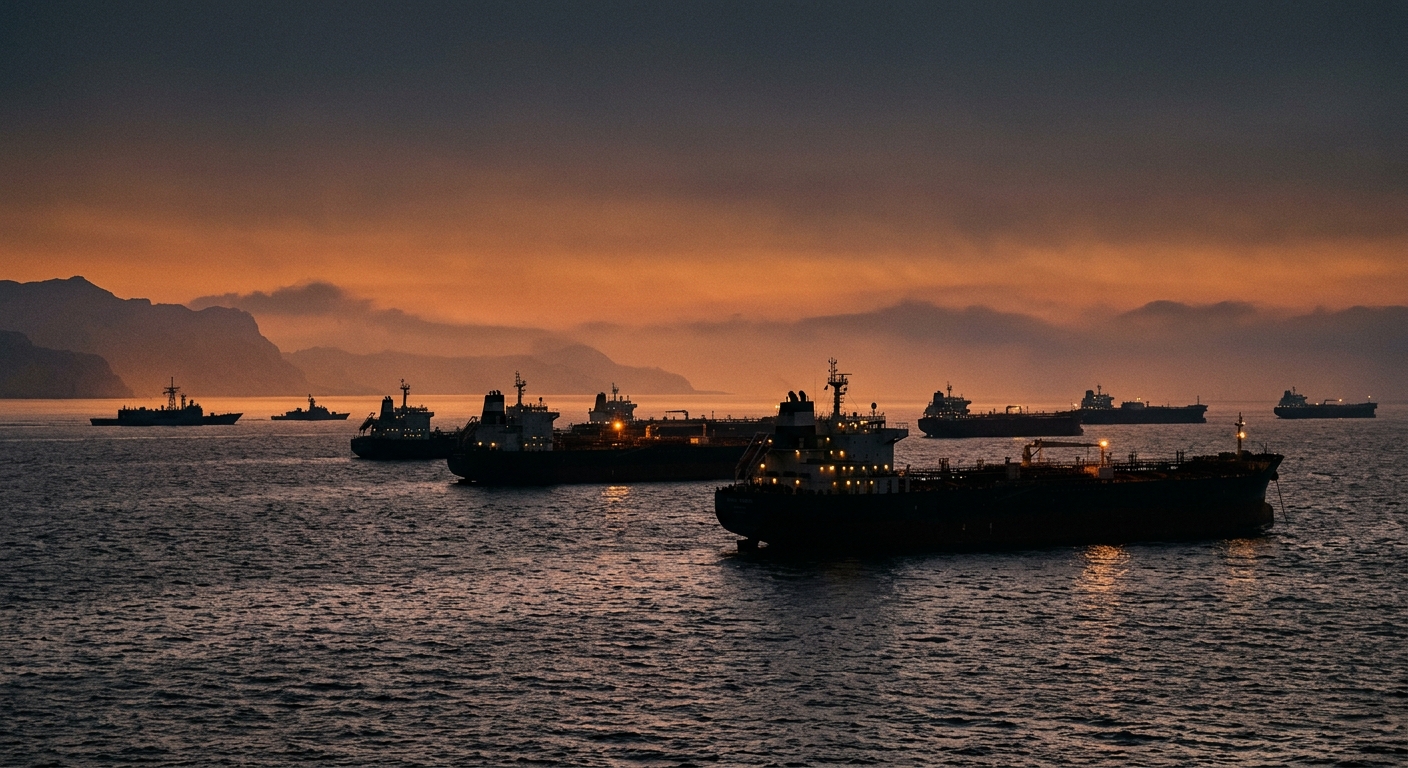
The trigger was the Strait itself. On July 6, a Qatari LNG carrier, the Al Rekayyat, was hit by an "unknown projectile" off the coast of Oman and caught fire; hours later, the Saudi crude tanker Wedyan was damaged by IRGC missiles, Al Jazeera reported, citing UK Maritime Trade Operations and Reuters. The US Navy-led Joint Maritime Information Center raised the Hormuz threat level to "severe" — the first time it had done so since June 15.
Washington responded on two tracks. Late on July 7, the Treasury Department revoked the 60-day general licence that had authorised Iranian crude sales through August 21, with new transactions blocked from July 7 and money from in-flight cargoes held in a "blocked, interest-bearing account," according to Al Jazeera's reporting of the Treasury statement. Hours later, CENTCOM said it had hit "over 80 targets" — coastal radar, air defence, anti-ship cruise missiles and fast boats in Qeshm, Bandar Abbas, Sirik and Bushehr — "to impose heavy costs for targeting and attacking commercial shipping crewed by innocent individuals in an international waterway." Iranian state media reported eight IRGC personnel killed.
Iran retaliated by launching missiles and drones at what the IRGC called "85 key US military facilities" in Bahrain and Kuwait, including the Sheikh Isa airbase and a US Navy headquarters, the BBC reported. Kuwait's state agency confirmed that ballistic missiles were intercepted near Ali Al-Salem Air Base. On July 8, CENTCOM launched a second wave, saying it was acting "at President Trump's direction… to further degrade [Iran's] ability to threaten freedom of navigation," according to
Al Jazeera's live coverage. More than 20 US Navy warships remain deployed across the region.
The Gulf swing vote
The most consequential reactions came not from Washington or Tehran but from Riyadh, Doha, Abu Dhabi and Manama. Within 24 hours of the tanker attacks, Saudi Arabia, Qatar, the UAE, Bahrain, the Arab League and the GCC Secretariat all issued near-identical statements condemning Iran and invoking UN Security Council Resolution 2817 — a March 2026 text that "demands that the Islamic Republic of Iran immediately cease all attacks against merchant and commercial vessels and any attempt to impede transit passage or freedom of navigation in the Strait of Hormuz." The
Qatari cabinet, meeting July 8, called Iran's actions a "blatant breach of international law" and reserved the right to take "measures it deems appropriate to protect its interests." Bahrain went further,
invoking UNCLOS and demanding the Security Council prevent Iran from "weaponizing the Strait of Hormuz for economic pressure."
That unanimity, however, is thinner than it reads. Two of the six GCC states — Bahrain and Kuwait — were struck on Iranian soil this week. A third, Qatar, saw one of its LNG carriers nearly explode 40 miles from its coast. The Gulf monarchies have every incentive to see Iran punished for attacking their shipping, and none whatsoever to see their own territory become the platform for the next round of US strikes. That contradiction is the actual constraint on Trump's next move. When the president warned of "hitting them hard again tonight," the operational question in Ankara was not whether US carriers could hit Kharg Island — Trump has publicly threatened to "take over" it — but whether Sheikh Isa, Al Udeid and Ali Al-Salem would host the sortie.
Qatari Prime Minister Sheikh Mohammed bin Abdulrahman Al-Thani has spent May and June urging Pakistan-mediated diplomacy and warning, according to Al Jazeera, that "we do not support the resumption of war." Saudi Foreign Minister Faisal bin Farhan condemned Iran on July 7 but has not endorsed further US strikes. The UAE, still recovering from Iranian missile attacks on February 28 that killed a Pakistani national in Abu Dhabi, has publicly reiterated its call for "restraint" and "diplomacy" in the
statement carried by KUNA. Read together, the Gulf position is: punish Iran diplomatically, extract US security guarantees, but do not host a war.
The oil hammer, and why Washington reached for it first
The Treasury waiver revocation matters more than the strikes. It is the piece of the MoU the US could unilaterally reverse without Congressional or Gulf consent, and it targets the single point of leverage Iran cared about most. As the Council on Foreign Relations noted in an analysis published Wednesday, "for Iran, almost the only lifeline to sustain [its] economy is the oil and petrochemical exports, and that's what the MoU was about."
Brent crude jumped more than 6% on Trump's remarks to a two-week high of $77.24 a barrel, Al Jazeera reported, reversing a gradual decline from an April peak of $126. US retail gasoline, tracked by AAA, has drifted to $3.79 a gallon from $4.48 in May — still well above the $2.98 baseline of February 28, when the US–Israel war on Iran began. That last number is the political ceiling on how long Trump can sustain the current posture. Every week of elevated crude prices erodes the "drop like a rock" pledge he made in June.
For Iran, the calculus is inverted. The MoU offered Tehran three tangible benefits: an end to the US naval blockade of its southern ports; the oil waiver; and a $300 billion "reconstruction" fund the US insisted it would not itself finance. Two of the three are now gone. What remains is the reason Tehran signed in the first place — the promise of durable relief on the Strait of Hormuz.
What Iran actually wants: Hormuz as a revenue base
The heart of the dispute is contained in a single sentence — Point 5 of the MoU. The published BBC text commits Iran to using "best efforts for the safe passage of commercial vessels with no charge for 60 days only, from the Persian Gulf to the Sea of Oman and vice versa" and requires Tehran to "conduct dialog with the Sultanate of Oman to define the future administration and maritime services in the Strait of Hormuz."
Tehran reads that "future administration" language as a mandate. Under the newly-declared Persian Gulf Straits Authority, Iran has begun charging "service fees" for transit — a scheme, according to CFR, that could generate as much as $40 billion a year, roughly equivalent to Iran's pre-war annual oil export revenues. Iran's ambassador in Beijing has publicly told partners like China they will receive "special treatment." US Ambassador to the UN Mike Waltz told the Council on July 3 that Iran was "setting the stage to doom global trade," according to UN News coverage of a draft Security Council text co-sponsored by Bahrain and the US.
This is the structural fight the MoU tried and failed to defer. It is not, primarily, about Iran's nuclear program — Point 8 committed Iran to a "status quo" on enrichment until the final deal, with IAEA-supervised down-blending. It is about who controls the choke point through which roughly a fifth of the world's oil and LNG passes. Iran has demonstrated over four months that it can close the strait, mine it (US Secretary of State Marco Rubio told Congress in June that Iran had "mined large segments of Hormuz"), and pick off individual tankers with drones. Reopening it — under Iranian rules — is the leverage Tehran has spent a war to build.
Diplomat View
Trump's "over" is a bargaining position, not a policy. The evidence points the other way: US negotiators remain in place, CENTCOM has struck coastal radar and fast-boat launchers — not oil terminals or leadership targets — and the Treasury sanction reinstatement includes a grace period for cargoes already at sea. The forecast: a limited third round of tit-for-tat strikes over the next 10 days, followed by a new, less generous MoU that formalises Iran's role in Hormuz administration in exchange for a narrower oil waiver, probably brokered by Qatar and Oman.
The forecast changes if two things happen. First, if Iran hits a US airbase in the Gulf hard enough to kill American service members — the Sheikh Isa and Ali Al-Salem strikes appear to have been calibrated to avoid this. Second, if Israel, whose military is reportedly updating operational plans with CENTCOM, resumes strikes on Iran unilaterally. Israeli Prime Minister Benjamin Netanyahu was told to hold fire during the June 8 flare-up; his willingness to do so a second time is not guaranteed. If either happens, the MoU is not just rhetorically dead — it is replaced by open war, and the Gulf monarchies lose the veto they currently hold.
What to watch
- August 21, 2026 — the original expiry date of the Treasury oil waiver. Even if a new deal is negotiated before then, this is the marker markets are pricing.
- The next Security Council vote on the Bahrain–US Hormuz resolution, which had 112 co-sponsors as of May. A Chinese or Russian veto would harden Iran's position; abstention would isolate it further.
- The end of Khamenei's funeral proceedings in Tehran, expected within days, which Iranian officials have said would allow talks to resume. Watch for the first public statement from new Supreme Leader Mojtaba Khamenei on the MoU's status.
The Bottom Line
The bottom line: Trump's declaration that the Iran memorandum is "over" is theatre for a renegotiation, not the opening act of a new war — and the actors who will decide which it becomes are not in Washington or Tehran but in Doha, Riyadh and Abu Dhabi. The Gulf states have the tankers Iran keeps hitting and the bases the US would need to hit back from; that dual exposure, not Trump's temper, is what will set the ceiling on the next escalation. For readers tracking regional escalation, the number to watch is not Brent crude but the Joint Maritime Information Center's threat level — the moment it drops back from "severe," a second MoU is being drafted.
Discover more
US Politics
House Ethics Committee Pushes Sexual Miscond.
The House Ethics Committee has shifted responsibility for sexual harassment settlement records to the Office of Congressional Workplace Rights, complicating disclosure efforts.
US Politics
SNAP Food Assistance Faces Legal Challenges
In 2026, SNAP faces stricter eligibility rules and mounting legal challenges, threatening food assistance for the millions of Americans who rely on the program.
India
Romanian Coalition Party Demands PM Resign
Romania's Social Democrats withdrew from coalition, joining far-right AUR to topple PM Bolojan, risking €10 billion in EU funds by August 2026.

Conflict & Security
Drone Warfare Killing Aid Workers at Unprec
Over 1,000 humanitarian workers killed in three years as cheap armed drones collapse legal protections. Gaza, Sudan, Ukraine, and DRC see deliberate targeting of aid convoys and hospitals with zero prosecutions.