Trump Ends Iran Ceasefire, Oil Prices Surge
Oil jumps 7% as tensions escalate in the Gulf.
Model Diplomat7 min readMiddle East
Trump ends Iran ceasefire: oil jumps 7% as Hormuz becomes the toll
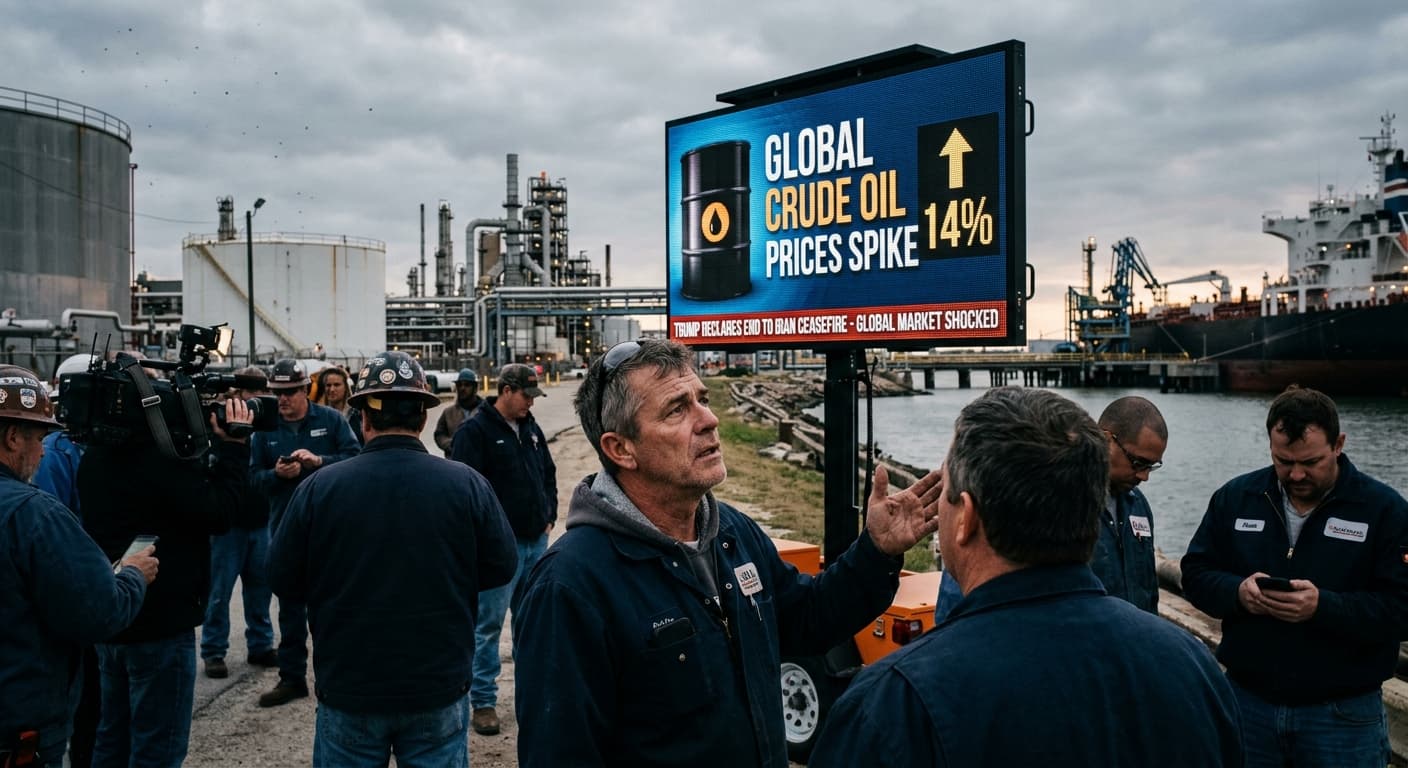
Brent surged 7.4% to $79.66 on July 8 after Trump declared the US–Iran memorandum "over" — Gulf states now face a war they cannot bypass.
Donald Trump's decision to declare the US–Iran memorandum of understanding "over" at the NATO summit in Ankara on July 8, 2026 sent Brent crude up 7.4% to $79.66 a barrel — and it did something more consequential for Gulf capitals than move a screen. It exposed the ceiling of their bypass strategy. The pipelines Riyadh and Abu Dhabi built to route around the Strait of Hormuz cannot carry the volumes their economies — or their customers in Asia — need, which means the Gulf's security bet is no longer that the strait stays quiet. It is that Washington and Tehran negotiate before a second-order crisis in shipping, insurance and LNG hits their sovereign balance sheets. That bet has, as of Wednesday, worse odds than at any point since the interim deal was signed on June 17.
What actually happened on July 7–8
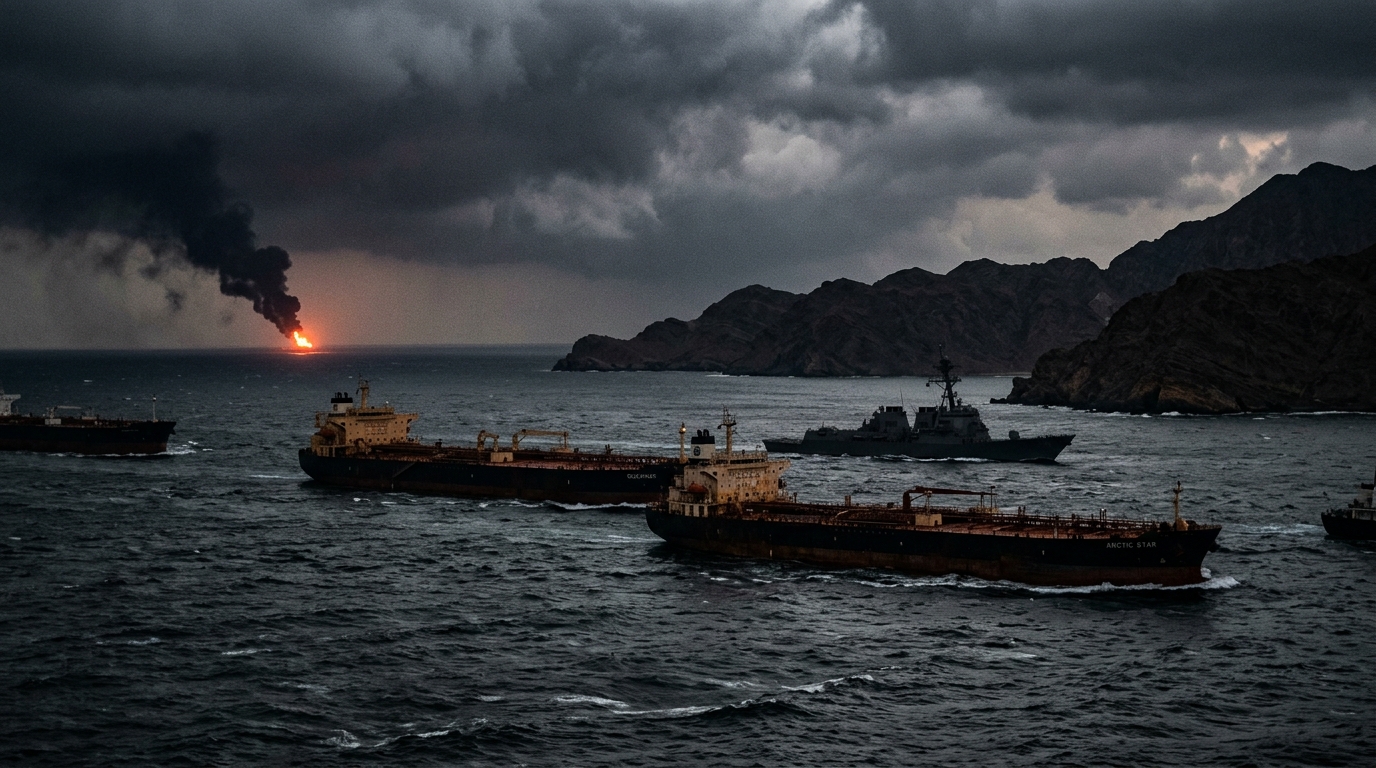
On July 7, three commercial vessels transiting near the coast of Oman — the Marshall Islands-flagged M/T Al Rekayyat, the Saudi-flagged M/T Wedyan and the Liberia-flagged M/T Cyprus Prosperity — were struck by drones and missiles fired by Iranian forces, according to reporting by Al Jazeera citing CENTCOM. U.S. Central Command answered with strikes on "over 80 targets" in southern Iran — coastal radar, IRGC fast boats, air-defence systems — before Iranian projectiles hit U.S. bases in Bahrain and Kuwait. The
BBC reported blasts in Sirik, Bandar Abbas, Qeshm and Chabahar, and Iranian state media confirmed eight army fatalities.
Speaking to reporters in Ankara, Trump called Iran's leaders "scum" and said the 14-point MoU signed in Istanbul on June 17 was, in his words, "over." He then said of his own envoys Steve Witkoff and Jared Kushner: "I don't care… I think they're wasting their time," per the BBC. Hours earlier, the U.S. Treasury's Office of Foreign Assets Control had already moved: it issued General License X1, revoking the June 21 authorization that let Iran produce, deliver and sell crude, with a wind-down deadline of 04:01 GMT on July 17, according to
OFAC's Iran sanctions page.
That waiver, along with the lifting of the U.S. naval blockade, was the entire tangible benefit Tehran received under the MoU. Its cancellation, from Iran's perspective, killed the deal before Trump did.
Why the market moved so hard
The oil price move was not about a single tanker. It was about the market re-pricing the probability that the strait — through which 27% of the world's seaborne crude and 22% of global LNG transited before the war, according to the Congressional Research Service's Iran Conflict and the Strait of Hormuz report (R45281) — reopens on U.S. and industry terms rather than Iran's.
Brent briefly touched $80 before settling near $77.70, per Channel News Asia; WTI climbed to $75.38, per
EcoPulse. The Council on Foreign Relations, in a note published Wednesday, called the collapse of the MoU a "severe blow" to any recovery of Hormuz shipping and estimated the cumulative disruption at more than 10 million barrels per day of oil and 300 million cubic meters per day of LNG for over 100 days — a shut-in with no historical precedent to unwind, according to
CFR. Even before Wednesday's strikes, CFR noted, an estimated 80 mines remained in the strait's main navigation channels.
Saul Kavonic of MST Financial, quoted by Al Jazeera, told clients passage through Hormuz will likely remain below 50% of pre-war levels "for many months, with periodic flare-ups." That is the number that matters for Gulf finance ministries planning 2026–27 budgets around Brent in the mid-$70s.
The Gulf's bypass problem
Since the strait shut on February 28, Saudi Arabia has pushed crude through its 1,200-kilometre East–West pipeline to Yanbu on the Red Sea, and the UAE has leaned on the Habshan–Fujairah line to the Gulf of Oman. The math does not work. Together those routes carry, at best, roughly 7 million barrels a day from Saudi Arabia and under 1.8 million from the UAE — against the roughly 20 million that once moved through the strait, per an analysis published by Al Jazeera. Iranian strikes cut the East–West line's throughput by an estimated 700,000 barrels a day in April; separate drone attacks disrupted Fujairah loading operations. Seaborne crude exports from non-Iranian Gulf producers fell by roughly half between February and March.
Qatar's exposure is starker. Its entire LNG export industry depends on Hormuz — there is no bypass — which is why Doha has, alongside Islamabad, been the most active mediator. Qatari Emir Sheikh Tamim bin Hamad Al Thani hosted Witkoff and Kushner on July 1 for what the Qatari foreign ministry described as "positive progress" on issues related to the Islamabad MoU, per Al Jazeera's Doha readout. Six days later a Qatari tanker was on fire off Oman.
The diplomatic ceiling
The MoU's Article 5 was always the fault line. It obliges Iran to make "best efforts for the safe passage of commercial vessels, with no charge for 60 days only" — language Tehran reads as a temporary concession of an underlying sovereign right, and Washington reads as a duty not to obstruct, per Al Jazeera's textual analysis. Iran has since established a "Persian Gulf Strait Authority" and directed shipping to a "safe route" hugging its coast, treating Omani territorial waters as a restricted zone. Ebrahim Azizi, spokesman for Iran's parliamentary national-security commission, put it plainly on X: "Recognise the new and Iranian order in the Strait of Hormuz."
The BBC's Jeremy Bowen, reading Trump's tirade, argued the president "for all his bluster, does not have a better option than negotiations." America can hit Iran hard — CENTCOM has demonstrated that three times since June 17 — but it has not broken Tehran's insistence on control of the strait. The Islamic Republic's new leadership, formed since Ali Khamenei's death on the first day of the war, has calculated that its bargaining power is the strait, and that surrendering toll authority is politically fatal at home.
That is the constraint the GCC's diplomacy runs into. The Gulf Cooperation Council's secretary-general Jasem Mohamed AlBudaiwi condemned Iran's July 7 attacks on Bahrain and Kuwait as a "flagrant violation" of sovereignty and a breach of the UN Charter, per Al Jazeera. But the same GCC, back in April, saw its own
UN Security Council resolution — sponsored by Bahrain, co-signed by Qatar, the UAE, Saudi Arabia, Kuwait and Jordan — authorising defensive maritime missions in Hormuz vetoed by Russia and China. The multilateral track is closed. That leaves Gulf capitals with only two levers: pressure Washington to hold the line on freedom of navigation, and quietly pay for the Iranian economy to want a deal.
The quiet realignment
The second lever is the real story. Vice President JD Vance, in an interview with UnHerd cited by Al Jazeera, said the UAE — "by far the most hawkish, by far the most pro-Israel country" in the GCC — is now holding conversations with the IRGC about "economic incentives" and what it would take to make Iran "investable." Anna Jacobs Khalaf of the Arab Gulf States Institute told Al Jazeera the Gulf's post-war strategy is to make Iranian attacks costlier by binding the two economies through electricity grids and infrastructure. Saudi Arabia has signed a defence pact with Pakistan; a "quad" grouping with Türkiye, Egypt and Islamabad is on the drawing board.
Read against Trump's Ankara press conference, the direction is unambiguous. Gulf states no longer trust either belligerent to protect their economic core. They are building a hedge — with China, Türkiye, Europe and, most surprisingly, Tehran itself — even as they publicly back Washington's strikes. Mark Rutte, NATO's secretary-general, called the U.S. attacks "absolutely necessary" in Ankara; the Gulf's response was measured condemnation of Iran and a Doha-mediated push to reopen talks by July 11.
Diplomat View
The most consequential document of this crisis is not Trump's Ankara press conference. It is OFAC General License X1. Revoking the oil waiver 20 days into a 60-day deal signals that Washington is willing to burn Tehran's only tangible incentive to hold the ceasefire — and it does so at a moment when Iran's post-Khamenei leadership needs to look strong, not pliant. That is a formula for continued flare-ups, not a durable settlement.
Our call: the July 11 Islamabad round produces a technical roll-over — the same "positive progress" language Doha issued last week — without resolving Article 5 or the oil sanctions cliff. Brent stays in a $72–$85 range with a $6–$10 risk premium so long as Hormuz throughput sits below 50% of pre-war levels. Gulf sovereign wealth funds accelerate their pivot toward Chinese and Turkish security cooperation; the UAE–Iran back channel becomes the region's most important diplomatic instrument by year-end.
What would change this forecast: a Qatari-brokered face-saver on Hormuz tolls (paid to a joint Iran–Oman authority rather than Tehran alone), full IAEA access to Fordow and Natanz, and a partial OFAC re-authorization for Iranian oil sales into China. Absent those three moves — and the Ghalibaf–Witkoff track shows no sign of any of them — this is a managed war, not a paused one.
What to watch
- July 11, 2026 — Islamabad talks resume; Ghalibaf leads Iranian delegation, Witkoff and Kushner for the U.S. Any GCC observer presence would signal a widened frame — and a tacit admission that Gulf capitals no longer trust Washington to carry this alone.
- July 17, 2026, 04:01 GMT — OFAC General License X1 wind-down deadline; last legal window for transactions under the June 21 waiver.
- August 21, 2026 — Original 60-day MoU waiver expiry and end of the ceasefire window; if no follow-on framework, expect a second sanctions cliff and a fresh volatility spike in Brent.
Discover more
US Politics
House Ethics Committee Pushes Sexual Miscond.
The House Ethics Committee has shifted responsibility for sexual harassment settlement records to the Office of Congressional Workplace Rights, complicating disclosure efforts.
India
Romanian Coalition Party Demands PM Resign
Romania's Social Democrats withdrew from coalition, joining far-right AUR to topple PM Bolojan, risking €10 billion in EU funds by August 2026.
US Politics
Congress Targets AI Chatbot Access for Terror
The House passed the Generative AI Terrorism Risk Assessment Act, focusing on AI's role in terrorism and potential surveillance implications.

Conflict & Security
Drone Warfare Killing Aid Workers at Unprec
Over 1,000 humanitarian workers killed in three years as cheap armed drones collapse legal protections. Gaza, Sudan, Ukraine, and DRC see deliberate targeting of aid convoys and hospitals with zero prosecutions.