Trump and Xi's BIT Talks
Exploring the potential of a bilateral investment treaty.
Model Diplomat3 min readNorth America
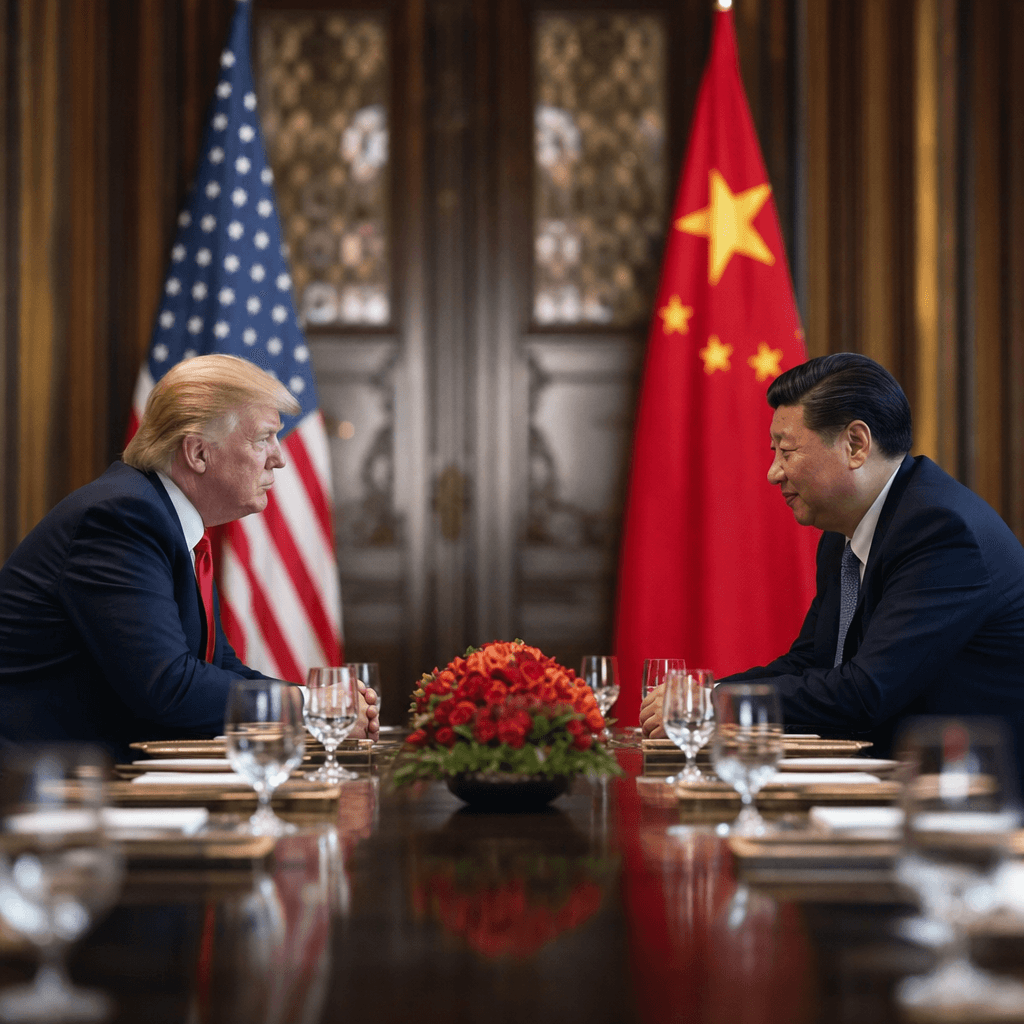
Trump-Xi BIT Talks Offer the Narrowest Way Back to Stability
[A bilateral investment treaty could hand Trump and Xi a face-saving win, but only if they can ring-fence sensitive sectors from the wider rivalry.]
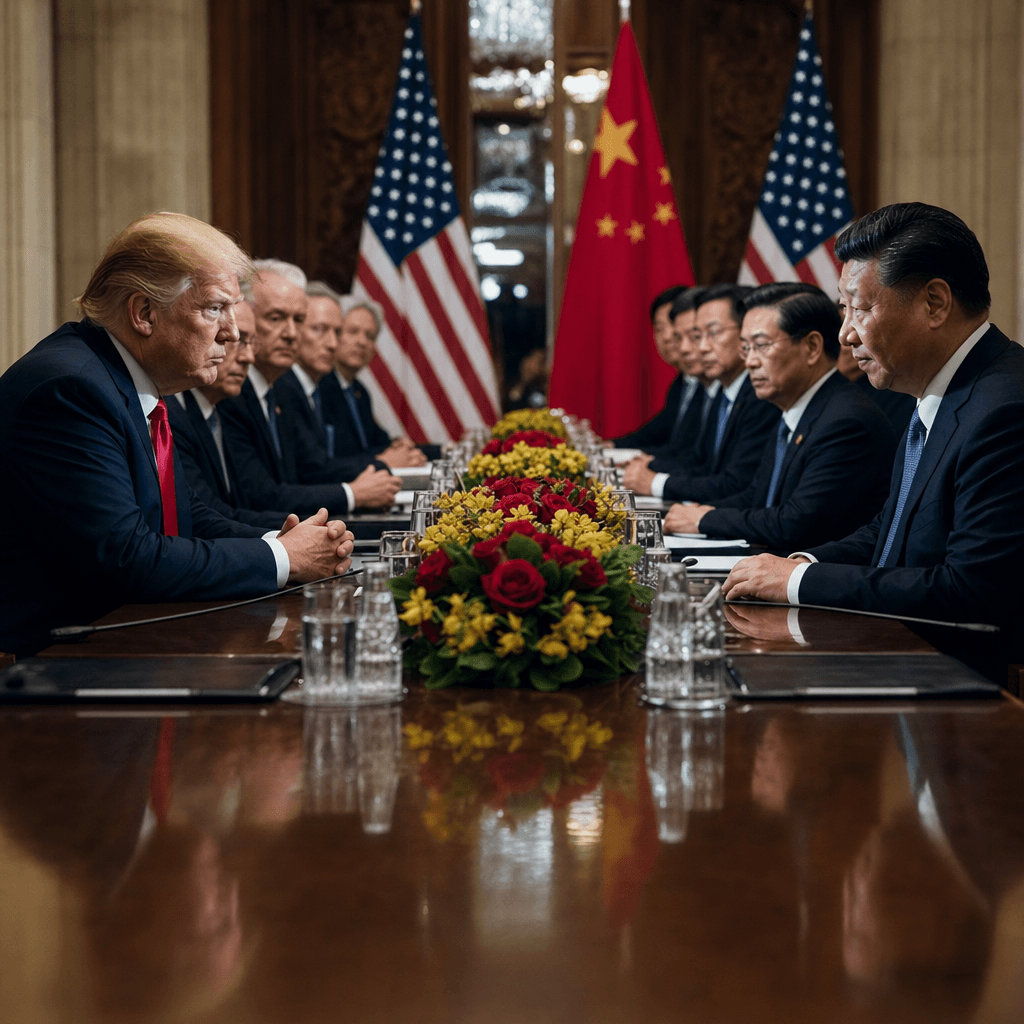
Washington and Beijing both want the summit, but for different reasons. The Economist says Donald Trump and Xi Jinping are set to meet in Beijing on May 14-15 after a prior October 2025 meeting that eased tensions only slightly, and argues that the most useful deliverable would be a bilateral investment treaty, or BIT The Economist. Reuters, reporting through Al Jazeera, says U.S. Trade Representative Jamieson Greer is instead describing a possible “board of trade” and “board of investment” to decide what the two sides can sustainably exchange without crossing national-security red lines
Reuters. That is the real bargain on offer: not reconciliation, but a rules-based pause in the fight.
Why a treaty is attractive
A BIT works because it gives each capital something it can sell at home. For Trump, a framework that preserves stability while keeping substantial tariffs in place lets him claim he is managing China without surrendering leverage; Greer said the administration wants to maintain that stability and keep access to Chinese rare earths Reuters. For Xi, a treaty is a way to press Washington for clearer rules on investment and fewer arbitrary roadblocks to Chinese firms, which is why the Economist frames the BIT as a way to find middle ground in sensitive sectors
The Economist.
The beneficiaries are not the diplomats. They are multinational companies, supply-chain managers and financial markets that have spent the past year pricing in a worse break between the world’s two largest economies. The losers are the hardliners in both capitals who prefer decoupling, because a BIT assumes the relationship will continue — just under narrower, more controlled terms. Reuters’ reporting makes that clear: the proposed investment mechanism would handle specific roadblocks to company investment, not rewrite the whole strategic relationship Reuters.
The constraint is politics, not economics
The economics are straightforward; the politics are not. Brookings notes that both sides see summit diplomacy as a way to prolong fragile stability, and that Beijing wants the relationship framed around mutual respect and future engagement rather than one-off concessions Brookings. That is why a BIT is the only plausible near-term instrument: it avoids the hardest files — tariffs, export controls, Taiwan, and industrial policy — while still letting both leaders claim progress.
But a treaty only works if it survives domestic scrutiny. In Washington, lawmakers hostile to Chinese electric vehicle and critical-infrastructure investment will treat any opening as a security risk. In Beijing, officials will not sell a deal that looks like capitulation to U.S. screening or technology controls. So the treaty’s value is less in its legal text than in the signal it sends: the two sides are still managing competition through institutions, not pure escalation The Economist.
What to watch next
The next decision point is the May 14-15 summit The Economist. If Trump and Xi jointly endorse BIT negotiations, the real work shifts to technocrats and lawyers. If they only agree to keep talking, the summit becomes a managed pause. Either way, the power remains with the side that can say yes to a process without conceding the principle — and that is why this pact matters for
Global Politics and for the next phase of U.S.-China competition.
Discover more
Global
Xi's September White House Visit Tests Truce
Trump to host Xi on September 24, 2026, to discuss a new phase in US-China trade relations amid ongoing tensions over Taiwan and technology.
Economics
Beijing Summit's Real Winner Revealed
The Trump-Xi summit reveals contrasting U.S. and Chinese narratives on stability and trade, indicating who holds the leverage.
International Relations
Taiwan Arms Pause Shows Trump’s Leverage
Trump's pause on Taiwan arms sales reveals how he wields leverage over China, tying weapons deliveries to broader bargaining across US-China and Iran policy.
International Relations
Trump and Xi's Summit
Trump and Xi's summit may project cooperation, but a genuine US-China G2 remains unlikely as trade-war tensions and rivalry keep the two powers far apart.