Trump's Shift on IMF and World Bank Explained
How Trump gained control over Bretton Woods institutions
Model Diplomat3 min readUnited States
Trump's Shift on IMF and World Bank Explained
How Trump traded threatened withdrawal from the Bretton Woods institutions for something more useful: control from the inside — climate agenda gutted, gas lending unlocked, Argentina bailed out.
Trump did not blow up the International Monetary Fund and the World Bank. He captured them. The shift from Project 2025's exit plan to Treasury Secretary Scott Bessent's "America First does not mean America alone" doctrine, telegraphed at the Institute of International Finance on April 23, 2025, was not a retreat. It was a recognition that a 17.4% US quota share, an 85% supermajority rule, and the ability to run a $20 billion Argentina rescue through the IMF gives Washington more leverage inside the tent than outside it. Eighteen months in, the receipts are visible: climate language dropped from strategy documents, upstream gas lending back on the table, a $20 billion IMF program for Milei's Argentina catalyzed. The 66-organization withdrawal memorandum Trump signed in January 2026 pointedly excluded both Bretton Woods institutions.
The exit that didn't happen
On February 4, 2025, Trump signed Executive Order 14199, ordering a 180-day review of every international organization to which the United States belongs. Project 2025, the Heritage Foundation blueprint drafted by figures now staffing the White House, had explicitly recommended withdrawal from the IMF and World Bank. Bank of England Governor Andrew Bailey said he was "following extremely closely" whether the administration would sever those ties,
warning that a functioning world economy depends on US "support and engagement in the multilateral institutions." Carnegie's Stewart Patrick
warned the order could in principle trigger "a U.S. abrogation of thousands of treaties and a departure from hundreds of multilateral organizations" — and that the White House could take similar steps to eject the World Bank from Washington entirely.
That withdrawal never came. When Trump acted on the review with a presidential memorandum on January 7, 2026, the United States exited 66 bodies — 35 non-UN and 31 UN entities — but neither the IMF nor the World Bank was among them. CSIS characterized the list as
"the 'easy list'": agencies and clubs covering particular niches, not the "global security, peace, and humanitarian architecture." AEI's Brett Schaefer noted that cumulative US contributions to the withdrawn organizations totaled roughly
$130 million, a rounding error next to the Fund's $960 billion resource base under the 16th General Review of Quotas
approved in December 2023.
The reason is arithmetic. The United States holds 17.4% of IMF voting shares, and per the Atlantic Council, that share "provides the United States with a veto over all major decisions at the IMF that require an 85 percent majority." Withdrawal surrenders that veto and hands it to whichever coalition — potentially including China — reallocates the seat. Staying inside costs almost nothing: Treasury reported a $4.07 billion unrealized gain on US IMF participation in fiscal 2023, per the same analysis. That is the closing argument Bessent has made to skeptics on the Hill, and so far it has held.
Discover more
US Politics
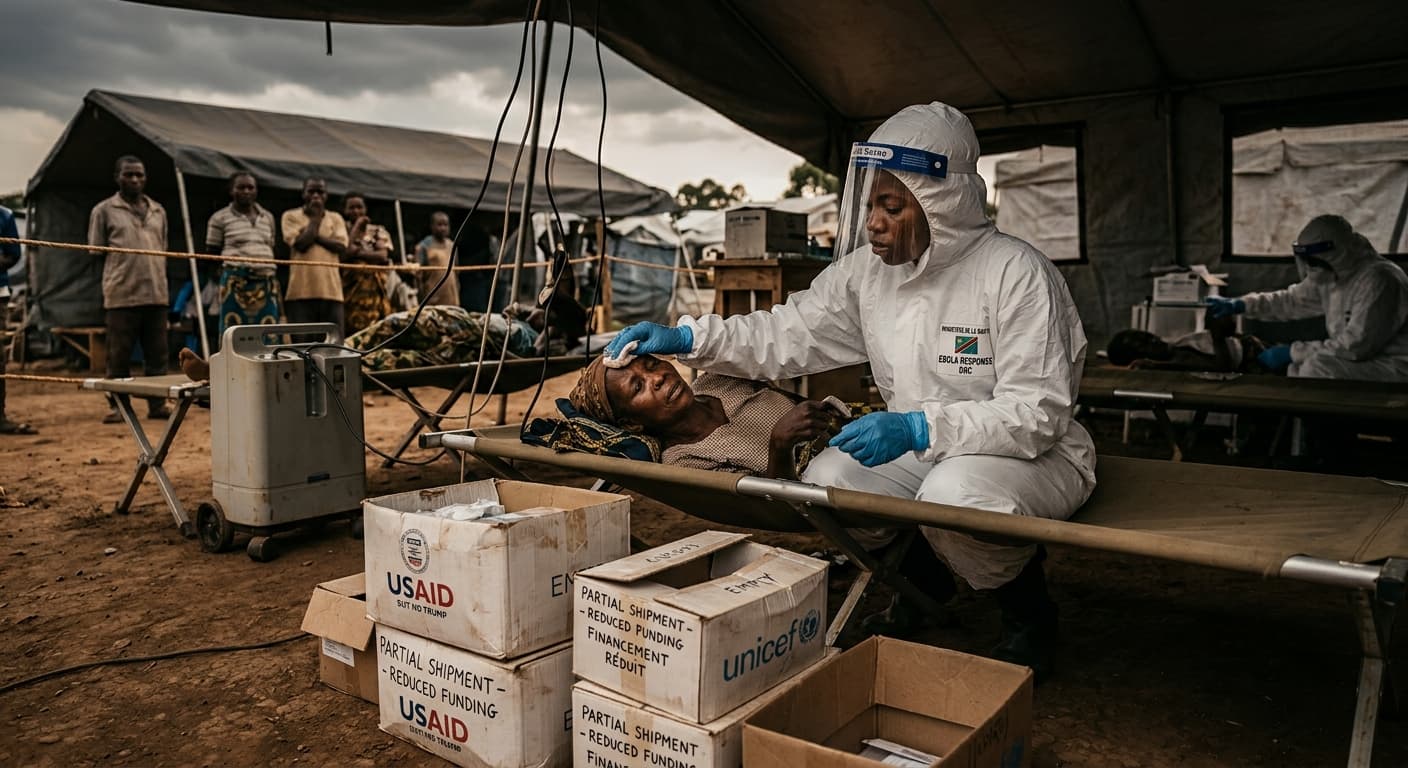
Trump's Aid Cuts Fuel Ebola Crisis in DRC
Trump's foreign-aid cuts gutted the DRC's fragile health infrastructure, worsening an Ebola outbreak and crippling the public-health response on the ground.

International Relations
Trump Cuts South Africa's HIV Lifeline
The Trump administration ends $400 million in PEPFAR HIV funding for South Africa, threatening lives and straining public health programs across the country.

International Relations
The $100 Billion Squeeze: Trump’s Iran War
Trump's Iran war has cost American families an estimated $100 billion, straining household budgets through higher oil prices and eroding domestic support.

US Politics
Trump’s Hormuz Gamble: US-Iran Ceasefire
Trump's 60-day truce with Iran could reopen Strait of Hormuz oil routes, but the high-stakes ceasefire gamble unfolds amid deep, lasting Middle East tensions.