Tinubu's Local Arms Push in Nigeria
Nigeria's strategy to combat Sahel jihadist spillover
Model Diplomat9 min readAfrica
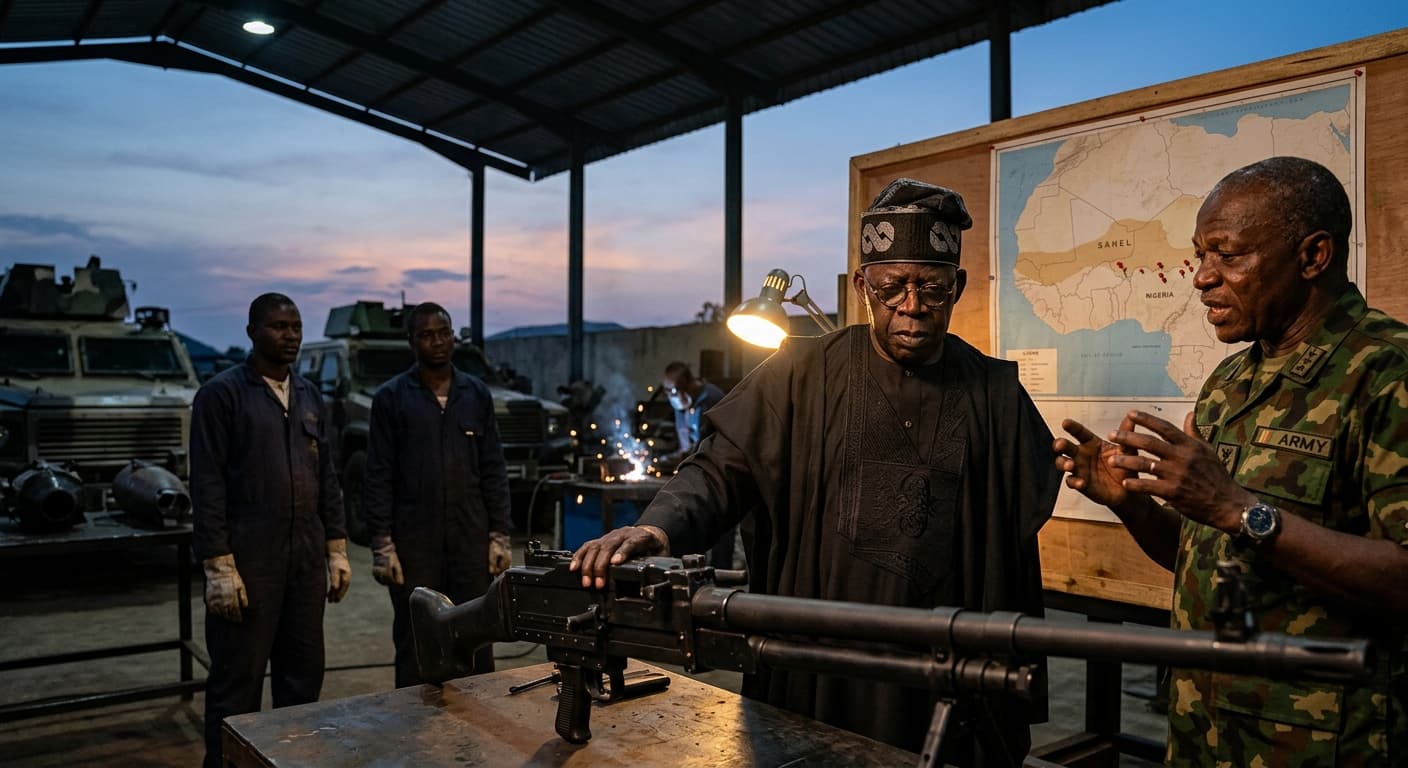
Tinubu's Local Arms Push: Nigeria's Answer to Sahel Spillover
Tinubu vows to revive DICON and buy Nigerian as jihadist violence spills from the Sahel into Nigeria's northwest borderlands and the Borgu-Kainji axis.
President Bola Tinubu, speaking through Vice President Kashim Shettima at the Nigerian Army Day grand finale in Port Harcourt on July 6, 2026, staked Nigeria's next security phase on emerging technology and a revived Defence Industries Corporation of Nigeria (DICON) — a bet that Africa's largest army can arm itself out of a crisis its imports have not solved. The thesis: Nigeria's turn toward indigenous arms is less an industrial policy than a strategic response to Sahel spillover — an attempt to compress procurement cycles as jihadist groups from Mali, Burkina Faso and Niger entrench along Nigeria's northwestern flank, and as ECOWAS' security umbrella disintegrates around it. Whether it works depends on whether Abuja can break a decade-long habit of announcing a domestic weapons complex without producing one.
What Tinubu actually promised
The commitment came at Liberation Stadium in Port Harcourt during the maiden joint edition of the Nigerian Army Day Celebration (NADCEL) and the African Land Forces Forum. According to the State House readout, Tinubu — represented by Shettima — pledged to counter "contemporary threats through the adoption of emerging technologies" and to revitalise DICON so as to build "the confidence that flows from a nation able to arm itself." He conceded that successive governments had "tried to revamp DICON" and failed — a rare presidential acknowledgement that the corporation, founded in 1964 and long confined to producing rifles and civilian tools at its Kaduna plant per
Al Jazeera's earlier reporting, has not scaled in six decades.
Chief of Army Staff Lt.-Gen. Waidi Shaibu, appointed in October 2025 in Tinubu's overhaul of the service chiefs, told the Port Harcourt audience the army was "intensifying investments in technology, intelligence capabilities and modern combat equipment," according to
Security Digest. Defence Minister Christopher Musa attended, the
Ministry of Defence confirmed on July 7. Also on the dais were former Head of State Yakubu Gowon and former President Olusegun Obasanjo — deliberate symbolism, given both men presided over previous, failed DICON revivals.
Shettima himself had earlier previewed the doctrine in June 2026 at the National Defence College graduation, where Tinubu — again through the Vice President — endorsed the College's "Presidential Treaties on Harnessing Indigenous Manufacturing for Enhanced National Security and Development: Strategic Options for Nigeria by 2040." The target date is the tell. Nigeria is not planning to arm itself out of this decade's war.
The budget lever — and the credibility gap
Tinubu's 2026 appropriation, signed in April, totals ₦68.32 trillion — roughly $50 billion — with security and defence claiming the single largest ministerial share, per BBC Pidgin's breakdown. His December 2025
budget speech itemised the security pillars: "modernisation of the Armed Forces," "intelligence-driven policing and joint operations," "border security and technology-enabled surveillance," and a "new national counterterrorism doctrine … anchored on unified command, intelligence gathering, community stability, and counter-insurgency."
Three consecutive years of rising defence outlays — ₦4.91 trillion in 2025, ₦5.41 trillion at the 2026 print — have not delivered results Nigerians can feel. In February 2026, Tinubu convened the Second National Economic Council days after suspected Boko Haram fighters killed more than 100 people in Kwara State's Kaiama LGA, north-central territory historically outside the insurgency belt. Retired officers quoted by BBC Pidgin argue the numbers are less the problem than the oversight: "Nobodi dey doubt di patriotism or di honesty of di security chiefs, but di issue be say dem suppose do oversight," retired Captain Garba said, warning that
"misapplication fit dey on wia dia funds dey go." A parallel academic literature review on SSRN warns that
"lack of transparency … creates high vulnerability for corruption, especially in arms procurement processes" — a finding that DICON's history illustrates precisely.
That credibility gap is why the Port Harcourt speech leans so hard on indigenous production. Presidents Goodluck Jonathan, Muhammadu Buhari and now Tinubu have each pledged to revive DICON. Buhari's 2015 order for a "modest military industrial complex" produced, four years later, the
Ezugwu MRAP unveiled in Kaduna — a genuine achievement, but one still measured in dozens of vehicles rather than the thousands Nigeria's theatres demand.
Why the pivot now: the Sahel is moving south
The strategic backdrop is the collapse of the northern buffer. Since the 2023 coup in Niger and the withdrawal of French and UN forces from Mali, Burkina Faso and Niger, jihadist violence has migrated toward the Gulf of Guinea. The Institute for Security Studies reports that in the Borgu-Kainji axis — spanning Niger, Kwara and Kebbi states, and abutting Benin and Niger Republic — jihadist violence rose 86% between 2024 and 2025, and fatalities rose 262%.
ISPI's Héni Nsaibia documents that on April 4, 2026, Nigeria hosted the first armed clash on its soil between al-Qaeda-aligned Jama'at Nusrat al-Islam wal-Muslimin (JNIM) and Islamic State Sahel Province (ISSP) — in Kebbi's Shanga LGA, two days after a similar clash in Petekole, Niger. The Stimson Center calls the trend a "southward creep" and dates JNIM's
first claimed attack on Nigerian territory to October 2025 near the Benin border. ISS' separate work on Boko Haram splinter JAS records that fighters have moved from Shiroro, near Abuja, to reinforce the Lakurawa group along the Nigeria-Niger-Benin tri-border, with
Lakurawa formally pledging allegiance to JAS in August 2025.
Then came Washington's intervention. On December 25, 2025, according to the Center for Strategic and International Studies, the United States struck two apparent Islamic State camps in Sokoto state with Tomahawk missiles — targeting either ISSP or Lakurawa. CSIS concludes ISSP "grew in strength in 2025 and now commands more fighters, controls more territory, and conducts deadlier attacks than it ever has before." The Hudson Institute
argues that "Lakurawa" has become a catch-all label for JNIM and ISSP fighters operating across Sokoto and Kebbi — a taxonomic confusion that itself benefits the jihadists.
The point for Abuja: the next war will not be fought around Lake Chad. It will be fought in forest corridors linking Kainji Lake National Park to Dosso, Alibori and northern Benin — terrain where an imported drone waiting in Lagos customs for six months is a strategic failure. That is the argument for a domestic production line, and it is a better argument than the one Tinubu made in Port Harcourt.
The Turkish backdoor and the SIPRI reality
Nigeria's self-reliance rhetoric masks a quiet supplier realignment. SIPRI's March 2026 arms transfers update shows African arms imports fell 41% between 2016–20 and 2021–25 — a figure that flatters continental finances but reflects supplier caution as much as demand. Within that shrinking pool, Nigeria has pivoted decisively toward Türkiye.
The International Crisis Group tracks Nigeria's 2022 Songar tactical drone purchase from Asisguard, followed by an undisclosed number of Bayraktar TB2s and Turkish helicopters, and 2023 talks on an ANKA-S co-production facility. A SETA analysis frames Tinubu's
January 27, 2026 Ankara visit — which produced nine memoranda — as the operational pivot from procurement to co-production, part of a bilateral trade target of $5 billion. The BBC's earlier
reporting on TB2 diffusion across Africa makes the geopolitics explicit: for Sahel and Gulf-of-Guinea states, Turkish drones reduce "public reliance on close security partnerships with France, the former colonial power."
The competing suppliers are constrained. Washington, hobbled by Leahy-law scrutiny after the December 2023 Tudun Biri drone strike that Crisis Group notes killed at least 85 civilians, sells cautiously. Russia is out of stock — SIPRI notes its arms exports halved between 2015–19 and 2020–24 to the lowest level in its post-1950 history. India remains a marginal supplier: an MP-IDSA study observes that defence cooperation agreements between Nigeria and India "have so far not included sales of weapons," and that Nigeria's procurement from Indian firms has been confined to Tata trucks, Ashok-Leyland vehicles, and Hindustan Aeronautics training. The United Kingdom has
narrowed its defence dialogue with Abuja to cyber-fraud, terrorist financing and doctrine — pointedly not hardware.
Read together, "local production" in 2026 means Turkish-Nigerian joint ventures under a DICON umbrella, not indigenous R&D. That is defensible — but it concentrates supplier risk in a single partner whose own defence-industrial base sits under US sanctions pressure and whose Bayraktar family enjoys unique political proximity to President Erdoğan.
The politics of a permanent emergency
Domestic politics sharpen the stakes. On the same day Tinubu spoke, Nigeria Democratic Congress presidential candidate Peter Obi called on the President to "resign or abandon any plan to seek re-election," citing persistent insecurity. Tinubu's counter-narrative rests on the Democracy Day claim, reported by
Al Jazeera, that Nigeria's military "neutralised" over 13,000 "terrorists" in the past year and that attack-related deaths are down 81% since 2023 — figures the government wields against opposition attacks but which independent analysts consider unverifiable.
The winners of this reframing are named. DICON's leadership secures its largest political mandate in decades. Baykar, Asisguard and Turkish Aerospace Industries move to the front of the queue for African co-production. Governor Siminalayi Fubara of Rivers State, hosting Army Day at a moment of renewed federal centralisation, earns a political dividend the State House explicitly credited — Fubara framed the venue itself as a rebuttal to "narratives" about Rivers instability. The losers: Nigeria's traditional Western suppliers, whose share of the procurement pipeline is quietly contracting, and the National Assembly's oversight committees, whose ability to scrutinise state-to-state defence deals with Türkiye is limited by the classified nature of the underlying contracts.
The 2027 election is now the political frame around every defence decision. A DICON that cannot show output by mid-2027 becomes a campaign liability. That, more than any strategic doctrine, is why the timeline pressure is building.
What to watch
- ECOWAS standby force activation. ISS reports the AU Peace and Security Council is weighing a 1,650-soldier standby force for the Borgu-Kainji axis. Deployment would signal whether ECOWAS still has operational reach after the Alliance of Sahel States (Mali, Burkina Faso, Niger) formally exited in January 2025.
- DICON procurement disclosures. Nigeria's 2026 capital expenditure of ₦32.2 trillion includes an undisclosed slice for defence industrialisation. Watch for the first published Baykar, Asisguard or TAI contracts — and whether they clear the Bureau of Public Procurement.
- Next US strike. The December 25, 2025 Tomahawk operation was a one-off, per CSIS. A second strike would confirm a sustained US air campaign against ISSP-Lakurawa, changing Nigeria's calculus on ground-force posture along the Niger border.
- Niger–Nigeria bilateral thaw. Niamey's junta accused Abuja in January 2025 of sponsoring Lakurawa. Any reopened intelligence channel between the two capitals would matter more than any DICON press release.
Diplomat View
Tinubu's arms-production pledge is a hedge against a supplier landscape that no longer works for Nigeria. Washington will not sell the platforms Abuja wants without human-rights conditions the army will not accept; Moscow is out of stock; Beijing is cautious; New Delhi is peripheral; and the Sahel juntas are hostile. That leaves Ankara. "Local production" is thus a euphemism for Turkish co-production — defensible, but concentrating supplier risk in one partner. Our forecast: DICON will produce announceable output — small arms, mortars, refurbished MRAPs, perhaps a licensed drone line — by Q2 2027, timed to the election. It will not close the capability gap against JNIM and ISSP along the Niger border within Tinubu's first term. We would revise upward if a Baykar or TAI co-production facility breaks ground on Nigerian soil before December 2026, or downward if further naira depreciation forces a foreign-exchange cut to defence capital spending in the 2027 budget.
The Bottom Line
Nigeria's turn to indigenous arms is not industrial policy — it is a strategic hedge against the collapse of its Sahel buffer and the exhaustion of its traditional suppliers. If DICON delivers even a modest Turkish-partnered platform by the 2027 vote, Tinubu will have redefined what "self-reliance" means in African defence. If it does not, the Borgu-Kainji corridor will become the next Lake Chad — and the map of West African terrorism will have moved 500 kilometres south on his watch.
See Global Politics coverage for the wider Sahel realignment story.
Discover more

US Politics
House Ethics Committee Pushes Sexual Miscond.
The House Ethics Committee has shifted responsibility for sexual harassment settlement records to the Office of Congressional Workplace Rights, complicating disclosure efforts.
US Politics
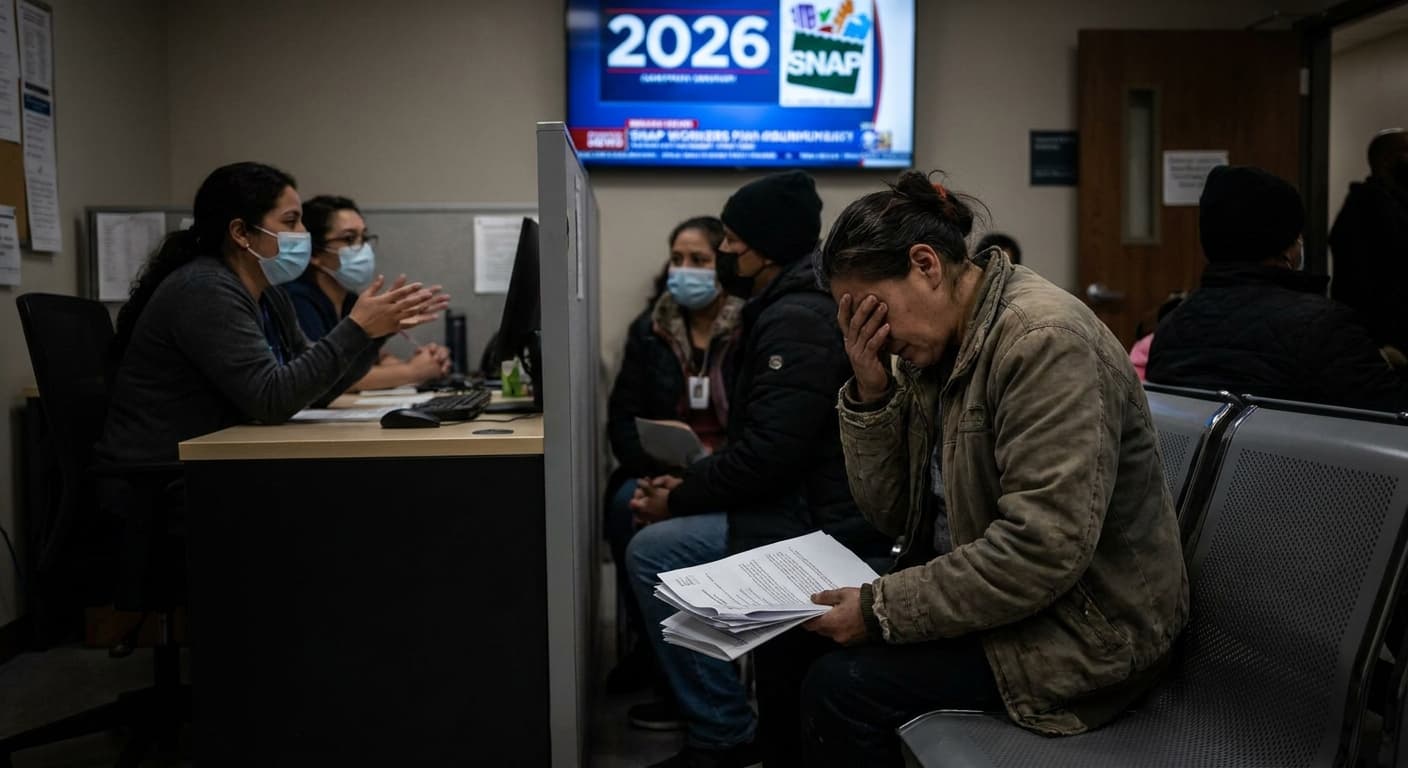
SNAP Food Assistance Faces Legal Challenges
In 2026, SNAP faces stricter eligibility rules and mounting legal challenges, threatening food assistance for the millions of Americans who rely on the program.
Global Politics
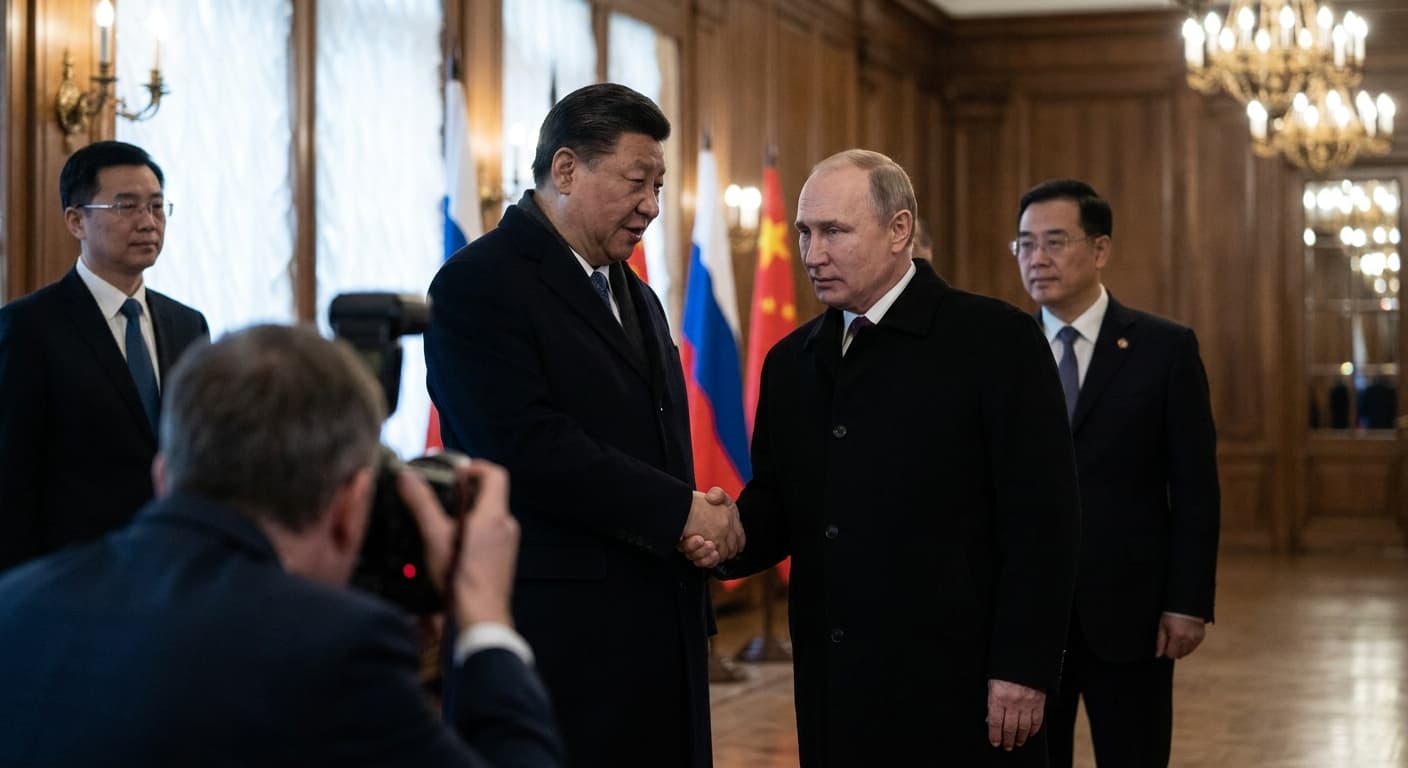
Xi Jinping Calls China-Russia Ties 'Precious'
Xi Jinping's description of China-Russia ties as 'precious' reflects a strategic imbalance, with Beijing dictating terms in the partnership.
Conflict & Security
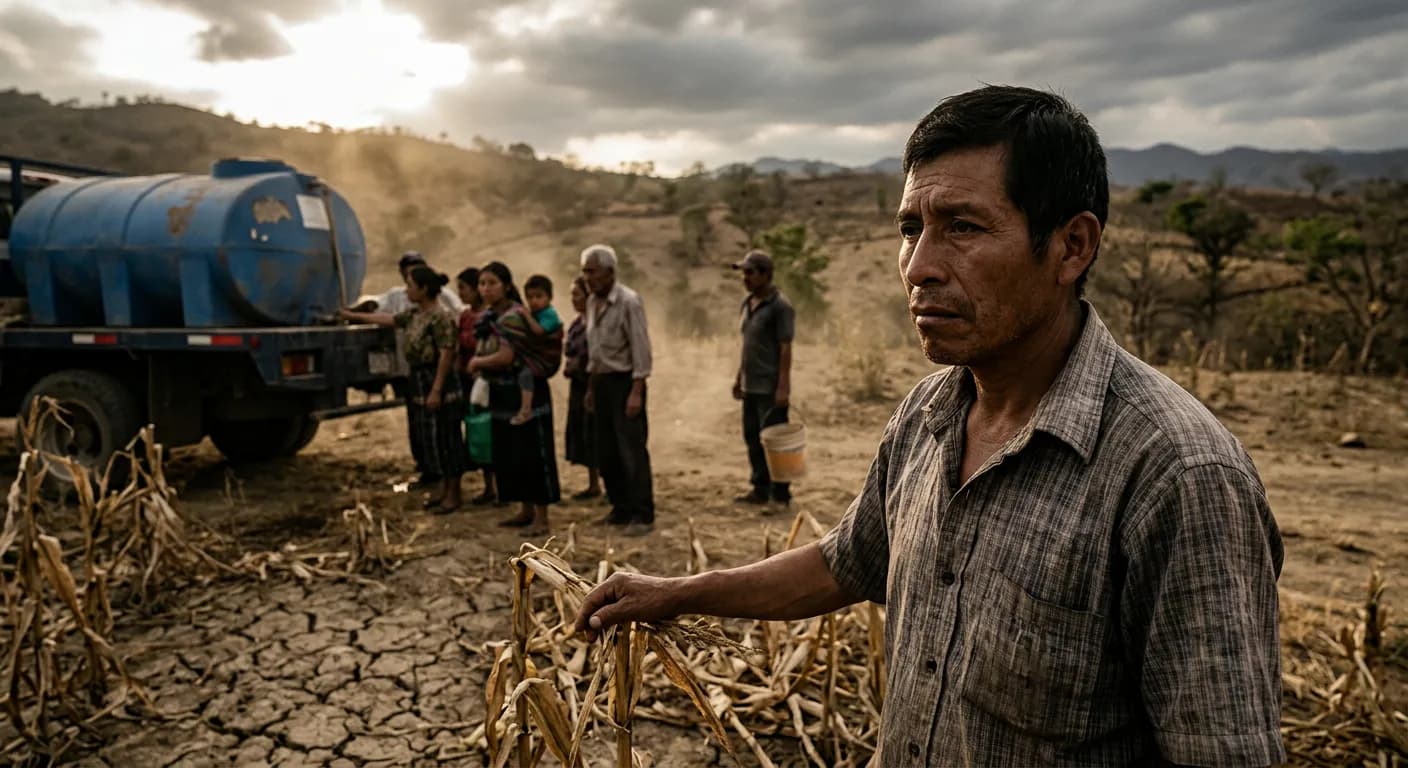
Guatemala: El Niño 2026–27 becomes regional security test
UNICEF: 25.8M children face El Niño risks in Latin America; Guatemala maps 188 municipalities for drought and food insecurity amid regional security test.