Tariff Pass-Through: Inflation's New Reality
New York Fed survey reveals persistent price hikes ahead.
Model Diplomat8 min readNorth America
Tariff Pass-Through Is Still Loaded in the Pipeline
New York Fed's July 8 survey shows nearly half of tariff-paying firms still plan price hikes, pinning Kevin Warsh's Fed above 3.5% and undercutting Trump's rate-cut demand.
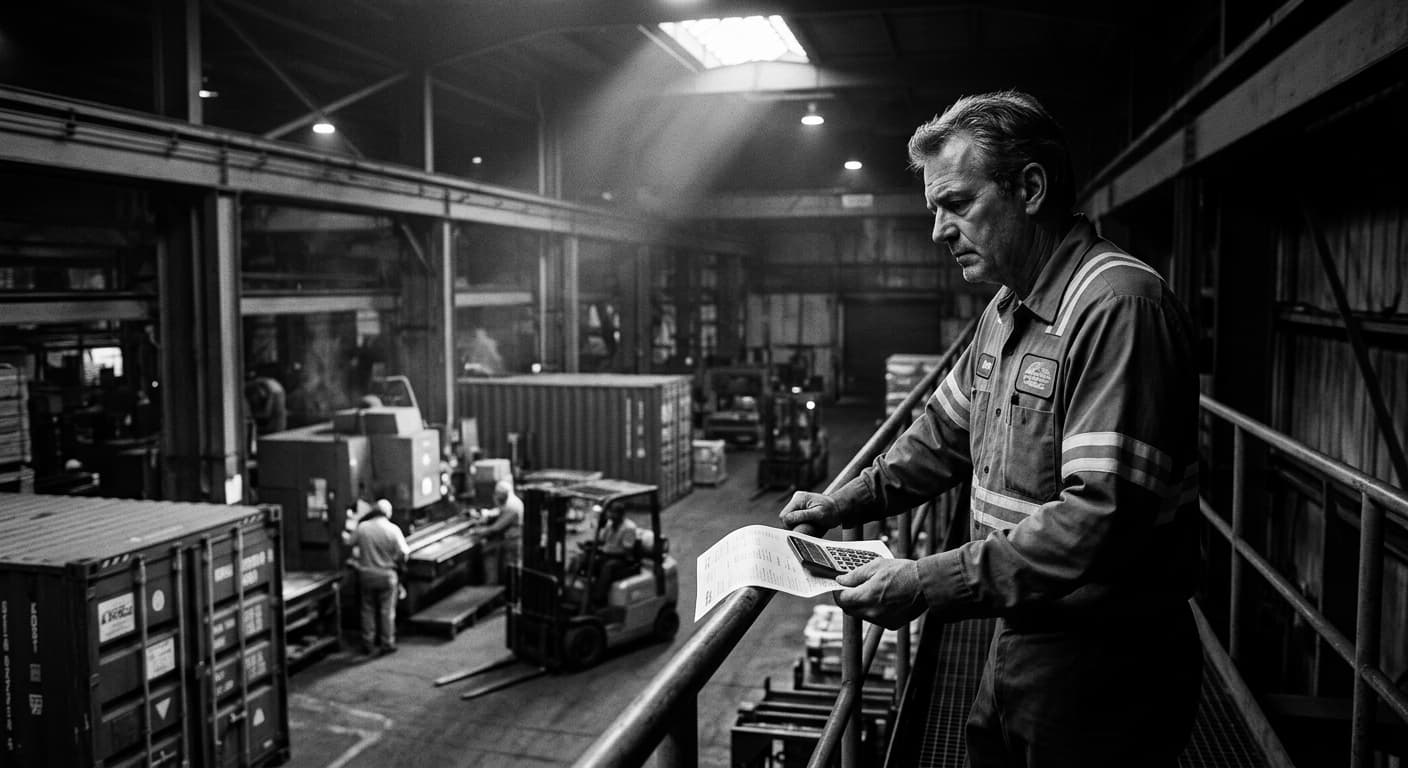
Nearly half of U.S. businesses that paid tariffs over the past year say they are not done raising prices — and that finding, published July 8, 2026 by the New York Fed's Liberty Street Economics blog, is the single most important data point sitting on Kevin Warsh's desk as he decides whether to hold, hike or cut in September. The thesis is simple and inconvenient for the White House: tariff pass-through is not a one-off price bump, it is a rolling shock spread over 18 to 24 months, which means the inflation stickiness that has kept the federal funds rate at 3.5–3.75% is baked in through mid-2027 regardless of what happens next at the border.
That reframes today's central-bank story. The Fed is not fighting an old inflation — it is watching a new one arrive on a schedule set by corporate pricing committees, not by Jay Powell's or Warsh's models.
What the New York Fed actually found
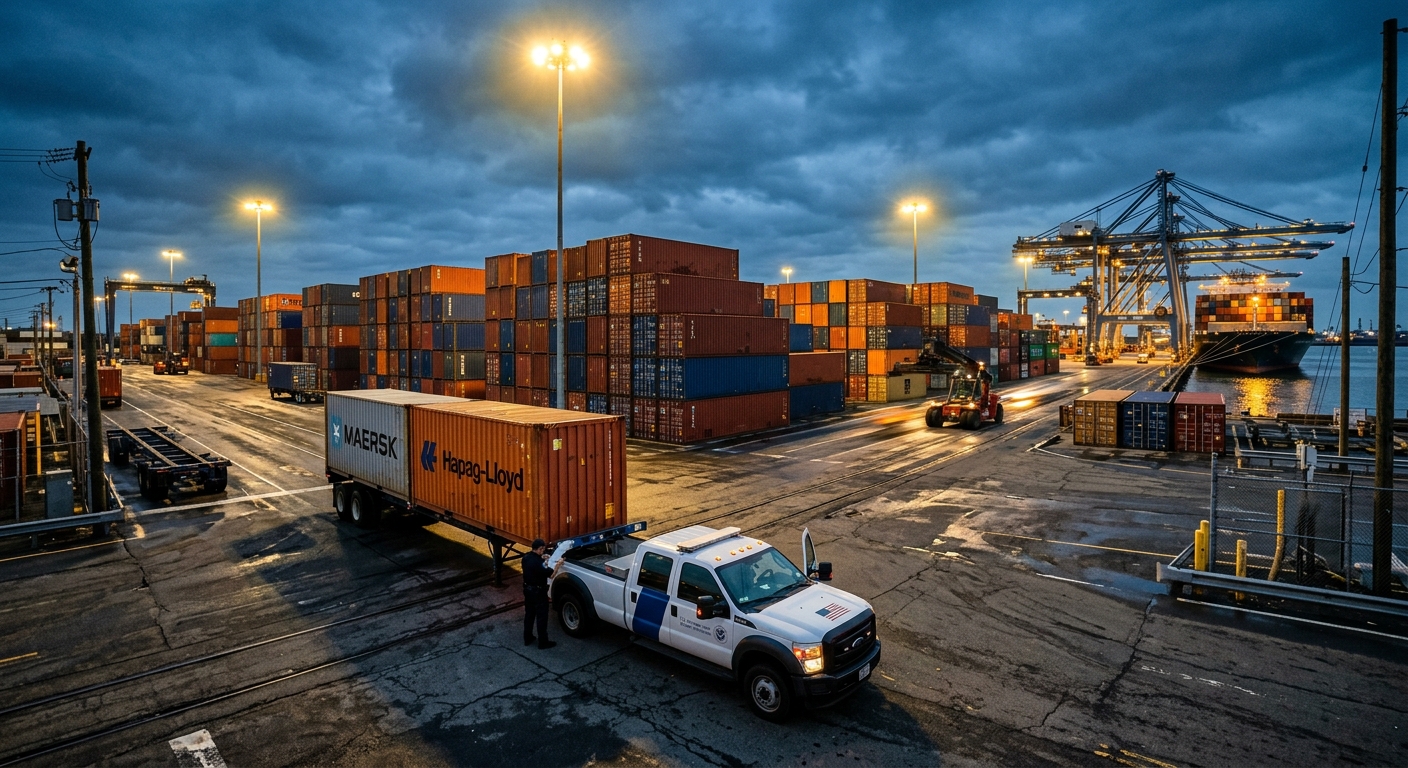
The Liberty Street post, authored by Jaison Abel, Mary Amiti, Richard Deitz, Sebastian Heise and Nick Montalbano, draws on the New York Fed's May 2026 Regional Business Surveys covering the mid-Atlantic. Among firms that directly paid tariffs in the previous twelve months, 47% of service firms and 44% of manufacturers say more tariff-induced price increases are still to come, according to the New York Fed. Roughly 30% of service providers and nearly 40% of manufacturers plan those hikes within six months; 16% of service firms and 7% of manufacturers plan them beyond six months out.
The authors are blunt about why "one-time" pass-through has become a euphemism: long-term supply contracts freeze old prices until they expire, and firms are using a "trickle-up" strategy — small, staggered increases — to avoid shocking customers while preserving optionality if tariffs rise again. The result, they write, is that "inflationary pressures due to tariffs may well last for some time to come."
That contradicts the framing Powell had used through 2025, when he told Congress that tariffs would likely produce "a one-time shift in the price level," a phrase cited in a February 2026 Brookings paper by Diego Comin and Robert Johnson on supply chains and inflation. The NY Fed's own economists are now openly signalling that the "one-time" framing was wrong in practice, if not in theory.
The number that pins the Fed
The macro backdrop makes the survey findings load-bearing rather than academic. May CPI hit 4.2% year-over-year, a three-year high, per Al Jazeera's reporting on the June 17 FOMC meeting. Warsh's Fed held rates at 3.5–3.75% unanimously; nine of 18 FOMC participants projected a hike this year in the dot plot, and only one projected a cut, according to the
BBC.
The Iran conflict and the Strait of Hormuz shock get the energy-price headline, but the tariff channel is what makes the inflation persistent. According to the July 8 Financial Times readout of the June FOMC minutes, several policymakers argued that "some policy firming would likely be warranted" if price pressures did not ease — language the market read as an active hike bias, not a hold. CME FedWatch, per Al Jazeera, priced a 30% probability of a hike by September and above 50% by December.
The IMF's March 2026 Article IV consultation had assumed the opposite: "As the passthrough of tariffs to consumer prices wanes, core PCE inflation is expected to fall to 2 percent by 2027H1," according to the IMF staff report. The New York Fed data suggests the IMF's fade assumption was too optimistic by six to twelve months.
The Yale number and the academic consensus
Independent estimates converge on high pass-through. A March 2026 Brookings paper by Pablo Fajgelbaum and Amit Khandelwal estimates 90% of the 2025 tariffs passed through to tariff-inclusive prices paid by U.S. importers — a rate consistent with the 2018–19 trade-war baseline and confirming that foreign exporters absorbed only about 10% of the shock.
The Yale Budget Lab, tracked by the Council on Foreign Relations, found that pass-through to U.S. consumers had reached roughly 76% by the end of 2025, and close to 100% for consumer durables. CFR's authors, citing tariff transmission literature, put "peak pressure between April and October 2026" — squarely in the window the NY Fed survey is now describing. Maurice Obstfeld's October 2025
NBER working paper put the effective tariff rate at roughly 17.5% as of September 2025, the highest since 1935, with an implied welfare-maximizing "optimal" tariff of 9.5% — meaning the current level is nearly double the rate that would be defensible on pure terms-of-trade grounds.
Layered on top: the July 2026 New York Fed finding that half of tariff-paying firms are still adjusting. That is not a fading shock. That is a shock that has been paced deliberately.
The Supreme Court hasn't rescued anyone
The read that mattered most to markets in February — that the Supreme Court's IEEPA ruling would defuse the tariff shock — has aged badly. On February 20, 2026, the Court struck down the "fentanyl" and "reciprocal" tariffs 6–3 in Learning Resources, Inc. v. Trump, with Chief Justice Roberts writing that "the president must 'point to clear congressional authorization' to justify his extraordinary assertion of the power to impose tariffs. He cannot," per Al Jazeera's coverage.
The Constitution "very clearly" gives Congress the power to impose taxes, which include tariffs. "The Framers did not vest any part of the taxing power in the Executive Branch." — Chief Justice John Roberts, majority opinion, Learning Resources v. Trump
Within 24 hours Trump had invoked Section 122 of the Trade Act of 1974 to impose a 10% global tariff, raised to 15% the following day, and pledged that all existing Section 232 and Section 301 tariffs would "remain in place, and in full force and effect." CSIS's William Reinsch called the economic effect
likely "modest", noting that Section 232 (steel, aluminum, autos) and Section 301 (China) sit outside the ruling. CFR reached the same conclusion: the ruling is "relatively narrow" and does not affect tariffs under Section 232, Section 301, Section 201 or antidumping law, according to a
February 23 CFR analysis.
The Section 122 authority is capped — it lasts 150 days and cannot exceed 15% — so the administration is racing to shift the underlying legal basis to Section 232 investigations, per Brookings. Net effective tariff rate: barely dented. The tariff-driven price pipeline the NY Fed is describing keeps flowing.
Refunds are the wildcard — but they aren't going to consumers
The Court's ruling did open a $166 billion refund question. Customs and Border Protection told the U.S. Court of International Trade in March that more than 330,000 importers had made 53 million entries subject to IEEPA duties, and the agency spent 45 days building the CAPE refund system. On April 19, 2026, the
refund portal opened, with refunds expected 60–90 days after submission.
But — and this matters for the pass-through story — a March 2026 Congressional Research Service brief makes plain that only importers of record have clean standing to reclaim. Downstream retailers and consumers who paid tariff surcharges through supplier invoices have no automatic path. A pending class action, Nabavian v. United States, is trying to force CBP to reserve refund funds for "tariffed payors" — the end customers who actually bore the cost — per a
June 2026 court filing from plaintiff counsel. Until that resolves, refund cash flows to importers' balance sheets, not to consumer wallets. Prices already raised will not come down.
That asymmetry is the second-order story: the IEEPA reversal is a transfer to importers, not disinflation. Prices set on the way up are sticky on the way down — a finding well-established in the pricing literature and consistent with the NY Fed's "trickle up" description.
Who benefits, who eats it
Follow the money. Foreign exporters absorbed only about 10% of the 2025 tariff shock, per Fajgelbaum and Khandelwal — meaning the near-90% burden fell on U.S. firms and consumers, in line with what the NY Fed authors called "recent research" showing tariffs are functionally a domestic tax.
Winners: importers who will receive IEEPA refunds with interest — many of them large, well-lawyered firms with liquidated entries; the U.S. Treasury, which is still collecting Section 232/301 tariffs, generating what Trump has publicly bragged is "tens of billions" per month; and domestic producers with pricing power in sectors like steel, aluminum, and autos.
Losers: firms locked into long-term fixed-price contracts, per the NY Fed authors; downstream retailers who paid tariff surcharges but cannot claim refunds directly; households, who the Yale Budget Lab estimated would face an average $2,400 annual cost hit from 2025 tariffs alone; and, crucially, a Federal Reserve now boxed into holding rates while the labour market cools.
The under-reported loser is the White House's own political timeline. Trump wanted rate cuts before the midterms. The NY Fed data all but guarantees Warsh cannot deliver them without inflation risk. That is the story hidden in a blog post.
Diplomat View
The New York Fed's July 8 note is the smoking gun for a rate hike, not a rate cut, in the second half of 2026. Our call: absent a decisive Iran ceasefire and a Section 232 rollback, the Fed hikes 25 basis points at either the September 16–17 or October 28–29 FOMC meeting, taking the target range to 3.75–4.00%. The dot plot already tells you nine of 18 participants are there; the NY Fed's own economists just gave them cover. This forecast is falsifiable: it revises down if July and August core CPI prints come in below 3.0% year-over-year, if the Court of International Trade forces refunds to flow to consumers rather than importers, or if Trump strikes a Section 232 climbdown as part of a China deal at APEC. It revises up — to a 50-basis-point move — if the Strait of Hormuz reopens slowly and energy prices stay above $95. The base case remains: pass-through has months to run, refunds don't reverse the price level, and the Warsh Fed will not let a second inflation cycle take root on its watch.
What to watch
- July 15, 2026: June CPI release. A core reading above 3.2% will lock in the hawkish tilt in the July 28–29 FOMC minutes.
- September 16–17, 2026: FOMC meeting with fresh Summary of Economic Projections. If the dot plot median moves to a 2026 hike, it is priced.
- Late July 2026: Section 122 15% global tariff hits its 150-day cap. Watch whether the administration substitutes Section 232 authority to sustain the rate.
- Court of International Trade rulings on CAPE modification (Nabavian): determines whether $166 billion in refunds flows to importers or to end-customers — the difference between a corporate windfall and a mild deflationary pulse.
The Bottom Line
The New York Fed has quietly told the market that tariff inflation is not a one-off adjustment but a two-year rolling shock, with roughly half of tariff-paying firms still planning price increases more than a year after the levies hit. That means the Warsh Fed's hawkish June pivot is not a bluff — it is the only defensible response to a price-level shock whose transmission has been deliberately spread across corporate pricing calendars. The refund process may make importers whole, but it will not make consumers whole, and it will not give Trump the rate cuts he wants before November.
Discover more

Economics
Dangote's Dollar Pricing Exposes Nigeria's Cr
Dangote Refinery switched fuel pricing from naira to dollars on July 13, 2026, exposing a structural crude supply gap that undermines Nigeria's naira-for-crude framework and threatens currency stability.

Economics
Dangote Dollar Pivot Breaks Nigeria's Naira-C
Dangote refinery ends naira pricing for fuel, exposing Nigeria's crude supply gap. The shift breaks Tinubu's currency stability policy and threatens inflation as NNPC fails to deliver enough domestic crude.
Economics
Warsh's Fed Tilts Hawkish: June Minutes
The Federal Reserve's June minutes reveal a hawkish shift, with policymakers favoring interest rate hikes, impacting global currencies and rates.
Economics
Tariff Pass-Through Complicates Fed Policy
New York Fed data shows 47% of service firms and 44% of manufacturers plan tariff-driven price hikes, complicating the Fed's inflation fight.