TAPI Pipeline: Turkmenistan's Energy Shift
Turkmenistan's TAPI pipeline aims to reduce reliance on China.
Model Diplomat8 min readSouth Asia
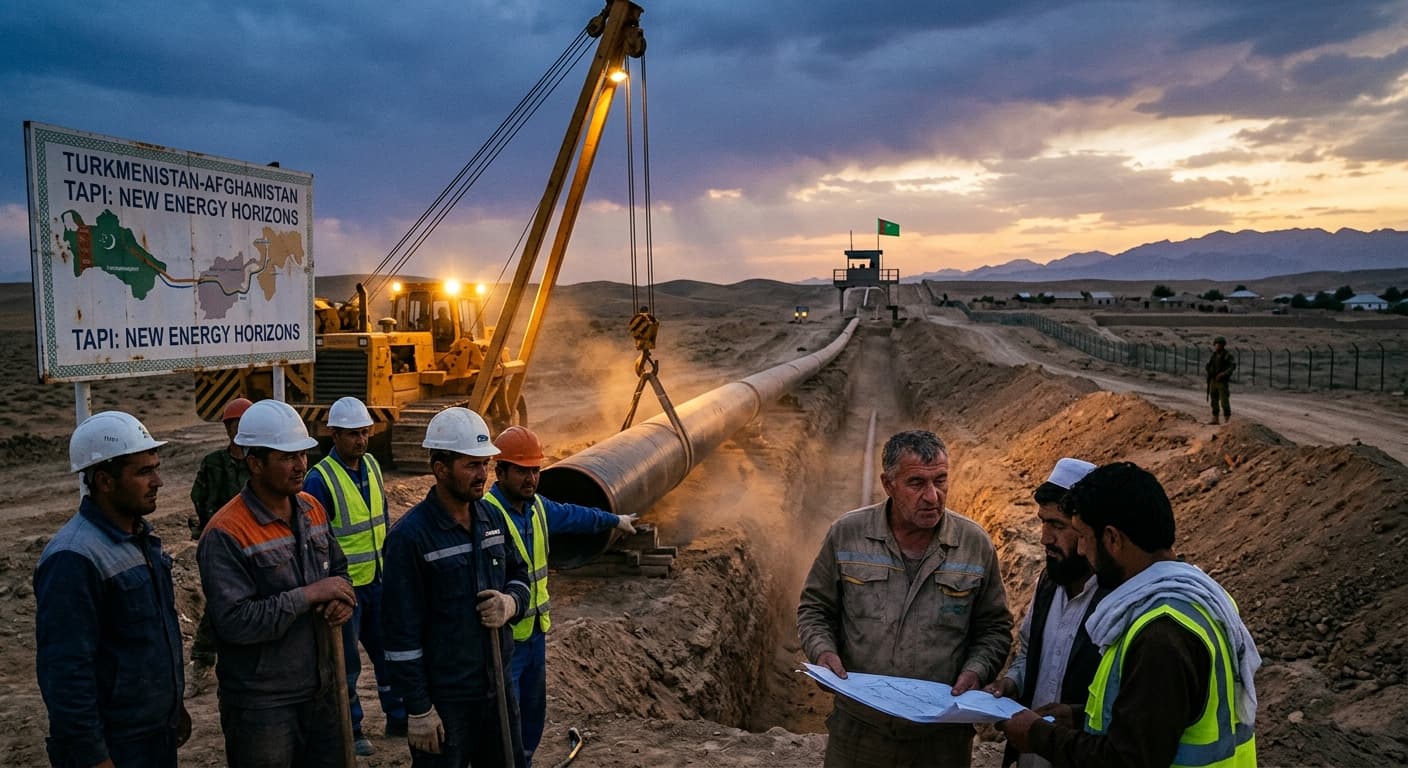
TAPI Pipeline Push: Turkmenistan's Escape From China, Not South Asia's Energy Fix
Taliban and Turkmen officials are racing to finish the Afghan leg of the TAPI gas pipeline by 2027 — but the geopolitics reveal Ashgabat's China exit, not South Asia's energy security.
The Taliban's declaration that construction on the Afghan segment of the Turkmenistan–Afghanistan–Pakistan–India (TAPI) gas pipeline is now advancing at roughly 500 metres per day, with the Herat sub-section targeted for early 2027, is being sold as a regional energy-integration story. It is not. It is a Turkmen story: Ashgabat is spending down its own credibility and cash to build a southern outlet because it has become dangerously dependent on a single buyer — China, which took roughly 75–80% of Turkmen gas exports in 2024, according to a February 2025 analysis by the OSW Centre for Eastern Studies. The July 2026 Herat meeting between Governor Noor Ahmad Islamjar and TAPI project chief Begenj Abdullayev, reported by
Ariana News, matters less for what it does for Afghan or South Asian energy security than for what it reveals about the tightening squeeze on Turkmenistan — and about who is quietly stepping into the vacuum left by absent Western financiers, absent Indian buyers, and an increasingly hostile Pakistan.
The load-bearing number is Turkmen, not Afghan
Turkmenistan produced 80.6 bcm of gas in 2023 and exported over 40 bcm, of which around 32–33 bcm went to China, OSW noted in March 2024. Since then, three of Ashgabat's four other buyers have collapsed or shrunk: the Gazprom contract expired in mid-2024 and was not renewed; exports to Azerbaijan were suspended in early 2024 over pricing; and Iran remains an unreliable swap counterparty. Turkey has signed a modest new deal, but it moves gas via Iranian pipes and cannot mask the underlying dependency.
That squeeze is what drives Ashgabat to accept construction costs and political risks that no solvent commercial actor would absorb. The Atlantic Council judged in 2021 that a realistic full-scale TAPI is closer to a USD 40 billion project once upstream Galkynysh development and contingencies are counted, against the widely quoted USD 10 billion Penspen figure. Even the scaled-down "Phase 1" free-flow variant, at roughly 11 bcm per year, is stretched thin: the Asian Development Bank has indicated only about USD 1 billion in loans, and the Turkmen government's own pledge of USD 1.675 billion looks aspirational against its ongoing fiscal squeeze. Turkmengaz retains an 85% stake in TAPI Pipeline Company Limited, with Afghanistan, Pakistan and India holding 5% each, according to a 2015
Indian government release.
The Afghan leg is real — the Pakistani and Indian legs are not
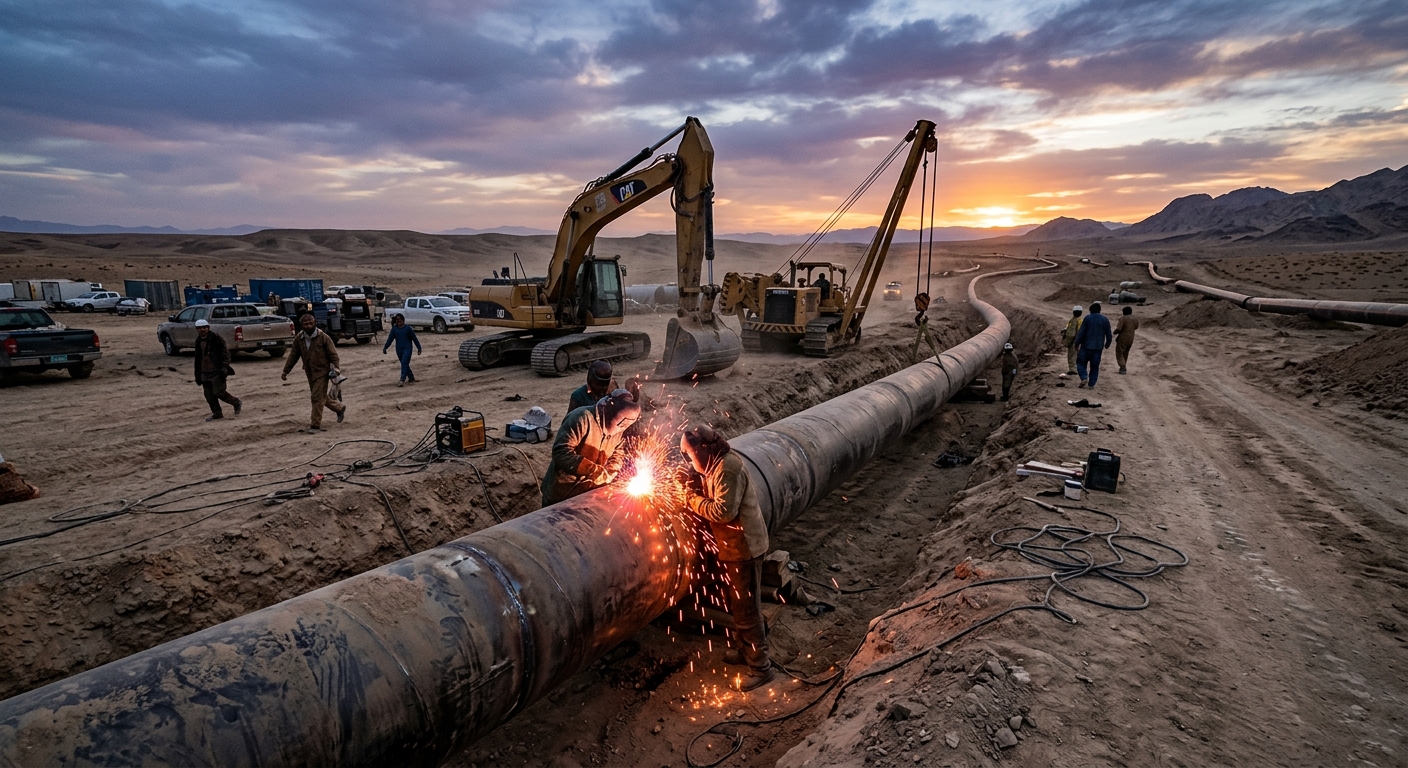
The construction progress the Taliban is publicising is genuine but confined. Around 84 kilometres of pipe have been laid inside Afghanistan and roughly 130 kilometres graded, per Ariana News and Taliban spokesman Zabihullah Mujahid, quoted by
DID Press Agency. The Herat governor's spokesman told local media the Afghan section is roughly 60% complete on his metric — a figure the Taliban has an obvious political interest in inflating, but which even sceptical observers concede reflects real activity.
The problem is what comes after Herat. The pipeline is designed to enter Pakistan near Quetta in Balochistan, run to Multan, and cross into Indian Punjab at Fazilka. Neither the Pakistani nor the Indian segment has broken ground. And the security environment on the Pakistani side has degraded sharply this year: on February 27, 2026, Pakistan's defence minister declared "open war" against the Afghan Taliban after Pakistani air strikes hit Kabul, Kandahar and Paktia, as documented by Al Jazeera and by a
CSIS brief. A Kunar university was struck in April, and by late June
Al Jazeera reported that Pakistani air strikes were failing to suppress TTP operations. A pipeline whose route requires cooperative Afghan–Pakistani border management is being built precisely as that border becomes the region's most active air-war zone.
India's silence is the loudest signal
The Stimson Center argued in November 2024 that India should proactively lead TAPI to preclude Chinese or Russian capture. New Delhi has done the opposite. Since 2018 India has quietly refused to sign a revised Gas Sales and Purchase Agreement, arguing the delivered price would run roughly double domestic gas, and remains wary that Islamabad could weaponise transit gas in a future crisis. GAIL's role in the Isle-of-Man-registered consortium is capped at a USD 5 million equity stake authorised under a 2013 Cabinet approval, per
India's Press Information Bureau — meaningful as a placeholder, negligible as a commitment.
Second-order effect: with India effectively absent, TAPI's economic case rests on Pakistan alone as an anchor buyer. Pakistan's chronic gas deficit and inability to sustain LNG imports at current prices give it every incentive to take the gas. But Islamabad has also stopped construction of the Iran–Pakistan pipeline for a decade under US sanctions pressure, and its balance-sheet capacity to underwrite billions in sovereign guarantees is thin. Absent Indian offtake and Indian political cover, TAPI becomes a Turkmen–Pakistani bilateral routed through a Taliban-run middle — a very different project from the one the four capitals signed at Mary in 2015. The vice-presidential launch speech that day, still archived by India's PIB, invoked "an economically integrated region stretching from the Bay of Bengal to the Caspian Sea." That vision is now on life support.
Who fills the vacuum: the historical parallel
The Atlantic Council analysis raised the scenario that would most alarm Washington and New Delhi: if China invests, TAPI comes to life — on Chinese terms. Beijing has the balance sheet, easy diplomatic entrée in Ashgabat and Islamabad, and, uniquely, the Taliban's attention. The Central Asia–China Gas Pipeline, operational since 2009, already carries the bulk of Turkmen exports east; CSIS argued in April 2026 that Beijing has replicated Moscow's Soviet-era
infrastructure-dependency playbook across the region, holding, for example, more than a quarter of Tajikistan's external debt.
The historical parallel is Unocal's mid-1990s effort — the original US-backed trans-Afghan gas concept that collapsed when the Taliban's first regime became internationally toxic. Three decades later, the same pipeline is being built by the same movement's second regime, this time without American money or American firms. Since August 2021, Washington has frozen roughly USD 7 billion of Afghan central bank reserves, per the Congressional Research Service, and the World Bank has
halted lending beyond humanitarian channels. The consequence is that the only actors with the political appetite to finance Afghan infrastructure are those willing to work around US sanctions — a shortlist headed by China, with Russia and Gulf capital in supporting roles. Dragon Oil, controlled by the UAE, was linked to TAPI as early as 2015 by
OSW and remains one of the few Western-connected firms with actual upstream positions in Turkmenistan.
Who benefits, who loses
The Taliban wins first and most concretely. Transit fees have been estimated at USD 450 million to USD 1 billion annually by the Stimson Center — a large sum against an Afghan economy that lost roughly USD 8 billion in annual aid, or 40% of GDP, after 2021, per the
United States Institute of Peace. Even without gas ever flowing, the construction phase gives Kabul jobs, hard-currency inflows and, crucially, a legitimating narrative: the regime that international lenders will not touch is delivering the region's marquee infrastructure project. The July 2026 Herat governor's meeting, and the parallel proposal for a joint Afghan–Turkmen trade exhibition at the border, are not incidental — they are the diplomatic packaging around that legitimation.
Turkmenistan gains a partial hedge, but a costly one. Even at full 33 bcm capacity, TAPI would divert only about a third of current exports; at Phase 1's 11 bcm it barely dents the China share. The country's foreign policy, as Valdai Club analyst Anastasia Pogorelskaya observes, is now dictated almost entirely by gas — and every diversification move (Turkey, Iraq via Iran swaps, the perennially theoretical Trans-Caspian) is smaller and more contingent than the last. Pakistan sits in the ambivalent middle: it needs the gas, but its "open war" posture toward Kabul makes hosting a Taliban-secured transit route politically radioactive. India loses optionality — the longer it waits, the more the project's governance calcifies around actors it cannot influence.
The clearest loser is US policy. Washington once called TAPI the "magic glue" of South and Central Asia — a phrase the Stimson Center attributes to former US officials — and has since watched every lever of influence over the project atrophy. Two decades later, the pipeline is being built without American money, American firms, or American strategic input, at a moment when the Trump administration's Central Asia engagement remains — as an October 2025 IRIS/DGRIS paper put it — long on statements of intent and short on delivery. If China ultimately backstops the financing, the pipeline joins CPEC and the Central Asia–China corridor as another leg of a Beijing-anchored Eurasian gas grid.
What to watch next
- Late 2026 / early 2027: Herat sub-section completion. If the Taliban misses this self-imposed deadline by more than a quarter, expect Ashgabat's public patience to fracture.
- Pakistani segment groundbreaking: no credible date exists. Watch for any statement from Islamabad's petroleum ministry pairing TAPI construction with a Balochistan security plan; without one, the pipeline stops at the Durand Line.
- Financing announcement: any Chinese, Emirati or Islamic Development Bank commitment above USD 2 billion would shift the consortium's centre of gravity away from Turkmengaz. The IDB extended a USD 700 million loan to Turkmenistan in 2016; a commitment at double that scale would be the first hard signal.
- India's next move: New Delhi has neither withdrawn from TPCL nor accepted a revised GSPA. A quiet decision either way — likely signalled via GAIL rather than the MEA — will determine whether Fazilka ever sees Turkmen gas.
Diplomat View
TAPI in 2026 is best read as a Turkmen strategic retreat dressed as regional integration. Ashgabat is building because it must, the Taliban is welding because it can bank the transit fees and the legitimacy, and Pakistan and India are watching because neither has a better alternative but neither trusts the current one. The forecast: the Afghan segment likely reaches mechanical completion by 2028; the Pakistani segment is at least 50/50 to stall past 2030; Indian gas offtake before 2032 is unlikely absent a breakthrough in India–Pakistan security relations. Revision triggers: a Chinese anchor investment of USD 3 billion or more; a written Kabul–Islamabad security understanding on the TTP and pipeline transit; or a GAIL move to increase its equity stake. Absent those, the pipeline of peace remains what Luca Anceschi called it in his 2017 academic paper — a virtual pipeline, most powerful as a foreign-policy instrument when it is not yet actually delivering gas.
The Bottom Line
TAPI's acceleration is not a South Asian energy-security story — it is Turkmenistan's forced march away from single-buyer dependence on China, financed by whoever will lend and secured by whoever holds the ground. Until the Pakistani segment breaks ground and India signs a revised gas contract, the pipeline's most valuable output is not gas but geopolitical positioning — and Beijing, not Washington or New Delhi, is best placed to collect it.
Read today's full |
Discover more
US Politics
Virginia's Redistricting Referendum
Virginia's redistricting referendum is drawing a flood of dark money, shaping future elections and the fight for congressional control amid party stakes.
Global Politics
Xi Jinping Calls China-Russia Ties 'Precious'
Xi Jinping's description of China-Russia ties as 'precious' reflects a strategic imbalance, with Beijing dictating terms in the partnership.
International Relations
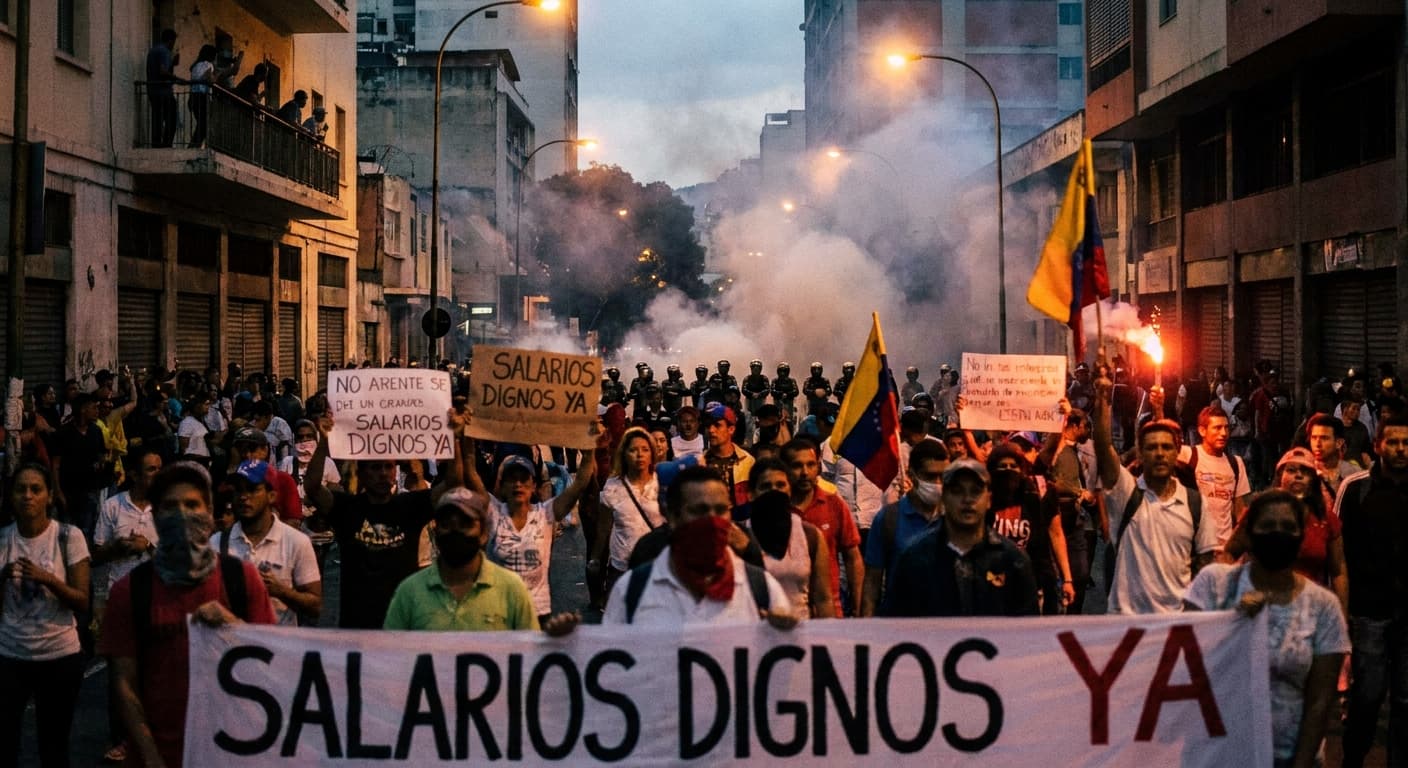
Venezuela Protests Demand Economic Reforms
Protests across Venezuela spotlighted deepening economic hardship under Maduro as workers demanded higher wages and pensions amid growing public discontent.

Economics
Fed's Amex AML order puts correspondent banking on notice
Federal Reserve's Amex AML order requires board-level controls and a 90-day plan; OCC fined the bank $350 million over enterprise-wide deficiencies.