Taiwan Warns of China's New Status Quo
Kuan Bi-ling highlights China's stealthy maritime pressure.
Model Diplomat7 min readAsia
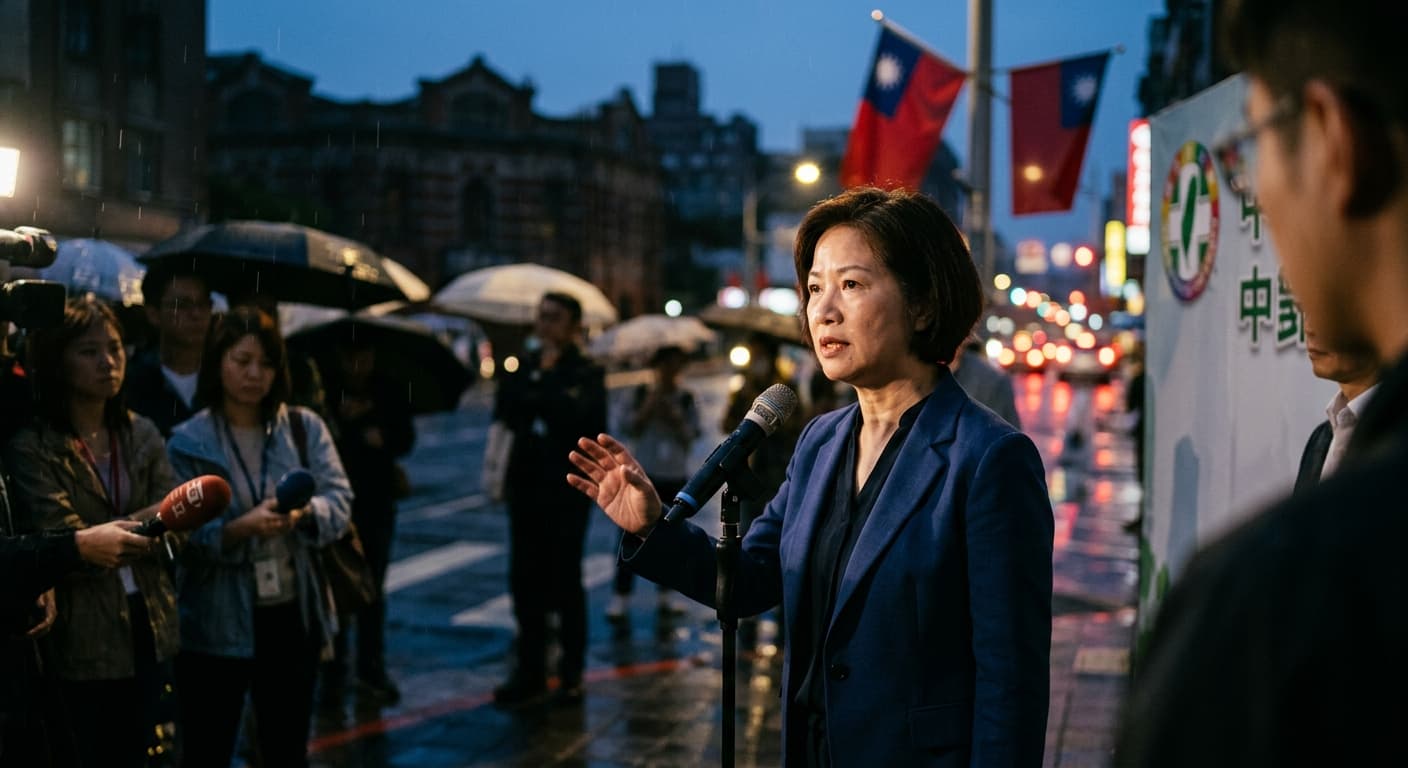
Taiwan warns China building 'new status quo' by stealth
Kuan Bi-ling says Beijing's grey-zone campaign around Taiwan, Japan and the Philippines is quietly rewriting the Indo-Pacific map — and the West is normalising it.
Speaking at a Taipei forum on July 8, 2026, Ocean Affairs Council Minister Kuan Bi-ling warned that China's incremental maritime pressure has begun rewriting the Taiwan Strait status quo without a single decisive incident — and that Washington, Tokyo and Manila risk waking up to a fait accompli. The argument matters because the evidence backs it: CSIS's Futures Lab measured a 500% jump in daily China Coast Guard vessels entering Taiwan's near waters between 2020 and 2025, Beijing now runs "law-enforcement" patrols east of the island for the first time, and a Trump–Xi rapprochement reached in May has narrowed the political space for a Western pushback. Kuan's warning is not rhetoric. It is a bid to name a campaign that is working.
What Kuan actually said
Kuan is not a marginal voice. Her council runs Taiwan's Coast Guard Administration, and in April 2026 she became the first sitting minister in years to visit Taiping Island in the Spratlys, observing drills as BBC News reported. That trip framed her July message: Taiwan sees the Taiwan Strait, the East China Sea, and the South China Sea as one integrated theatre of Chinese pressure.
At the forum, reported by Reuters via SRN News, Kuan said:
"Each individual action may not appear to trigger an international crisis. Each escalation of pressure may still be judged as not constituting war. But when a series of actions accumulates, it may create an entirely new status quo… In the end, we may suddenly discover that no decisive war ever occurred on any particular day, yet the original status quo no longer exists."
She warned the compounding effects — rerouted shipping, higher marine-insurance premia, frontline attrition — would arrive before any single "crisis" concentrated Western minds. Her deputy at the same forum, National Security Council Deputy Secretary-General Lin Fei-fan, framed the same problem as "a common maritime security issue" affecting the Baltic as well as the first island chain, according to Taiwan's Ocean Affairs Council.
The audience mattered. U.S. Senator Tammy Duckworth attended — the first American senator to visit Taipei since President Donald Trump met Xi Jinping in Beijing in May 2026. That timing is not incidental: Kuan is trying to lock the "grey zone" issue into a U.S. political calendar that the White House would prefer to move past.
The data behind the warning
The numbers make Kuan's case harder to dismiss. In its May 2026 report The Geometry of Coercion, CSIS found that between January 2020 and December 2025, the daily average of distinct China Coast Guard vessels entering Taiwan's near waters rose by more than 500%, while daily incursions into Taiwan's second maritime security ring more than quadrupled. A parallel CSIS study,
"Signals in the Swarm", identified 128 Chinese-flagged fishing vessels behaving as likely gray-zone actors — surveilling drill zones, obscuring identifiers, loitering near PLA Navy exercise areas.
Air pressure has kept pace. Brookings China Center director Ryan Hass and co-author Stephen Tan, in "Paint it black", record that Beijing has "erased the median line" in the Taiwan Strait and, in January 2026, violated Taiwan's territorial airspace with a military drone for the first time. Al Jazeera reported that in a single week in late May 2026, Taiwan's Ministry of National Defence tracked two "joint combat readiness" patrols and more than 100 PLA and coast-guard ships arrayed along the first island chain, according to
Al Jazeera.
The mechanism Kuan described — Taiwan burning fuel and airframes to intercept — is deliberate. Hass and Tan argue Beijing exploits an asymmetry: Taiwan scrambles frigates to shadow every intrusion, wearing down readiness, while China faces no comparable cost. The result is a "gray zone treadmill" that reads as prudence in Taipei and as attrition in Beijing.
The east-coast breakthrough
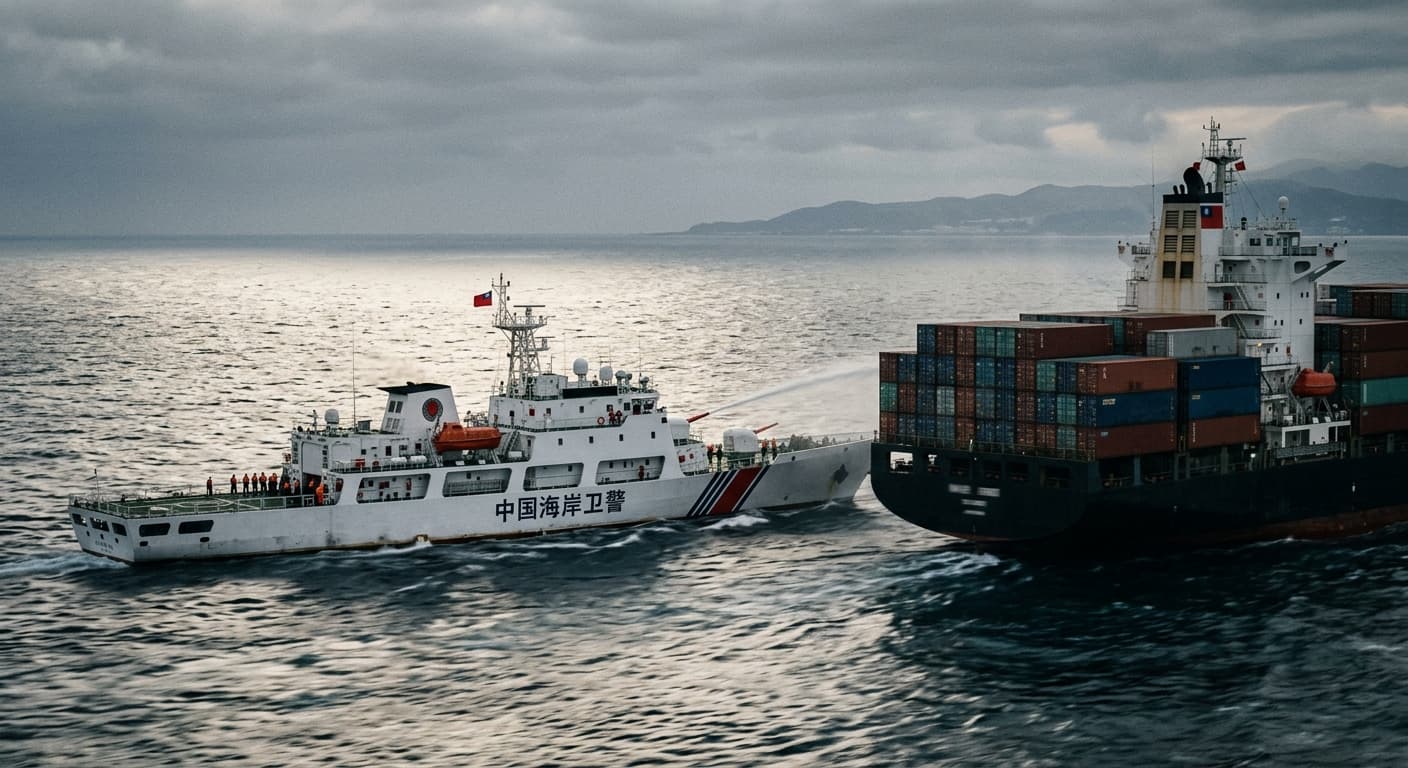
The specific incident that reframed the debate came in June 2026. On the night of June 6, China's Ministry of Transport announced a "special law enforcement operation for maritime traffic in waters to the east of Taiwan." Over the next four days, Chinese coast guard and public-service vessels — including 10,000-tonne cutters — swept 1,030 nautical miles, hailed 198 commercial ships, and conducted seabed cable surveys, according to BBC Chinese.
Taiwan's Ministry of Foreign Affairs called it a "structural change." In a June 9, 2026 statement, MOFA said Beijing had "illegally harassed cargo ships exercising their right to freedom of navigation" and warned the operation "gravely disrupt[s] the status quo, and seek[s] to justify its unlawful maritime harassment with fabricated pretexts." The pretext was Japan and the Philippines opening EEZ delimitation talks — a bilateral matter that, by
Vienna Convention logic, cannot bind Taiwan. Beijing seized on it anyway to assert "coastal governance" east of the median line for the first time.
That is the operational meaning of Kuan's warning. For decades the PLA's pressure envelope focused on the Strait's western half. The east coast — where Taiwan's mobile missile batteries, resupply corridors and U.S. reinforcement axis would run in a crisis — was strategic depth. Normalizing CCG patrols there compresses that depth without a shot fired. The Asia Maritime Transparency Initiative documented an analogous drift around Pratas Island, where by February 2026 CCG vessels had made three separate contiguous-zone incursions — moving from "peripheral concern to a new normal," in AMTI's phrase.
The legal architecture was pre-positioned. China's 2021 Coast Guard Law and its June 2024 Order No. 3 authorize the CCG to board and detain vessels in "waters under Chinese jurisdiction" — a term left deliberately undefined. Taiwan's MOFA warned in 2024 the rules would "impact navigation safety for international commercial and fishing vessels." Two years on, that prediction is being tested against Taiwanese-flagged and third-country hulls.
Who benefits, who's exposed
The Trump–Xi Beijing summit in May 2026 is the political backdrop Kuan cannot say out loud. Since that meeting, U.S. officials have been noticeably quieter on daily gray-zone incidents. That silence is the space Beijing is exploiting.
Allies are trying to fill it. Last month, the United States, United Kingdom, France and Germany issued a joint expression of concern over the new east-coast CCG patrols — an unusual G4 démarche outside a formal summit. Japan and the Philippines, meanwhile, have hardened. Their Reciprocal Access Agreement took effect in September 2025 and was reinforced on January 15, 2026 by an Acquisition and Cross-Servicing Agreement, Al Jazeera reported. Prime Minister Sanae Takaichi's late-2025 remark that Tokyo could intervene militarily if China attacked Taiwan — dubbed the "Takaichi doctrine" in Japanese commentary — has structurally changed the risk calculus in Beijing's east.
The Philippines chairs ASEAN in 2026, coinciding with the tenth anniversary of the 2016 arbitral award that voided China's nine-dash line. CSIS notes Manila is deliberately routing security cooperation around ASEAN consensus, through "minilateral" pacts with Tokyo, Canberra, Paris and Washington. That is the coalition Kuan is trying to plug Taiwan into without a formal treaty.
The exposed party is Taiwan's coast guard. It is outmatched: the CCG is the world's largest, drawing on China's Maritime Safety Administration fleet of at least three dozen oceangoing vessels and a maritime militia that CSIS estimates in the hundreds. Taiwan launched a program in 2018 to build 141 new coast-guard hulls by 2027, but even completed on schedule it leaves Taipei outnumbered roughly ten to one. Firing first is politically prohibited. Not responding is what Kuan is warning against.
Diplomat View
Kuan's speech will be treated in Western capitals as familiar Taiwanese messaging. That reading is wrong. The Taipei government is signalling that the June 2026 east-coast operation was the inflection point at which "gray zone" ceased to be a below-threshold nuisance and became the mechanism of territorial change. Our call: within twelve months, the China Coast Guard will conduct at least monthly law-enforcement patrols east of Taiwan's median line, and will attempt at least one boarding of a Taiwan-flagged commercial vessel outside the 24-nm contiguous zone — testing whether Taipei's coast guard responds with force and whether the U.S. Seventh Fleet responds at all. The forecast would be revised if the Trump administration authorizes joint U.S.–Taiwan or U.S.–Japan–Philippines coast-guard patrols inside Taiwan's EEZ, or if the G4 démarche is followed by targeted financial measures against CCG-linked entities. Absent either, Kuan's "new status quo" will be a description, not a warning, by mid-2027.
What to watch next:
- July–September 2026: Frequency and geography of China Coast Guard patrols east of Taiwan; whether the June "special operation" template is repeated monthly.
- October 10, 2026: President Lai Ching-te's National Day speech, historically a trigger for PLA "Joint Sword" exercises — the last two, in 2024, produced record encirclements.
- November 2026: Philippines' ASEAN chairmanship handover and the tenth-anniversary politics of the 2016 South China Sea award; watch for a Manila-led statement on gray-zone coercion.
- U.S. FY2027 defence appropriations: whether Congress conditions any China-related funding on a formal U.S. designation of the China Coast Guard as an arm of the PLA, as CSIS's Bonny Lin has
recommended.
The Bottom Line
Beijing is not preparing for a Taiwan war on a single date; it is dissolving the pre-war status quo in monthly increments, and the June 2026 east-coast patrols were the moment the technique broke through. Kuan Bi-ling's warning is the last clear signal Taipei can send before international audiences file the change under "the way things are now." If the Trump administration treats the post-Beijing-summit quiet as an achievement rather than a permission slip, the map of the first island chain will have been redrawn before the next U.S. election.
Discover more
Global
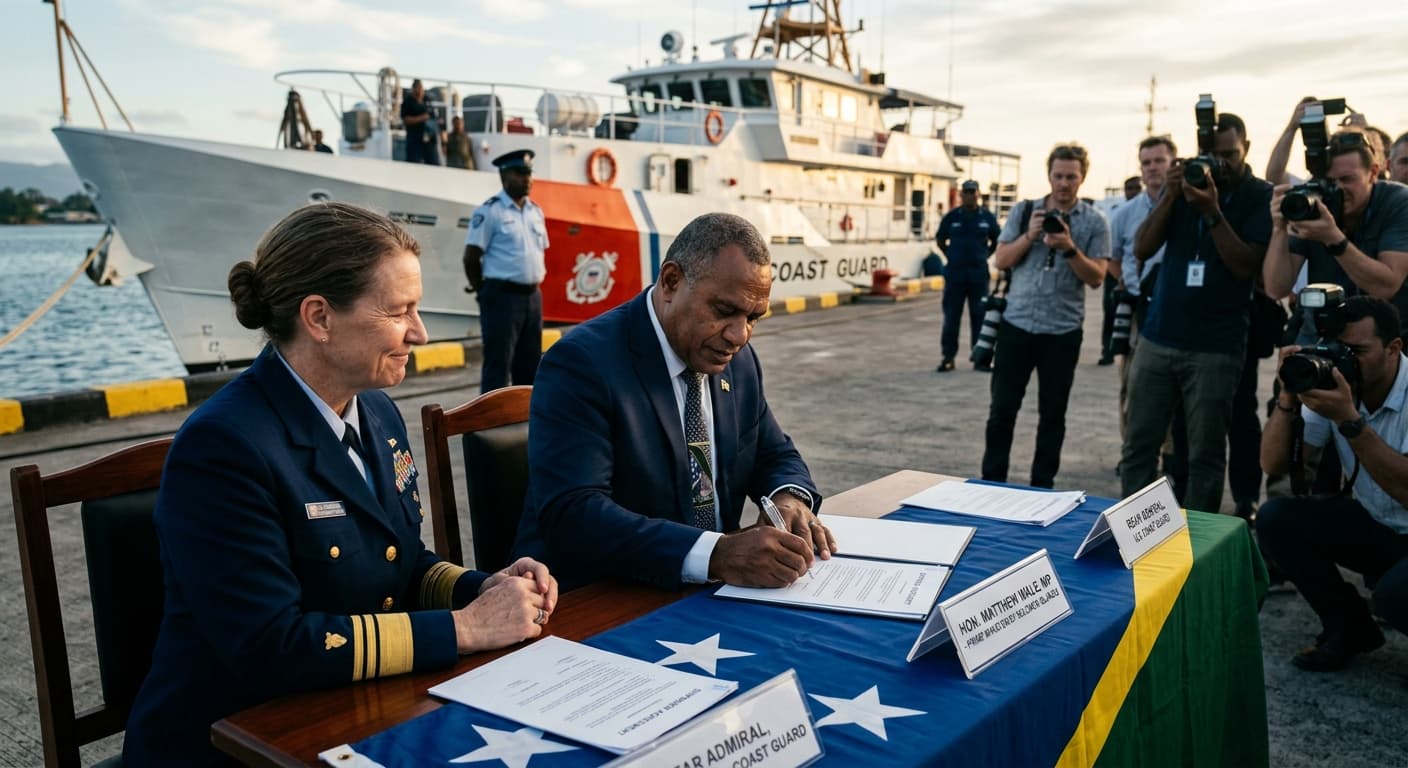
Solomon Islands Signs US Coast Guard Patrol
Solomon Islands PM Matthew Wale signs US Coast Guard shiprider deal 68 days after taking office, reversing four years of Chinese-aligned maritime policy and signaling a strategic balancing act in the Pacific.
Global
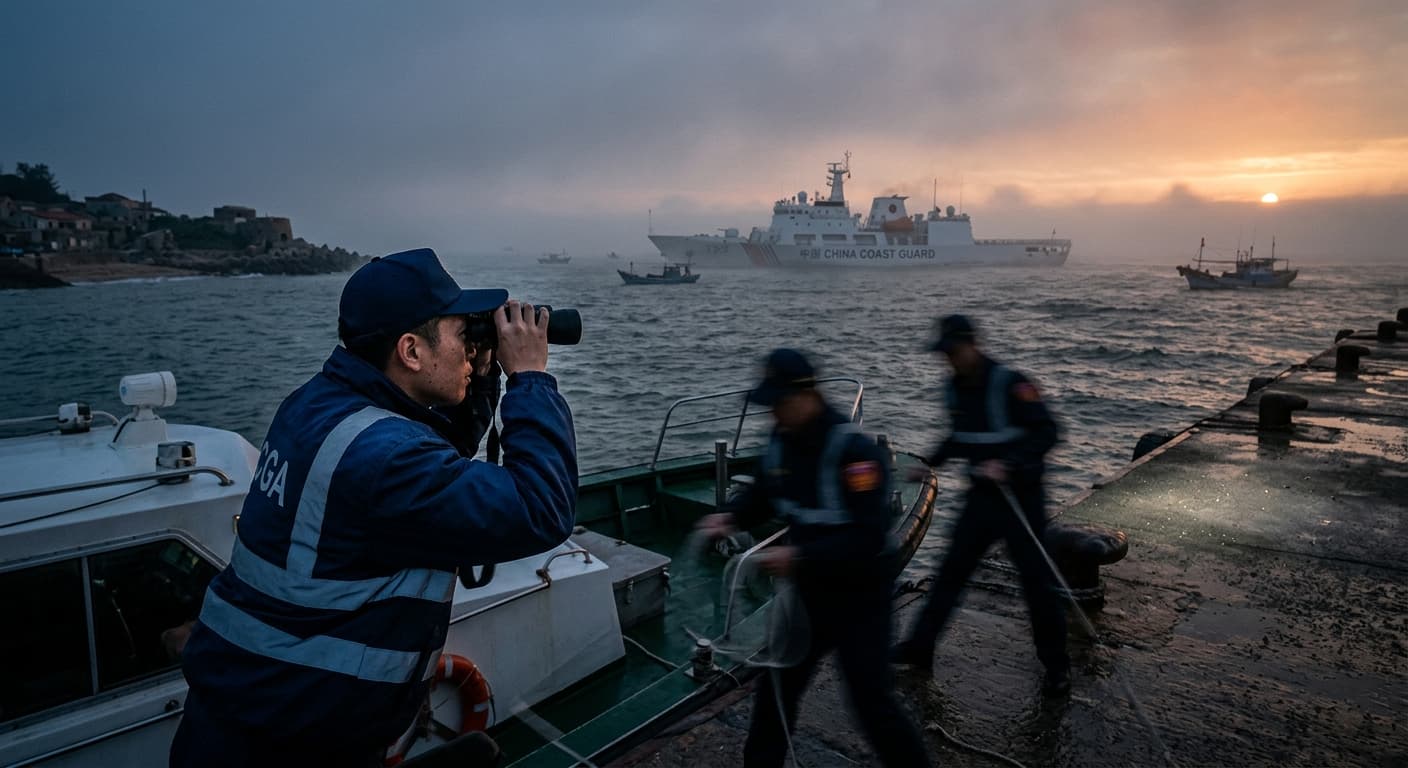
China's Kinmen Campaign: The Deceptive Calm
China's coast guard entered Kinmen's restricted waters 24 times in 2026, desensitizing Taiwan's public and eroding territorial jurisdiction through a deliberate gray-zone campaign.
Global
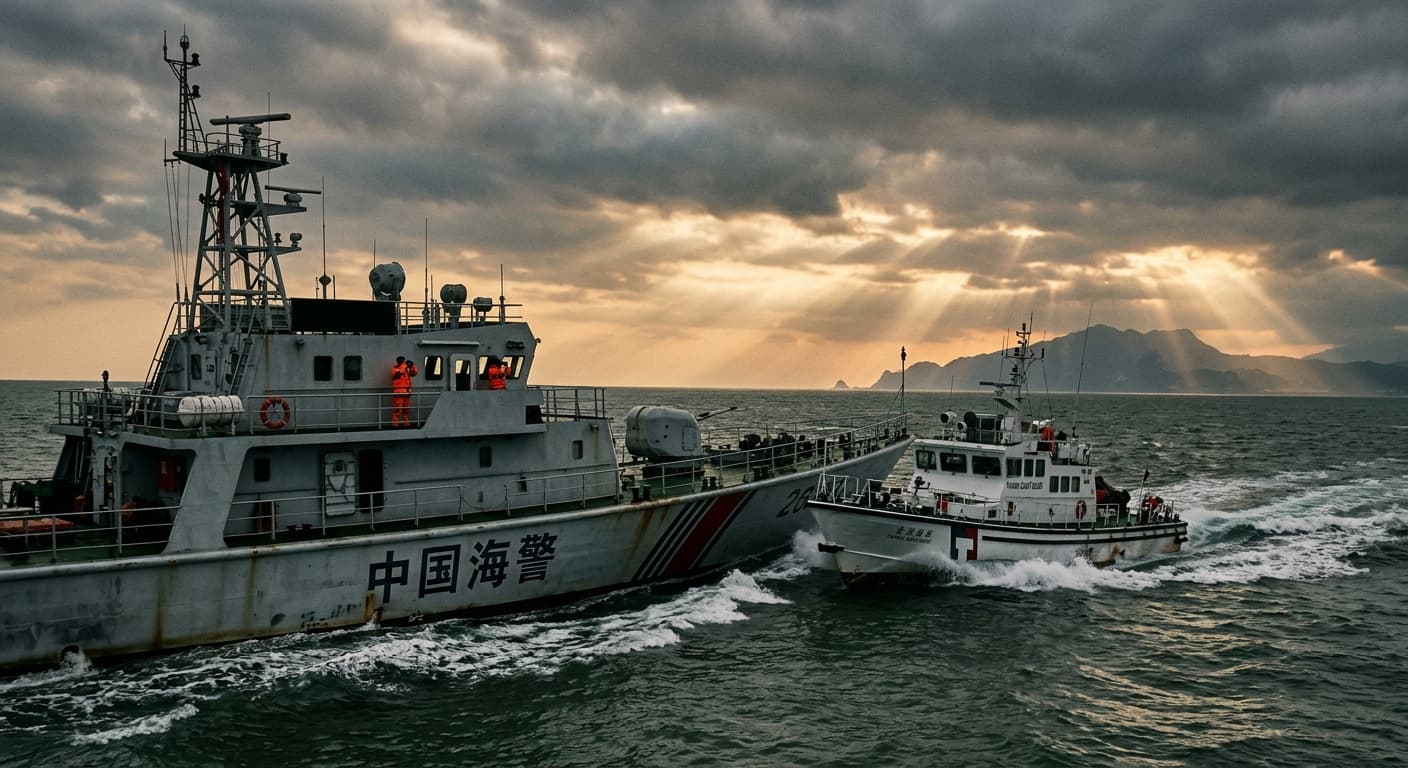
China's Grey-Zone Pressure on Taiwan
Analysis of China's June 2026 deployment east of Taiwan: CCG and navy vessels maintain round-the-clock presence, using 'law enforcement' to assert jurisdiction and test Taiwan's defenses.
Global
China's Taiwan Blockade Playbook: White Hulls
Senator Tammy Duckworth warns China will likely blockade Taiwan by 2028 using coast guard vessels under legal cover, not military invasion, citing rehearsed exercises and economic stakes of $2.45 trillion in trade.