Suvendu Adhikari’s Oath Ends Mamata Era in West Bengal
BJP’s first Bengal government turns a landslide into power, but Adhikari still has to prove he can govern a state built by Mamata Banerjee.
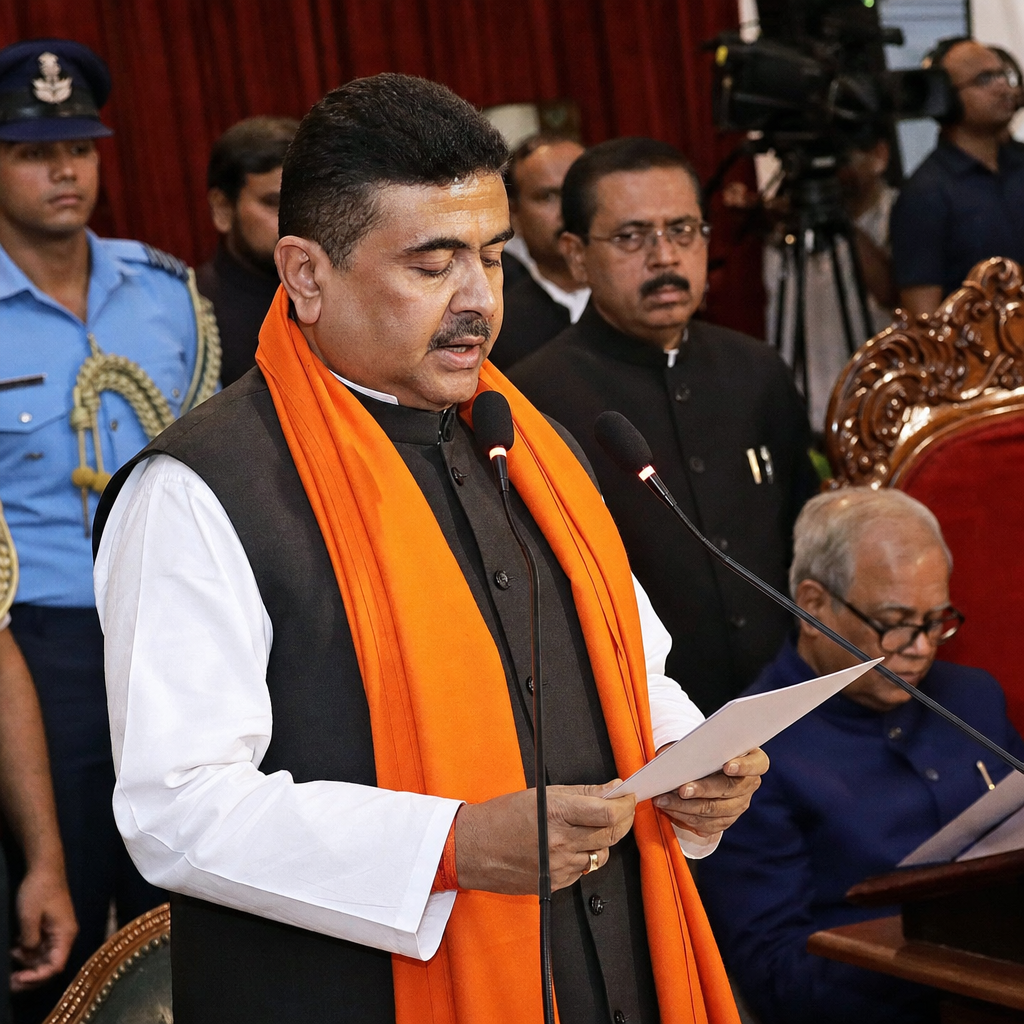
Suvendu Adhikari is being sworn in as West Bengal’s first BJP chief minister at Kolkata’s Brigade Parade Ground, a symbolic transfer of power that ends 15 years of Trinamool Congress rule and gives the BJP its biggest governing prize in eastern India, according to the  Indian Express and
  The Hindu. The optics matter: Prime Minister Narendra Modi and Home Minister Amit Shah are attending, and the oath is timed to Rabindra Jayanti, a deliberate signal that the BJP wants to frame its win as culturally Bengali, not merely numerically victorious (
 Rediff/PTI).
Delhi cashes in on Bengal
The real leverage sits with the BJP central leadership. Adhikari’s rise was not just a local promotion; it was managed through a legislature-party meeting in Kolkata, with Shah presiding over the choice, and then formalized after Adhikari staked claim to form the government at Raj Bhavan, according to the  Free Press Journal. That means this government starts with a dual power center: Adhikari as the state’s face, Modi-Shah as the political owners of the victory.
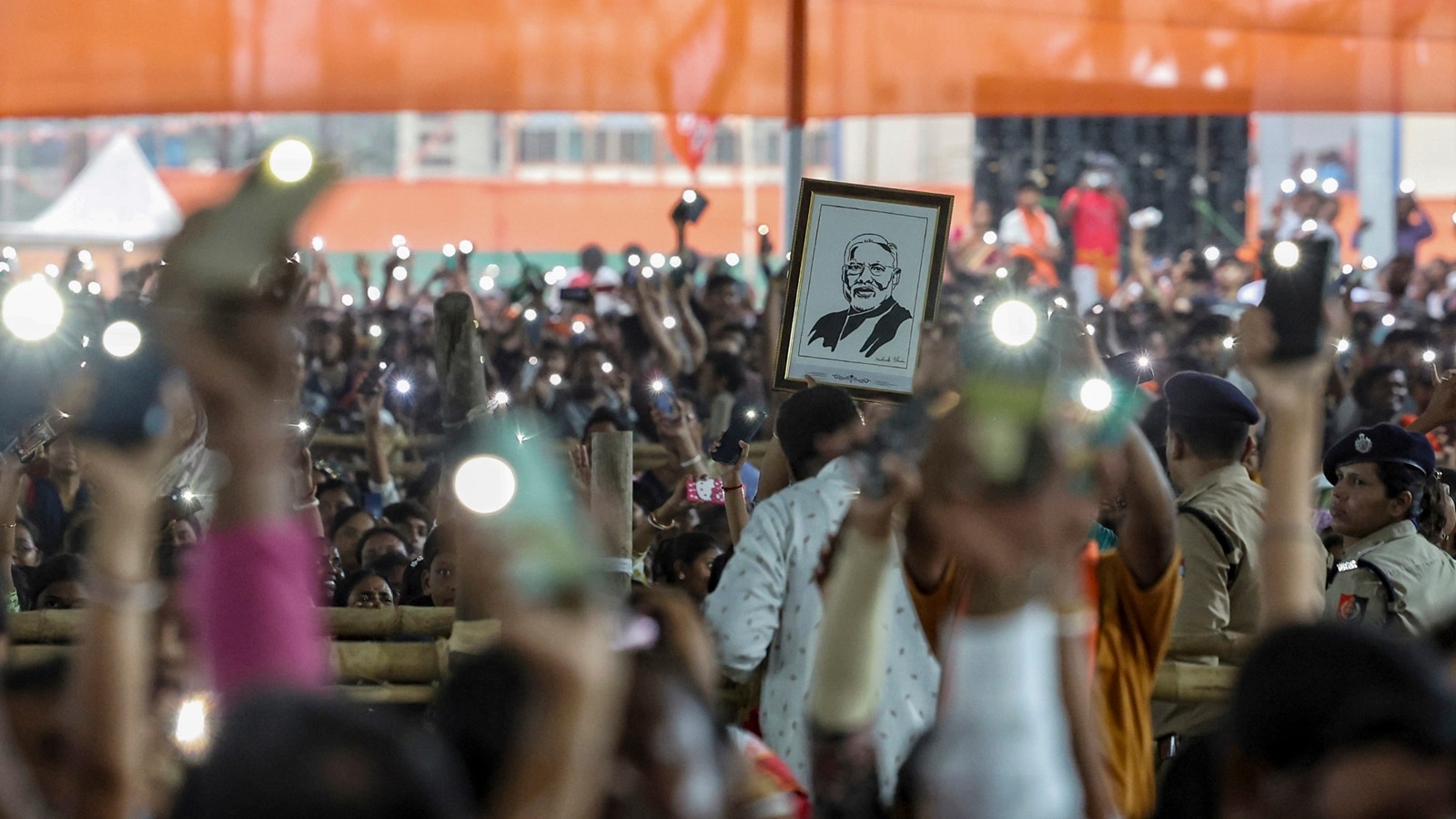
That is why the ceremony at Brigade Parade Ground is more than pageantry. Bengal has been the BJP’s most important test case in the east; now it gets a chance to convert electoral momentum into administrative control. For  India, this is not just another state handover. It is a proof-of-concept for whether the BJP can turn opposition gains into durable state power outside its traditional north and west India base.
Mamata loses office, but not the fight
Mamata Banerjee’s defeat is severe, but it does not automatically translate into political irrelevance. The  Straits Times reported that Banerjee rejected the idea that she had been “defeated” and accused the BJP of unfair tactics, while the BJP dismissed those claims and pointed back to the constitutional process. That tells you the next phase is likely to be contested in political—not just electoral—terms. The Trinamool Congress has lost office, but it still has a large opposition bloc and the state’s most experienced mobilization machine.
Adhikari’s personal story also matters. He crossed over from Banerjee’s camp and then beat her in her own stronghold, making him a useful symbol for the BJP’s message that Bengal’s old loyalties can be broken. But defectors make good campaign faces and difficult chief ministers: he now has to govern a state where the BJP’s organizational depth is uneven, and where every early cabinet choice will be read as a signal about whether Kolkata or Delhi is in charge.
What to watch next
The key decision point is the cabinet. If Modi and Shah allow Adhikari room to build a distinctly Bengali administration, the BJP can consolidate. If not, this will look like another Delhi-managed experiment with a local face. Watch the first 30 days: portfolio allocation, police control, and whether the TMC shifts from shock to sustained street opposition. The next real test is whether this win becomes a governing model—or just a once-off reversal.