Suvendu’s oath seals BJP’s Bengal takeover
BJP turns a symbolic victory into executive power as Suvendu Adhikari takes charge; the real test is whether Delhi can hold Bengal together after the euphoria.
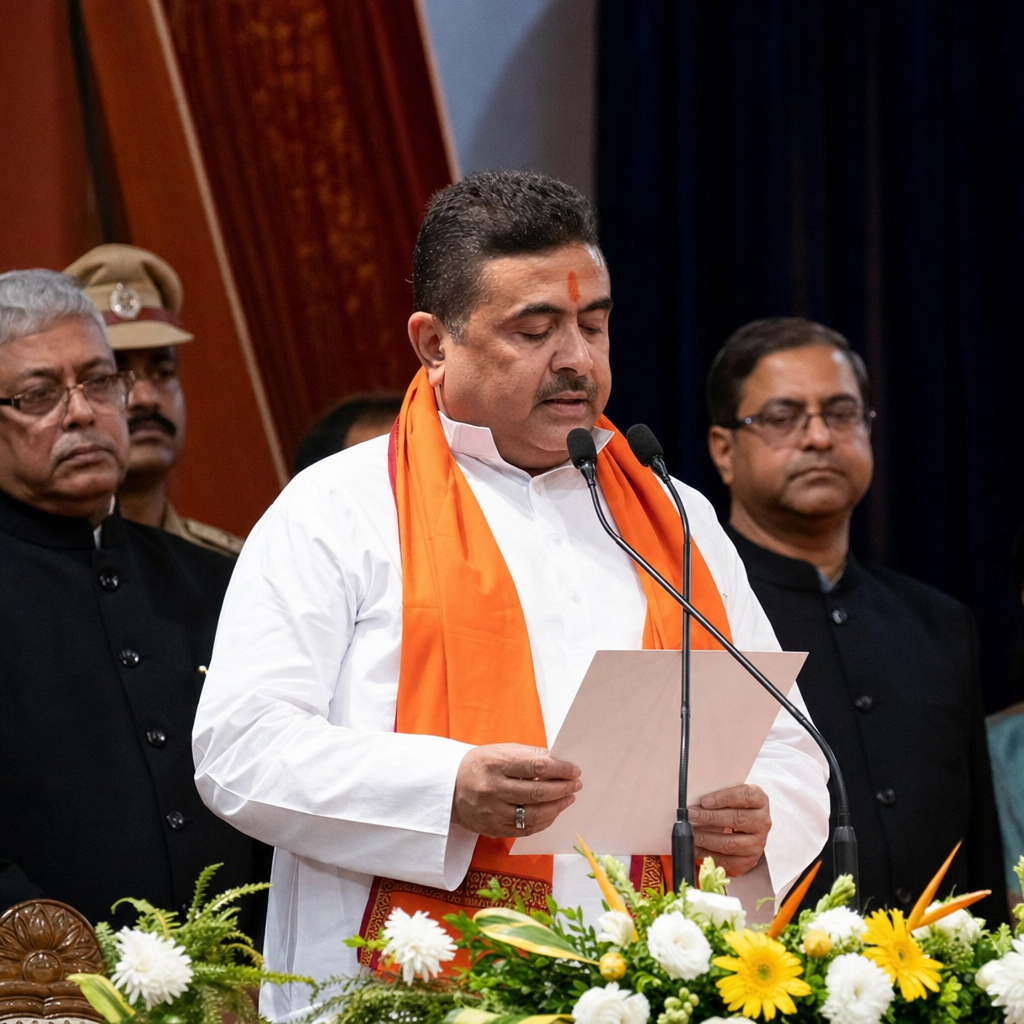
Suvendu Adhikari is set to be sworn in as West Bengal chief minister at Brigade Parade Ground on Saturday, after being unanimously elected BJP Legislature Party leader and meeting Governor R.N. Ravi to stake claim to form the government, according to  The Indian Express. The party is also likely to install two deputy chief ministers, a sign that it wants both to widen its political base and to keep tighter central control over a state it has never governed before.
The leverage now sits with Delhi
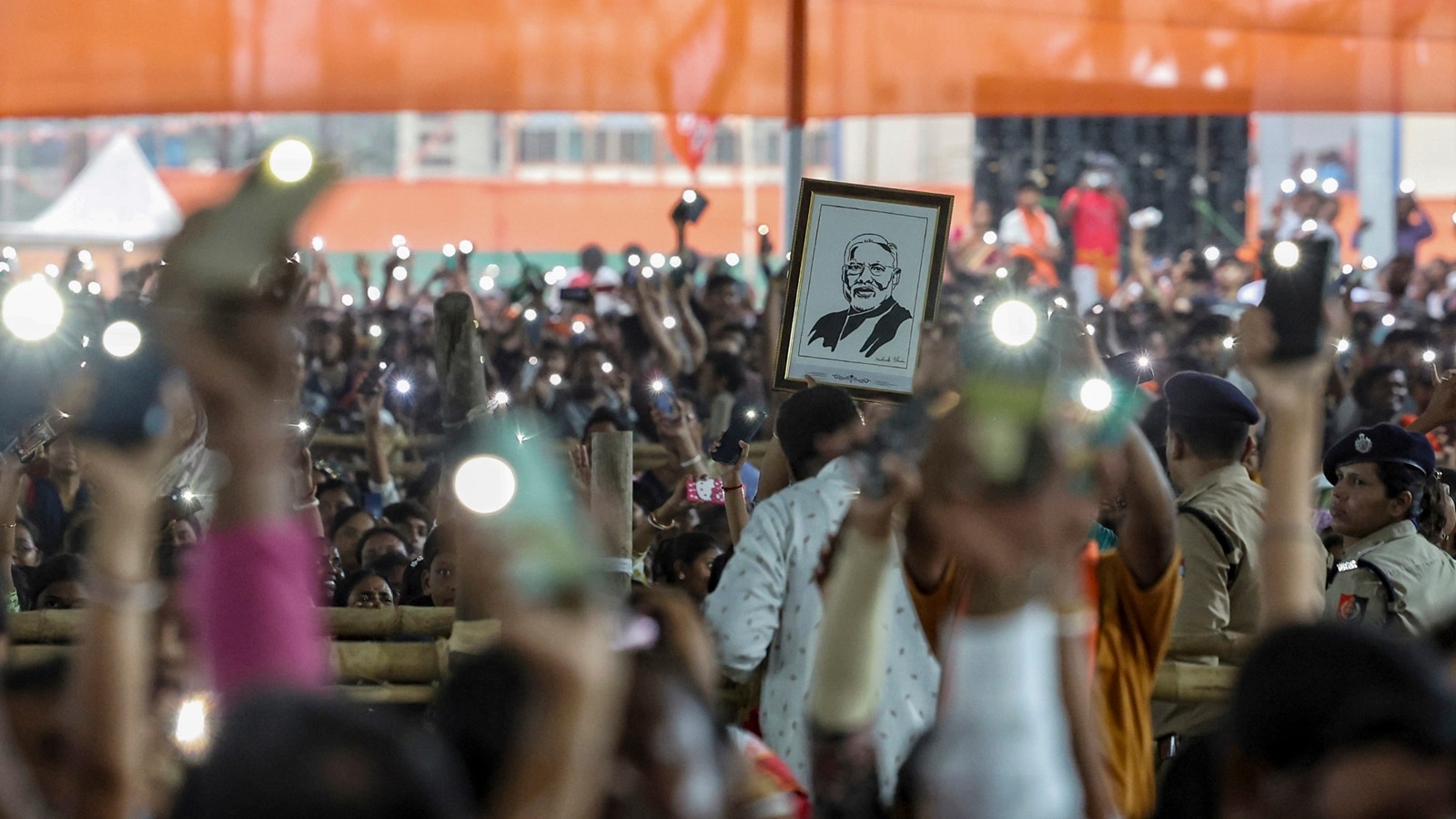
This is not just a change of chief minister; it is the BJP’s final frontier coming under its command. The party won 207 seats in the 294-member Assembly, ending Mamata Banerjee’s 15-year rule, and Adhikari’s elevation converts that mandate into a government that will be judged on delivery, not protest politics, according to  The Hindu. Prime Minister Narendra Modi has already framed the win as proof that voters rejected “fear, appeasement, and violence,” and promised rapid implementation of flagship schemes, including Ayushman Bharat, in the very first Cabinet meeting, The Hindu.
That is the key power dynamic: the BJP wants Bengal to validate the Modi model after the party lost its outright parliamentary majority in 2024. A victory in a state long defined by anti-BJP politics gives the national leadership more than bragging rights. It gives it a narrative that the party can still expand in hostile terrain, and it gives Adhikari direct dependence on the central leadership that backed him.
Why the two deputy CMs matter
The reported plan for two deputy chief ministers is a clue that the BJP is entering office with caution, not confidence. In a state where the party has built its rise through defections, aggressive campaigning, and a tight national leadership, deputy CMs can be used to balance regions, factions, and caste equations while keeping the chief minister politically boxed in. That matters in Bengal because governance failures would quickly expose the gap between the BJP’s electoral coalition and its administrative capacity.
Adhikari himself is the party’s most potent local asset and its biggest political risk. He is the face of the BJP’s advance in Bengal, but he also embodies the hard-edged confrontational style that energized the campaign. That may help the party hold its base. It may also make stable administration harder if the new government starts with inquiries into corruption and crimes against women, as Adhikari has promised, while also trying to reassure investors, bureaucrats, and district power brokers, The Indian Express.
What to watch next
The immediate test is the cabinet: who gets home, finance, and the deputy CM posts, and whether those jobs go to trusted organizers or to figures meant to signal social and regional balance. The next marker is whether the new government uses its first week to pursue confrontation with the Trinamool Congress or to show administrative normalcy.
Watch the first Cabinet meeting and the early law-and-order decisions. If Delhi moves quickly on schemes and policing, it will try to lock in the perception that Bengal is now governable from the BJP’s side of power — a shift that will ripple well beyond  India.