Supreme Court's Immigration Rulings Favoring
Trump's immigration agenda largely upheld by Court
Model Diplomat7 min readNorth America
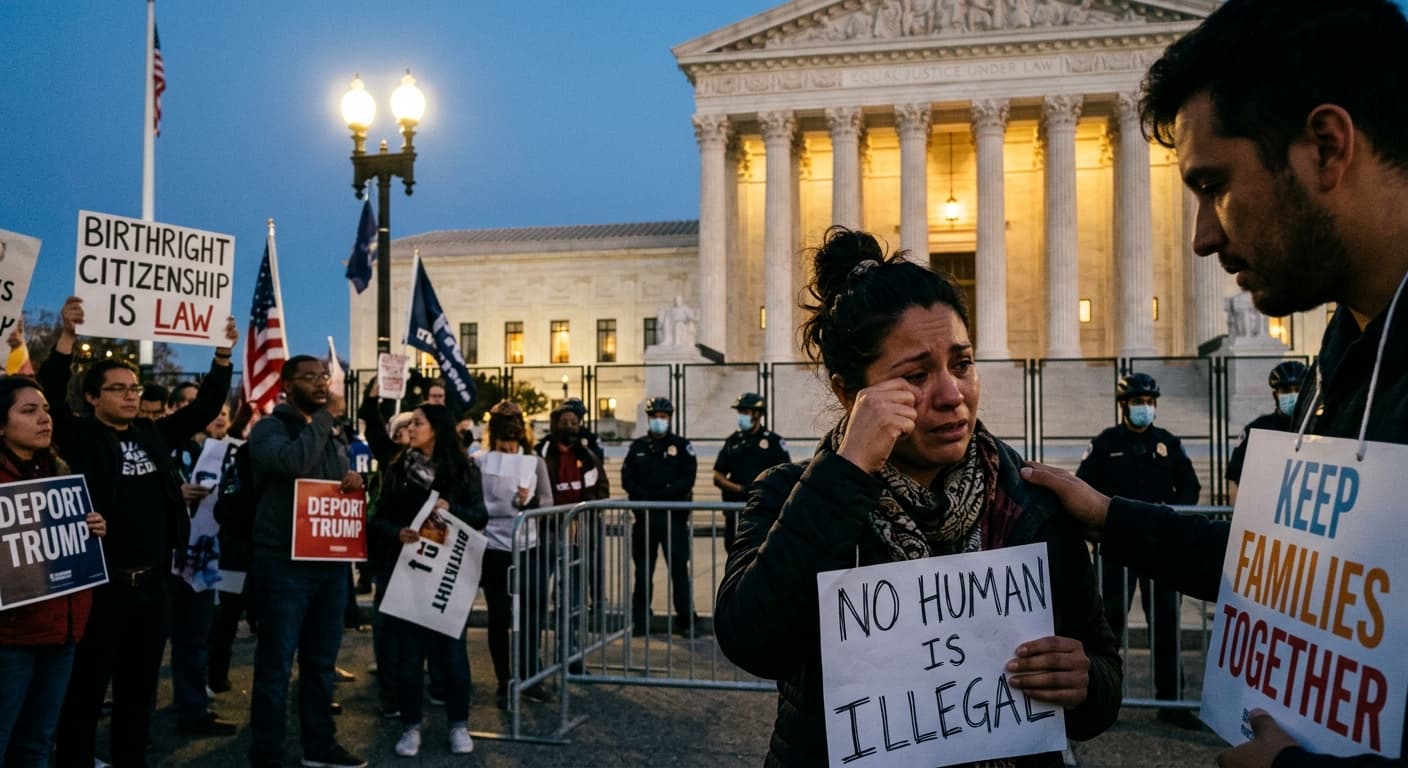
Trump lost birthright citizenship. He won almost everything else at the Court.
In a 6–3 ruling on June 30, 2026, the Supreme Court preserved birthright citizenship — but a year of shadow-docket orders has already handed the White House the rest of its deportation agenda.
The Supreme Court's headline defeat of Donald Trump's birthright citizenship order obscures the more consequential fact of the 2025–2026 term: on every other significant immigration question, the conservative majority has ratified a rewrite of executive power that reaches roughly 1.3 million legal migrants and every asylum-seeker at the southern border. Trump lost the marquee case — Trump v. Barbara, decided June 30 by 6–3 — while quietly winning the plumbing. The result is that the Fourteenth Amendment survived intact, but the statutory architecture around it — Temporary Protected Status, humanitarian parole, asylum access, due process for green card holders — has been substantially demolished.
That is the argument. The Court did not co-sign Trump's most radical constitutional theory. It co-signed nearly everything else, and it did so mostly through unsigned emergency orders that carry no reasoning.
The one loss that matters — and its limits
In Trump v. Barbara, Chief Justice John Roberts wrote for a five-justice majority that children born on U.S. soil to parents "unlawfully or temporarily present" are "citizens at birth" under the Fourteenth Amendment. The full opinion is public at the Legal Information Institute. Justice Brett Kavanaugh concurred on narrower statutory grounds, giving the ruling its sixth vote; Justices Thomas, Alito and Gorsuch dissented, with Thomas producing a 91-page historical brief for a "domicile" requirement, as
Brookings recapped.
The respondents' brief filed with the Court framed Executive Order 14160 as "a radical rewriting of the Fourteenth Amendment," anchored in the 1898 precedent United States v. Wong Kim Ark. That framing carried the day. As the official filing put it:
The Citizenship Clause guarantees citizenship to all persons born in the United States, subject only to common-law exceptions for foreign sovereigns, ambassadors, warships, and occupying armies.
Trump's response was muted by his standards — a Truth Social post calling the decision "too bad for our country" and a call for legislation, per the BBC. House Speaker Mike Johnson and Senator Mike Lee, quoted by Brookings, conceded that only a constitutional amendment could reverse the ruling. That is a functional impossibility. Birthright citizenship is locked in.
The reason Trump's response was muted is that the rest of the term went his way.
The wins nobody put on the front page
Between May 2025 and late June 2026, the Court cleared four separate pillars of the second-term immigration agenda. Each is bigger, in raw numbers, than the birthright case would have been.
Temporary Protected Status. On May 19, 2025, the Court lifted a California district court injunction and allowed DHS Secretary Kristi Noem to strip TPS from roughly 350,000 Venezuelans covered by the 2023 designation, NPR reported. On October 3, 2025, the justices returned to the same case and froze Judge Edward Chen's final ruling that had reinstated the protections, per
Al Jazeera. On June 25, 2026, the Court extended the logic to Haitians and Syrians. Justice Samuel Alito wrote for the majority that the TPS statute "plainly bars" judicial review of the executive branch's termination decisions. As of that ruling, about 350,000 Haitians and 6,100 Syrians face loss of work authorization, with work permits for many expiring July 10. Beyond those cohorts, the reasoning threatens the roughly 1.3 million TPS holders from 17 designated countries, per an earlier
Al Jazeera analysis.
Humanitarian parole. On May 30, 2025, the Court let the administration revoke humanitarian parole for 532,000 Cubans, Haitians, Nicaraguans and Venezuelans admitted under a Biden-era program.
Asylum "metering." On June 25, 2026, the Court ruled 6–3 that Customs and Border Protection agents may physically block migrants from crossing before they touch U.S. soil, thereby cutting them off from the statutory right to apply for asylum, Al Jazeera reported. Alito wrote that "an alien standing in Mexico does not 'arriv[e] in the United States.'" Justice Sonia Sotomayor's dissent said the ruling allows removals "even if the asylum seeker is certain to be persecuted, or killed."
Green card holders. On June 23, 2026, in a case involving a lawful permanent resident named Muk Choi Lau, the Court held 6–3 that a mere allegation of criminal wrongdoing — not a conviction — is sufficient to place a green card holder on immigration parole. Justice Ketanji Brown Jackson, writing in dissent, warned that the majority "has now handed the Government a massive blank check," per Al Jazeera.
Third-country removals. On June 23, 2025, the Court vacated Judge Brian Murphy's order requiring 15 days' notice before migrants could be deported to countries with no connection to them. That order came in a case involving eight men flown toward South Sudan, NPR reported. Sotomayor dissented that the administration had "openly flouted two court orders" before appealing.
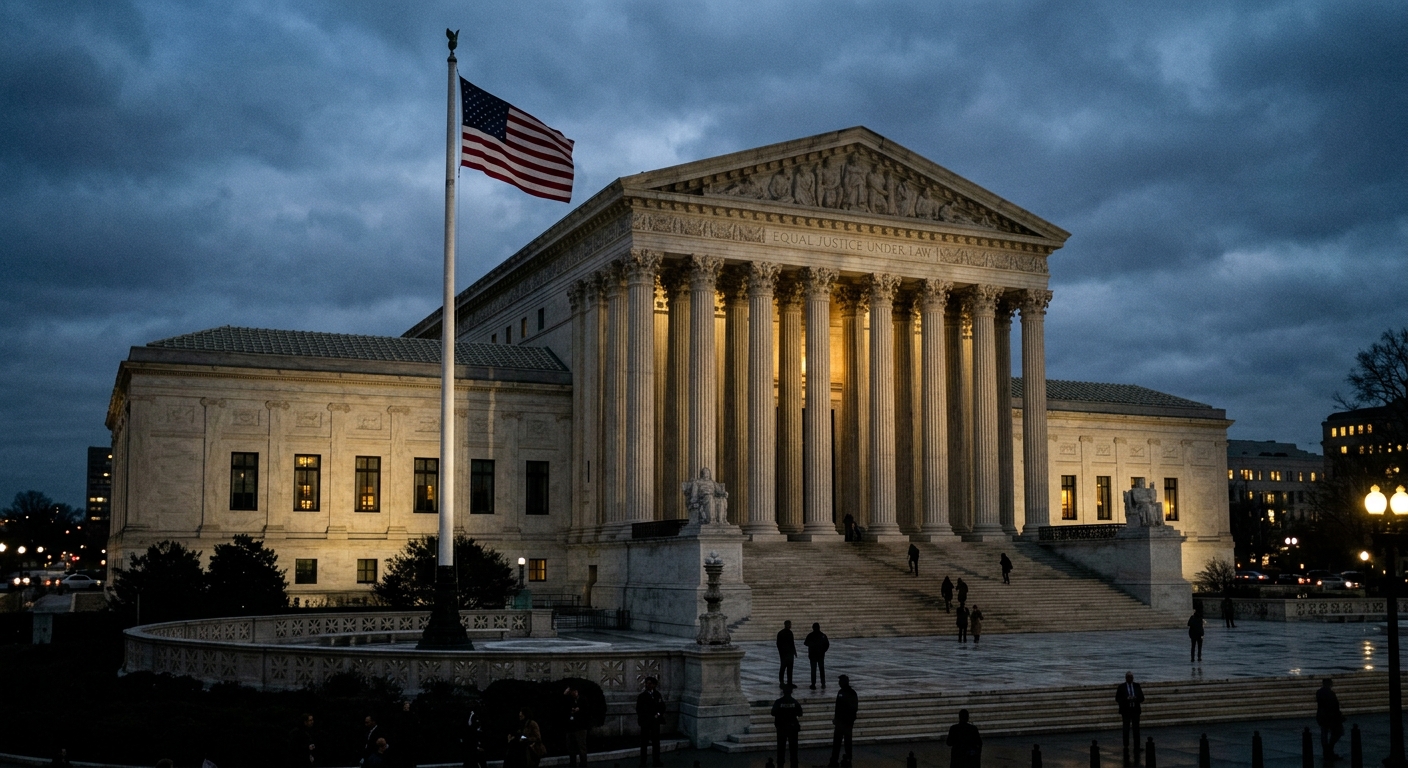
The mechanism: shadow docket, not merits
The critical structural fact is that most of these wins came without oral argument, without signed opinions, and often without any reasoning at all. Georgetown law professor Stephen Vladeck told NPR that in the three months from April 4 to July 15, 2025, the Court granted 15 out of 15 Trump emergency applications to pause lower court rulings — and offered no written explanation in seven of them. A
Cambridge University database of the shadow docket confirms that Trump's 22 emergency applications in the first nine months of 2025 set an all-time record, surpassing his own prior peak of 16 in 2020. A separate ProPublica count cited by
Al Jazeera put the 2024–2025 term's shadow-docket total at 63 orders — more than the 56 signed merits decisions.
Sotomayor made the political implication explicit in a July 3, 2025 dissent quoted by Al Jazeera: "Other litigants must follow the rules, but the administration has the Supreme Court on speed dial. That does suggest a finger on the scale in favour of the administration."
The procedural point is not academic. Vladeck's analysis on NPR after the birthright oral arguments identified the second-order effect that makes this term dangerous for challengers: the Court's earlier rulings limiting nationwide injunctions mean that when a district judge blocks a Trump policy for a discrete plaintiff group, the policy keeps rolling elsewhere. Only birthright citizenship, in his view, was too "transparently odious" to survive that regime. Everything else is fair game.
Who wins, who loses
The winners are legible. The Department of Homeland Security has recovered discretion over TPS designations that federal district judges had spent a year trying to constrain. Immigration and Customs Enforcement can now place green card holders in removal proceedings on the strength of an arrest report. CBP can meter asylum-seekers before they touch American soil. And the White House has a proven route — the emergency docket — to override adverse district court rulings within weeks.
The losers are equally concrete. South Florida bears the sharpest impact: hundreds of thousands of Venezuelans and Haitians whose work authorizations expire in the coming weeks. Roughly one-third of the 350,000 Haitian TPS holders work in U.S. healthcare, including about 13,000 nursing assistants caring for 65,000 patients, according to Boston Globe reporting cited by Al Jazeera. Republican Representative Mike Lawler, quoted in the same piece, warned that "immediately shutting off TPS will create a crisis in our hospitals, nursing homes, and in the [intellectual disabilities] community."
The historical parallel worth naming is not the 1996 immigration reform. It is Trump v. Hawaii (2018), the travel-ban decision. That ruling established a principle of extreme judicial deference to the political branches on immigration and foreign affairs. The 2025–2026 term has extended that deference from entry decisions to internal removal, status revocation, and border processing. What began as a doctrine about who may enter has become a doctrine about who may stay.
What to watch
- July 10, 2026 — Work authorizations tied to Haitian TPS expire for roughly 330,000 people unless the Trump administration issues wind-down guidance. Employer compliance rulings and state Medicaid workforce impacts will follow within weeks.
- Mahmoud Khalil's Supreme Court petition — After the Second Circuit's 6–5 May 2026 refusal to rehear his case en banc, per
Al Jazeera, Khalil's cert petition tests whether the Immigration and Nationality Act's rarely invoked "foreign policy" removal provision can reach a lawful permanent resident who has not been charged with a crime. A merits grant would extend the term's pattern from statutory status revocation to First Amendment territory.
- Congressional TPS legislation — The House-passed bill extending Haitian TPS through 2029 (10 Republicans joined Democrats) awaits a Senate vote. Absent action, the Court's June 25 ruling is the last word.
- The next emergency application — Vladeck's benchmark is whether the tariff and birthright losses signal a Court willing to police the administration on the merits, or whether the shadow docket batting average holds. The next Trump filing will answer that.
The Bottom Line
The 2025–2026 Supreme Court term did not stop Donald Trump's immigration agenda — it retooled it. Birthright citizenship survived because the constitutional text was unambiguous and the political cost was extreme; every other pillar of the agenda passed through the emergency docket with unsigned orders that reshuffled the status of roughly 1.3 million legal migrants. The Court's message, read across the full term, is that the Fourteenth Amendment is a hard limit and everything downstream of it is executive discretion.
Discover more

Global Politics
US Seizes Iranian Ship, Tensions Surge
The US seizure of the Iranian ship Touska highlights a shift in control over the Strait of Hormuz, favoring Iran's strategic position.
US Politics
House Ethics Committee Pushes Sexual Miscond.
The House Ethics Committee has shifted responsibility for sexual harassment settlement records to the Office of Congressional Workplace Rights, complicating disclosure efforts.
Global Politics
Trump's Conflicting Messages on Iran War
Trump's mixed messages on Iran reflect a strategy of audience management, benefiting Tehran amid a complex geopolitical landscape.

Economics
Fed's Amex AML order puts correspondent banking on notice
Federal Reserve's Amex AML order requires board-level controls and a 90-day plan; OCC fined the bank $350 million over enterprise-wide deficiencies.