SC corners MP over Vijay Shah sanction delay
The Supreme Court is forcing Madhya Pradesh to decide whether to prosecute minister Kunwar Vijay Shah, turning a stalled sanction into a test of state accountability and political discipline.
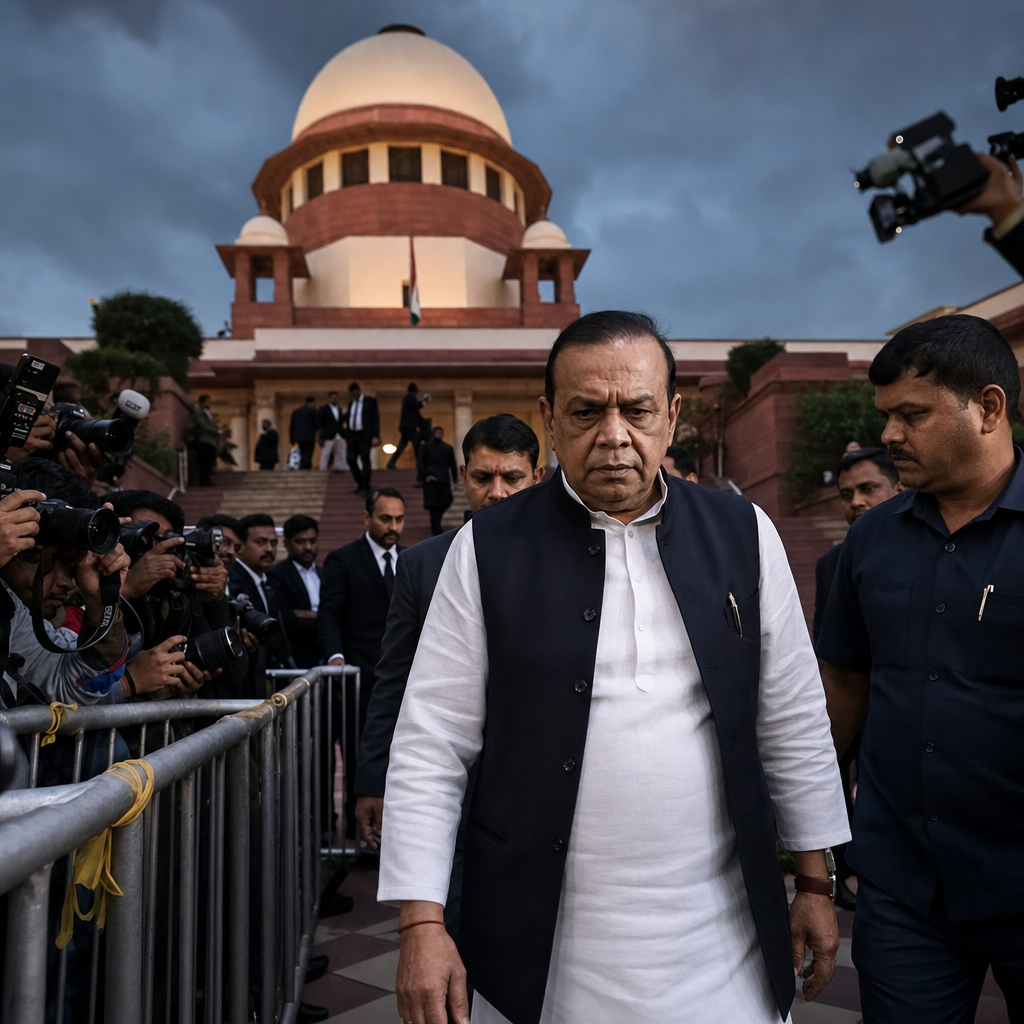
The Supreme Court on Friday told the Madhya Pradesh government to decide within four weeks whether to grant sanction to prosecute Tribal Affairs Minister Kunwar Vijay Shah over his remarks about Col. Sofiya Qureshi, and rejected the state’s attempt to keep the matter in procedural limbo ( Indian Express;
  The Tribune). CJI Surya Kant’s line — “Enough is enough” — was not just courtroom irritation. It was an instruction to stop shielding a political figure with delay, and to make the government own the decision in public (The Tribune).
Why the delay matters
This is about leverage. The state government controls the sanction that would let the prosecution move forward; Shah benefits from that pause because it keeps the case from advancing, while the court is trying to deny him the protection of political inertia (Indian Express;  ETV Bharat). The bench also signaled it was unconvinced by the apology argument. According to the hearing reports, the court said a letter was not an apology and treated Shah’s response as a post-facto defence rather than genuine remorse (Indian Express; ETV Bharat).
That matters because the Court is not treating this as a routine defamation fight. The issue has already been framed as one involving communal ill-will under Section 196 of the Bharatiya Nyaya Sanhita, after a court-appointed SIT sought sanction to proceed (Indian Express). The bench also pointed to the SIT’s conclusion that Shah was “in the habit of making such statements,” which makes the case look less like an isolated slip and more like a repeat-pattern problem (Indian Express).
The political cost is now in Bhopal
For the BJP in Madhya Pradesh, this is a reputational problem that refuses to go away. The High Court had already taken suo motu cognisance and ordered an FIR, describing the remarks as dangerous and capable of causing enmity, before Shah brought the matter to the Supreme Court (The Tribune). That means the state is no longer managing a communications problem; it is managing a court-driven enforcement problem.
The beneficiary here is the institutional line the Court is trying to draw: civilian politicians do not get to use delay as de facto immunity when remarks are judged incendiary enough to merit criminal scrutiny. For Col. Qureshi, the case is also about public vindication after a controversy that spread far beyond Madhya Pradesh, especially given her visibility during Operation Sindoor (The Tribune). For the state government, the risk is simple: whichever way it rules, it will own the consequences.
What to watch next
The next decision point is the Madhya Pradesh government’s response to the sanction request within the four-week deadline and the follow-up hearing after the summer break (The Tribune). If sanction is granted, the prosecution moves; if it is denied or delayed again, the Supreme Court is likely to harden its stance. For the broader domestic backdrop, see  India.