South Sudan's December 22 Election Bet
Kiir's government sets another election date amid turmoil
Model Diplomat3 min readAfrica
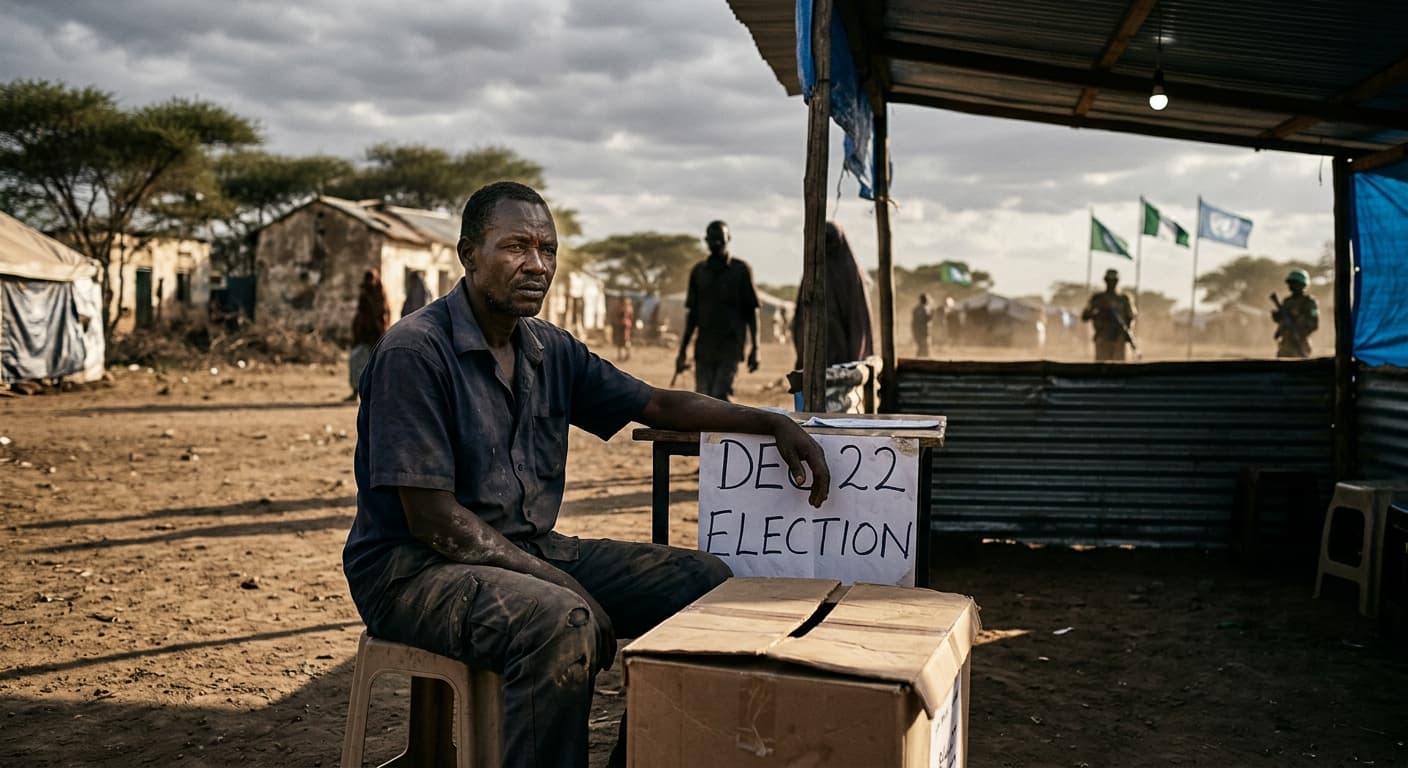
South Sudan's December 22 Election Bet Against History
After three missed deadlines since 2011, Kiir's government sets yet another election date—but Machar remains jailed and opposition warns of civil war risk.
South Sudan has announced December 22 as the date for the country's first-ever general elections since independence—a promise that carries little weight given 15 years of delays, a collapsing peace deal, and open threats of violence from the opposition. The National Elections Commission confirmed the date on June 23, but the announcement masks a machinery near breakdown: Kiir controls the presidency, disputed territory, and security forces, while his rival Riek Machar sits under house arrest without even formal permission to compete.
The Pattern of Broken Promises
The original 2015 election was cancelled due to civil war. The 2018 peace deal envisioned a 2022 vote—that was scrapped. Another extension in September 2024 pushed the date to December 2026. Each delay has been justified by unfinished implementation of the peace agreement: a constitution still unwritten, security force integration incomplete, state boundaries still contested, and
funding repeatedly unavailable.
This time, the electoral commission openly signaled skepticism. Electoral chief Abednego Akok Kacuol told reporters that "the political will is not ours; it lies with the government," and admitted that six months is insufficient to clear legal amendments or plug funding gaps—then said his commission would adjust toward a "realistic electoral timeline" if money doesn't materialize. That is not optimism; that is a safety exit written in plain language.
Kiir's Control Over the Process
The power asymmetry is now stark. Kiir is expected to run but has yet to formally declare, a luxury available only to someone already controlling the state apparatus. Machar—his former deputy and signatory to the 2018 peace deal—has been
held under house arrest since March 2025 on charges of treason, murder, and crimes against humanity, which he denies. Whether he will even be permitted to stand as a candidate remains unclear.
The opposition Sudan People's Liberation Movement-in-Opposition (SPLM-IO) has made its position unmistakable. On June 22, its acting chairperson Nathaniel Pierino posted on Facebook: "Anyone coming to register voters and campaign in territories controlled by the mighty SPLM-IO, you will be a prisoner of war. Be reminded, the country is at war." The statement is framed as a warning to international monitors and campaign workers, but its meaning is structural: large swaths of South Sudan remain outside government writ, and the opposition has signaled it will block electoral activity by force.
Why December Is Still Six Months Away
Electoral readiness is fiction. The National Elections Commission has publicly called on the government to expedite legal reforms and provide basic resources "within a short period"—language used when the commission expects its requests will be ignored.
Voter registration is incomplete, internal boundaries remain disputed, and the military remains divided along ethnic lines. Civil servants and security personnel have not been paid salaries for over a year, a condition that historically accompanies state fragmentation, not consolidation.
Yet Kiir's government gains by announcing the date: it satisfies regional and international pressure (the UN, US, and EU have all pushed for elections as a way to legitimize leadership), postpones confrontation with the opposition by six months, and signals commitment to the peace process while keeping Machar jailed. If December passes without a vote—as it likely will—Kiir can blame external constraints rather than his own choice.
What to Watch
The next critical date is not December but the funding decision. If the government fails to appropriate electoral resources by September—three months out—the probability of a December vote approaches zero and the opposition has grounds to claim the election was never genuine. A second trigger is Machar's status: if he is tried, convicted, or barred from candidacy before October, the unity government framework collapses entirely and elections become a ratification of Kiir's dictatorship rather than a choice.
Finally, monitor SPLM-IO military movements over the next four months. If opposition-held territories see an uptick in recruitment or mobilization, the threat of violence is credible. If they remain static, opposition leaders may be hedging—preserving the option to contest an election they expect to lose rather than betting on war.
Discover more
India
Romanian Coalition Party Demands PM Resign
Romania's Social Democrats withdrew from coalition, joining far-right AUR to topple PM Bolojan, risking €10 billion in EU funds by August 2026.

International Relations
Pakistan's Key Role in US-Israel-Iran Meddle
Pakistan is seeking to mediate the US-Israel-Iran conflict, balancing high-stakes diplomacy against severe economic pressures and steep regional challenges.
India
Women’s Reservation Bill 2026
The Constitution (131st Amendment) Bill, 2026 was defeated in Lok Sabha, revealing deeper political conflicts over women's reservation and delimitation.

Conflict & Security
Drone Warfare Killing Aid Workers at Unprec
Over 1,000 humanitarian workers killed in three years as cheap armed drones collapse legal protections. Gaza, Sudan, Ukraine, and DRC see deliberate targeting of aid convoys and hospitals with zero prosecutions.