South America's Lithium Leverage Expires Soon
Key decisions by November 2026 will shape lithium's future.
Model Diplomat7 min readSouth America
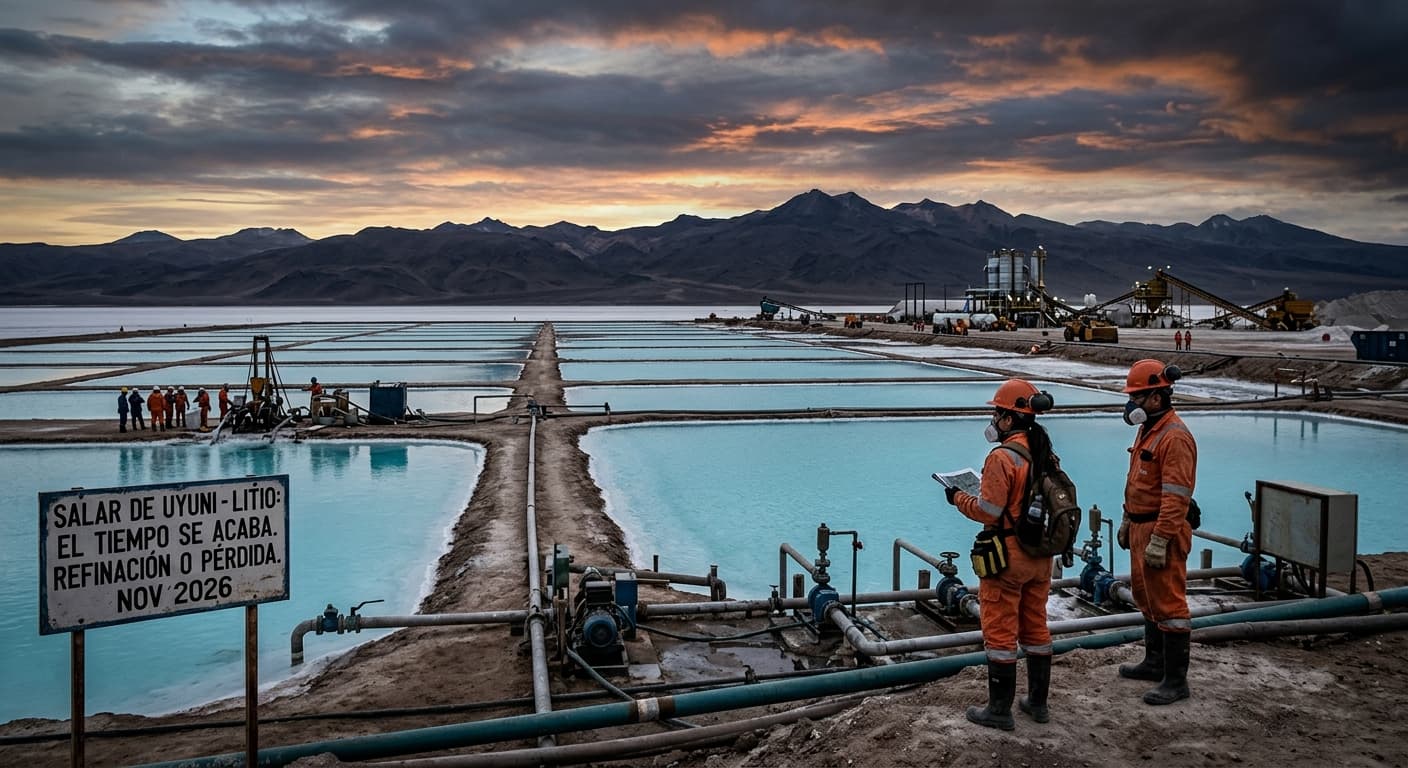
South America's Lithium Leverage Is Real — But It Expires in November
South America holds 60% of world lithium reserves. Three decisions before November 2026 will decide whether Chile, Argentina and Bolivia capture the energy transition — or watch it get refined in China.
At the I Foro Internacional del Uranio y el Litio in Lima on July 8, 2026, former Chilean mining minister Aurora Williams reminded delegates of a number every energy-security strategist already knows: combined, Chile, Argentina, Bolivia and Peru sit atop more than 60% of the world's lithium reserves, according to the foro coverage in El Gas Noticias. That fact has been true for a decade. What is new — and what makes this week's ministerial theatre in Lima consequential rather than ceremonial — is that the region's leverage over the global energy transition is now bounded by a hard clock: Bolivia's August 17 election, the ramp of Chile's Codelco-SQM lithium venture, and the November 10 activation of China's export controls on lithium-refining technology and batteries. The window in which South America can convert reserves into pricing power closes this quarter.
The thesis is uncomfortable for regional boosters. Holding the ore is not the same as holding the value chain. Australia extracted more lithium in 2024 than Chile despite having half the reserves, and China refined roughly two-thirds of global supply regardless of where it came out of the ground, per the IEA's 2025 Global Critical Minerals Outlook. South America's negotiating position rests not on geology but on whether three governments — Boric in Santiago, Milei in Buenos Aires, and whoever wins in La Paz next month — can lock in downstream partners before Beijing's new export controls harden the current architecture into permanence.
The refining chokehold is the real geopolitics
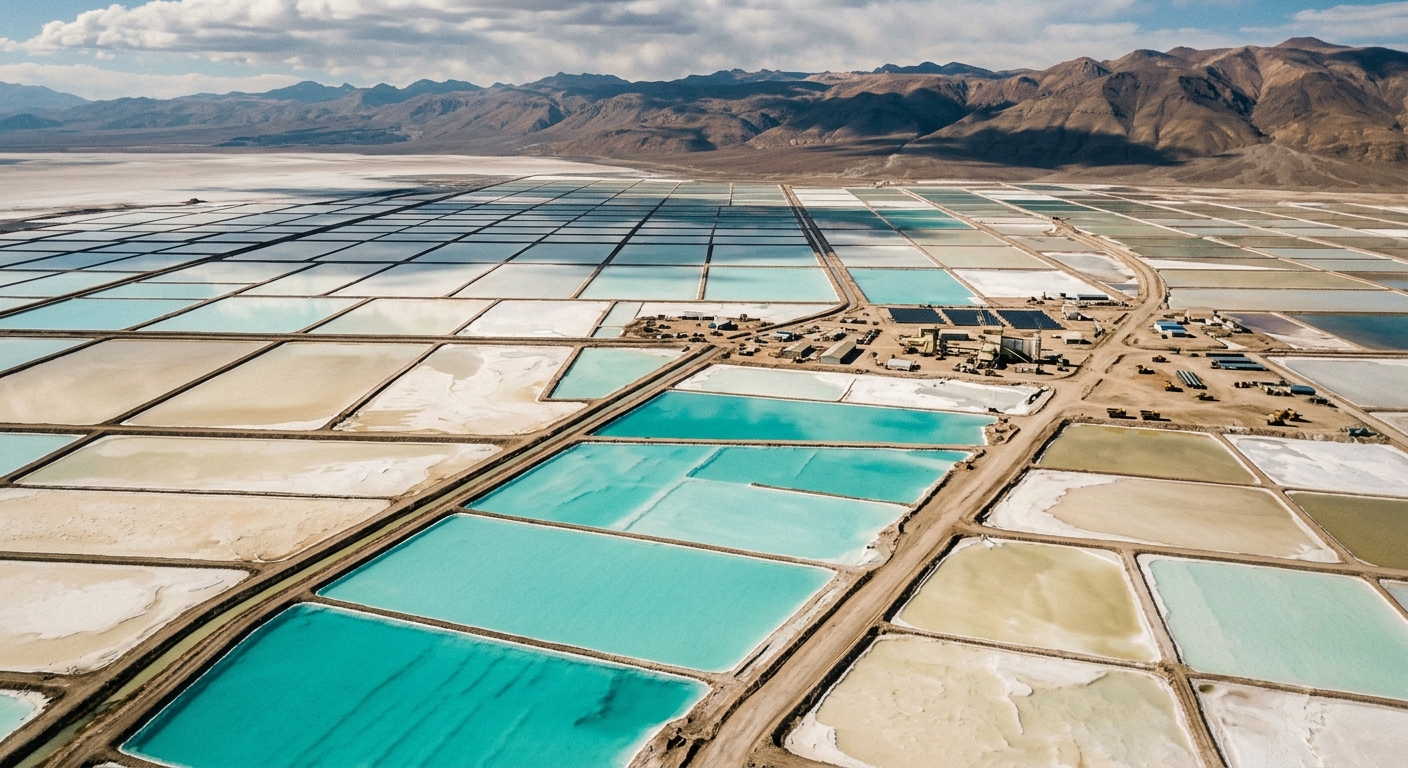
Ministers in Lima this week spoke about reserves. The number that actually matters sits in a different column. The European Parliament's 2024 briefing on EU-Latin America critical raw materials — a primary EU document — records that 79% of the EU's refined lithium already originates in Chile, while China absorbed 34% of Latin America's mineral exports in 2023 and dominates the midstream refining that turns Andean brine into battery-grade product.
That asymmetry is being weaponised. A January 2025 analysis by the Swedish Institute of International Affairs documents that Beijing imposed export controls on lithium processing technology in January 2025, then followed in October 2025 with controls on finished lithium-ion batteries and graphite anode materials — measures suspended only until November 10, 2026. The intent, per the UI report, is to "preserve and strengthen [China's] dominance in global mineral supply chains by restricting foreign access and making it more difficult for other countries to build independent supply capabilities."
For the Lithium Triangle, that clock changes everything. Every month between now and November is a month in which South American producers can still import Chinese refining equipment. After November, either they will have signed offtake and technology deals with non-Chinese partners, or they will find themselves permanently locked into raw-ore exports at whatever price Chinese refiners set.
Three national bets, three different theories
The region is not answering the chokehold in unison — a point Williams elided in Lima but that undermines her call for "regional collaboration." Each triangle country is running a distinct experiment.
Chile has gone furthest toward state capture of the value chain. President Gabriel Boric's National Lithium Strategy, launched in 2023, produced its first operating asset in Q1 2026: Nova Andino Litio, a joint venture in which state copper giant Codelco takes majority control from SQM starting in 2031. In its March 2026 earnings release, SQM reported that Nova Andino generated more than US$530 million in contributions to the Chilean state in its first quarter alone, on sales of roughly 69,000 metric tons of LCE. The IMF's
2024 Article IV consultation on Chile — another primary source — endorsed the strategy's fiscal framing while flagging execution risk on non-strategic salt flats. Chile's bet: state co-ownership plus a first-mover EU trade deal (the EU-Chile advanced framework agreement entered into force February 1, 2025).
Argentina is running the mirror-image experiment. Under President Javier Milei, the Incentive Regime for Large Investments (RIGI) offers 30-year tax stability, unrestricted repatriation of revenue, and — in the case of the Vicuña copper project — 40 years of benefits under a new PEELP designation approved June 16, 2026, according to a Lundin Mining announcement. On February 4, 2026, Washington and Buenos Aires signed a bilateral Framework Instrument for Securing Critical Minerals Supply, cited in
Jaguar Uranium's April 2026 filing on its Mendoza uranium-copper-vanadium project. The Atlantic Council's March 2026 issue brief describes Argentina as
"a critical test case for US economic engagement in regional mineral supply chains". Argentina's bet: maximum openness to US and allied capital, minimum state footprint.
Bolivia has bet on both China and Russia — and lost most of the decade doing it. The Arce government sent contracts to the Legislative Assembly authorising Chinese consortium CBC and Russia's Uranium One Group to industrialise Uyuni and Coipasa using direct lithium extraction, per BBC Mundo's account. Neither has been ratified. Bolivia's lithium output remains at pilot scale despite holding, by USGS reckoning, the largest resource endowment in the world.
The EU-Mercosur pivot is the underrated variable
The story most Lima delegates undersold is Brussels. The EU-Mercosur Partnership Agreement, politically concluded December 6, 2024 and provisionally applied from May 2026, is — as Peterson Institute analysts write — "the first binding legal framework aimed at reducing China's chokehold on critical mineral processing and shifting part of that processing to South America."
The mechanics are quiet but material. The agreement dismantles the EU's historic tariff escalation, which taxed processed goods more heavily than raw ores — a structure that had, in effect, subsidised the export of Andean brine to Chinese refineries. It also, per PIIE, contains "non-escalation tariff clauses, guarantees non-discriminatory treatment for investment, [and] provides dispute resolution mechanisms." The European Critical Raw Materials Act's benchmark — no more than 65% of any strategic raw material from a single supplier — is now paired with a legal instrument that makes lithium refining in Argentina, nickel sulphate in Brazil, and rare-earth separation facilities financially rational for European capital.
The World Bank's 2025 assessment puts scale to the opportunity: Latin America and the Caribbean holds 47% of world lithium reserves and 36% of copper reserves, "and also has significant endowments of other critical minerals such as cobalt, graphite, nickel, and Rare Earth Elements."
What the Lima foro actually signalled
Peru's inclusion in the conversation — the whole reason the foro was held in Lima rather than Antofagasta or Salta — is the region's belated recognition that lithium leverage is a plural game. The Falchani deposit in the Macusani volcanic field, described in a March 2025 Nature Scientific Reports paper, holds an estimated 900,000 tonnes of contained lithium in an unusual volcanogenic setting. Combined with Peru's dormant uranium prospects — including the historic Macusani ignimbrite mineralisation — Lima is positioning itself as the region's "second front" for the nuclear-and-battery combination that Peruvian minister Jorge Montero highlighted at the foro.
The Council on Foreign Relations warned in February 2026 that Trump-administration policy toward Latin America "risks ceding influence to China" if extraction is prioritised over midstream investment. That is the fault line running through every South American capital right now: raw exports keep flowing regardless, but the refining and battery-cell layers are being decided in a 24-month window that is already half-spent.
What to watch — the falsifiable calls
-
August 17, 2026 — Bolivian presidential election. A government able to ratify — or renegotiate — the CBC and Uranium One contracts will determine whether the world's largest lithium resource enters commercial production this decade or slips another cycle.
-
Q3 2026 — SQM/Codelco Salar Futuro environmental filing. SQM's CEO confirmed the joint venture will submit Salar Futuro to Chilean environmental authorities in coming months. Approval speed sets the pace for the entire Chilean expansion.
-
November 10, 2026 — Chinese lithium export controls activate. After that date, non-Chinese refining projects that have not secured technology partners face materially higher costs and longer lead times.
Diplomat View
The energy transition's balance of power is not being written in Lima this week — it is being written in three national capitals, and the deadline is fixed. Chile has bet on state ownership, Argentina on radical openness, Bolivia on paralysis. All three will look right or wrong depending on what non-Chinese refining capacity is under construction on November 11, 2026. The most likely outcome, based on the pace of Nova Andino's Q1 numbers and the RIGI approvals stacking in Buenos Aires, is a two-speed Lithium Triangle in which Chile and Argentina lock in EU and US offtake while Bolivia remains a resources-rich spectator. The forecast reverses if the Bolivian election produces a government able to ratify Chinese and Russian DLE contracts within 90 days, or if Beijing extends its November suspension — either would restore the current pattern of Chinese midstream dominance and neutralise the EU-Mercosur pivot before it hardens. Aurora Williams called in Lima for regional coordination. She is right that it would help. She is also — based on the evidence of three divergent national strategies — describing a Latin American cooperation that has never existed and shows no sign of arriving in time.
The Bottom Line
South America holds the reserves that the energy transition cannot do without. But reserves are a starting position, not a strategy — and unless Chile, Argentina and Bolivia lock in non-Chinese refining and offtake before Beijing's November export controls take effect, the region will spend the 2030s exporting brine to whoever refines it, exactly as it spent the 20th century exporting copper and guano. The window is not closing next year. It is closing this year.
Discover more

US Politics
House Ethics Committee Pushes Sexual Miscond.
The House Ethics Committee has shifted responsibility for sexual harassment settlement records to the Office of Congressional Workplace Rights, complicating disclosure efforts.
US Politics
SNAP Food Assistance Faces Legal Challenges
In 2026, SNAP faces stricter eligibility rules and mounting legal challenges, threatening food assistance for the millions of Americans who rely on the program.
Global Politics
Trump's Conflicting Messages on Iran War
Trump's mixed messages on Iran reflect a strategy of audience management, benefiting Tehran amid a complex geopolitical landscape.

Economics
Fed's Amex AML order puts correspondent banking on notice
Federal Reserve's Amex AML order requires board-level controls and a 90-day plan; OCC fined the bank $350 million over enterprise-wide deficiencies.