South Africa’s Xenophobia Pushes Ghanaians
Ghana evacuates citizens amid anti-migrant violence.
Model Diplomat3 min readAfrica
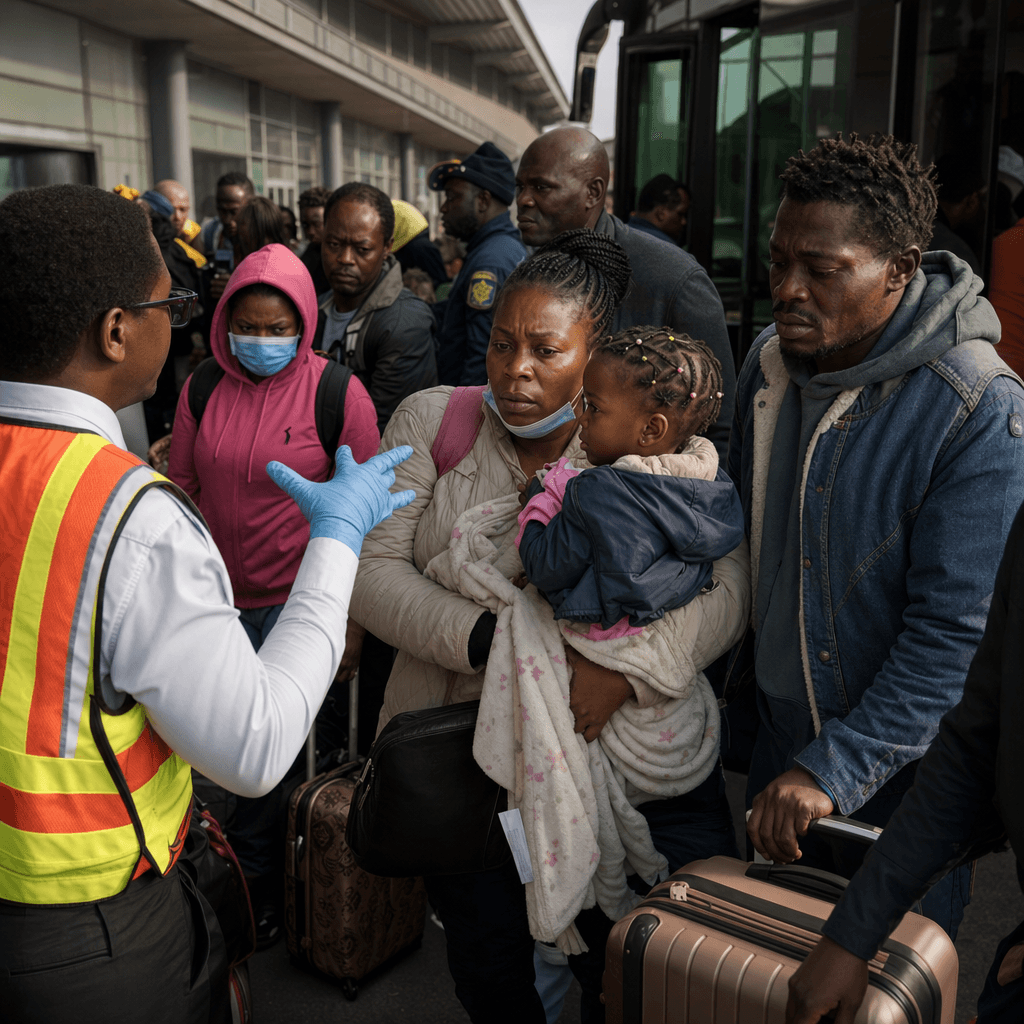
South Africa’s Xenophobia Pushes Ghanaians Home
Violence and anti-migrant protests in South Africa are forcing Ghana into evacuation mode — and exposing how fast undocumented migrants can become diplomatic leverage.
Diana Akuffo’s return to Accra is the clearest signal yet that the power balance in this dispute has shifted toward the street and the border. The 42-year-old hairdresser told BBC News Pidgin that at least six men attacked her with knives and sticks, cut her hand, and told her to leave her salon because she was foreign. She is one of almost 300 Ghanaians brought home on Ghana’s repatriation exercise on Wednesday, with another batch expected on Sunday, according to
The Straits Times and the
Ghana News Agency.
The leverage is in South Africa
The immediate winner here is not the South African state but anti-immigrant activists who have pushed undocumented migrants into retreat. Their message is simple: foreigners are blamed for unemployment and crime, and they should go. The Straits Times reports that the protests have been accompanied by violence against migrants from across sub-Saharan Africa, while a South African immigration official said only 10 of the 300 Ghanaians in the first group were legally compliant.
That matters because it gives Pretoria a second lever: enforcement. Once the question becomes documentation rather than protection, migrants lose bargaining power fast. In practical terms, that is what has happened. Ghana’s High Commission in Pretoria has been trying to manage departures, while South African authorities can present the repatriation as immigration control rather than forced expulsion. For migrants, that distinction changes little on the ground. For the state, it changes everything in diplomatic terms.
Ghana is buying time and political control
Accra is trying to turn a crisis into a demonstration of state capacity. Foreign minister Samuel Okudzeto Ablakwa has promised returnees allowances, medical support, psychological care, and help reintegrating into work and business, according to Ghana News Agency and
News Central TV. That is not just humanitarian messaging. It is political containment.
The government needs to show that it can protect citizens abroad without escalating into a public rupture with South Africa, one of Africa’s biggest economies and a critical destination for West African migrants. Benjamin Quashie, Ghana’s High Commissioner in Pretoria, has already framed the returns as a managed process to ease tensions, not a break in ties, in reporting from The Straits Times. That is the diplomatic play: bring people home, support them visibly, avoid turning xenophobia into a broader bilateral confrontation.
What to watch next
The next decision point is Sunday, 31 May, when Ghana says the second batch of returnees is due to arrive, with more than 800 people already registered for repatriation in BBC News Pidgin and
Ghana News Agency. Watch whether South African authorities can contain the protests without more violence, and whether Ghana’s evacuation list keeps growing. If it does, this stops being a one-off rescue and becomes a regional warning: in
International, migration pressure can turn into diplomatic pressure almost overnight.
Discover more
India
Romanian Coalition Party Demands PM Resign
Romania's Social Democrats withdrew from coalition, joining far-right AUR to topple PM Bolojan, risking €10 billion in EU funds by August 2026.

Global Politics
US Seizes Iranian Ship, Tensions Surge
The US seizure of the Iranian ship Touska highlights a shift in control over the Strait of Hormuz, favoring Iran's strategic position.

India
India-South Korea $50B Trade Expansion Plan
India and South Korea target $50 billion in bilateral trade by 2030, focusing on industrial cooperation and strategic alignment amid US pressures.

Conflict & Security
Drone Warfare Killing Aid Workers at Unprec
Over 1,000 humanitarian workers killed in three years as cheap armed drones collapse legal protections. Gaza, Sudan, Ukraine, and DRC see deliberate targeting of aid convoys and hospitals with zero prosecutions.

