Siddaramaiah’s Delhi Trip Reopens Karnataka Power Race
The Delhi summons is less about one meeting than who controls the next move in Karnataka: a cabinet rejig, or a reset of the succession script.
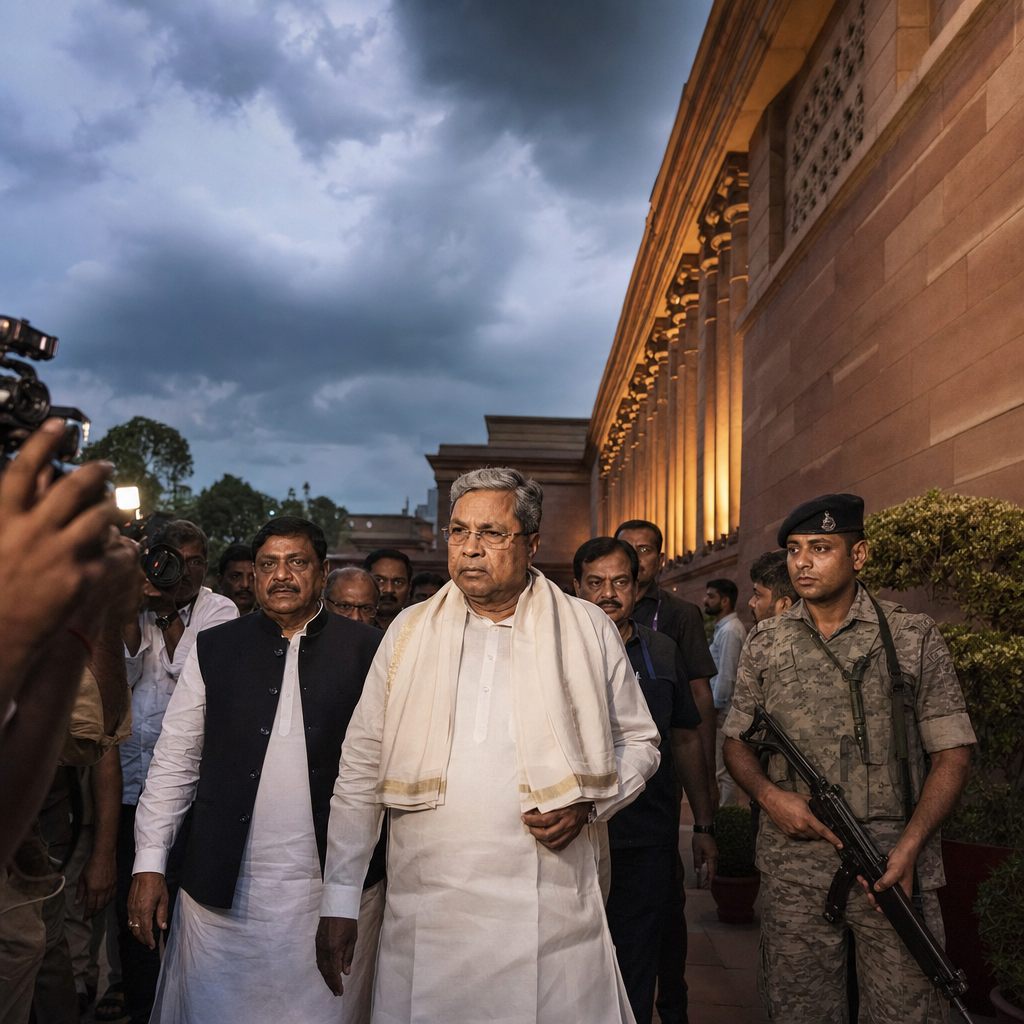
Chief Minister Siddaramaiah has been called to New Delhi by the Congress high command, and his own description of the trip has only sharpened the stakes. He said AICC general secretary KC Venugopal informed him of the meeting and that he did not know the agenda; he also brushed off talk of an imminent leadership change, saying, “There is always speculation” ( The Indian Express). Deputy Chief Minister D K Shivakumar, the other pole in Karnataka Congress politics, said he would go to Delhi if formally summoned, while minister Satish Jarkiholi framed the visit as an attempt to end “six-month-long confusion” inside the party (The Indian Express).
Delhi holds the leverage
The power dynamic is straightforward: the Congress high command decides the sequence. That is why this meeting matters more than the public denials around it. In Karnataka, neither Siddaramaiah nor Shivakumar can afford to force a public showdown, because both need the central leadership to arbitrate if the party wants to avoid a split between cabinet management and succession talk (The Indian Express).
That leverage has been building for months. The cabinet reshuffle was expected last November but was delayed after public jockeying by ministers and aspirants, precisely because the high command did not want to worsen factionalism (The Indian Express). Now, according to The New Indian Express, senior leaders expect the party to finally end the uncertainty by month-end, with Siddaramaiah and Shivakumar likely to be called to Delhi to settle whether the issue is a reshuffle or a change in leadership ( The New Indian Express).
Why the cabinet row matters more than the chair
A reshuffle is the lower-risk option. It lets Congress reward frustrated MLAs, adjust regional balance, and reset a ministry that has now crossed three years in office, without detonating the power-sharing bargain at the top. The state-level pressure is real: The New Indian Express reported that legislators are demanding clarity within days, while another report said 30-35 MLAs may travel to Delhi to press for new faces in the cabinet and warned of “aggressive steps” if nothing moves (The New Indian Express;  News Ei Samay).
A leadership change would be far costlier. It would reopen the unresolved rivalry between Siddaramaiah and Shivakumar, and it would force the party to explain why it is altering a formula that still keeps Congress in power in a key southern state. That is why the central leadership may prefer to use a reshuffle as a pressure-release valve: it satisfies some MLAs, preserves the current CM, and postpones the bigger succession fight.
What to watch next
The immediate test is whether the Delhi meeting stays narrow or expands to include Shivakumar and other claimants. If Venugopal and the party brass use it to announce a cabinet overhaul first, Siddaramaiah gains time and the succession question is pushed back again. If Shivakumar is brought into formal talks, the leadership issue is back on the table.
The next deadline is not just political but procedural: Karnataka’s Rajya Sabha and MLC cycles are approaching, and the high command has reason to clean up the state unit before those votes harden factional lines (The Indian Express; The New Indian Express). For now, the real question is simple: does Delhi settle the cabinet, or the chief ministership?